5 min read


© The Indian Express Pvt Ltd



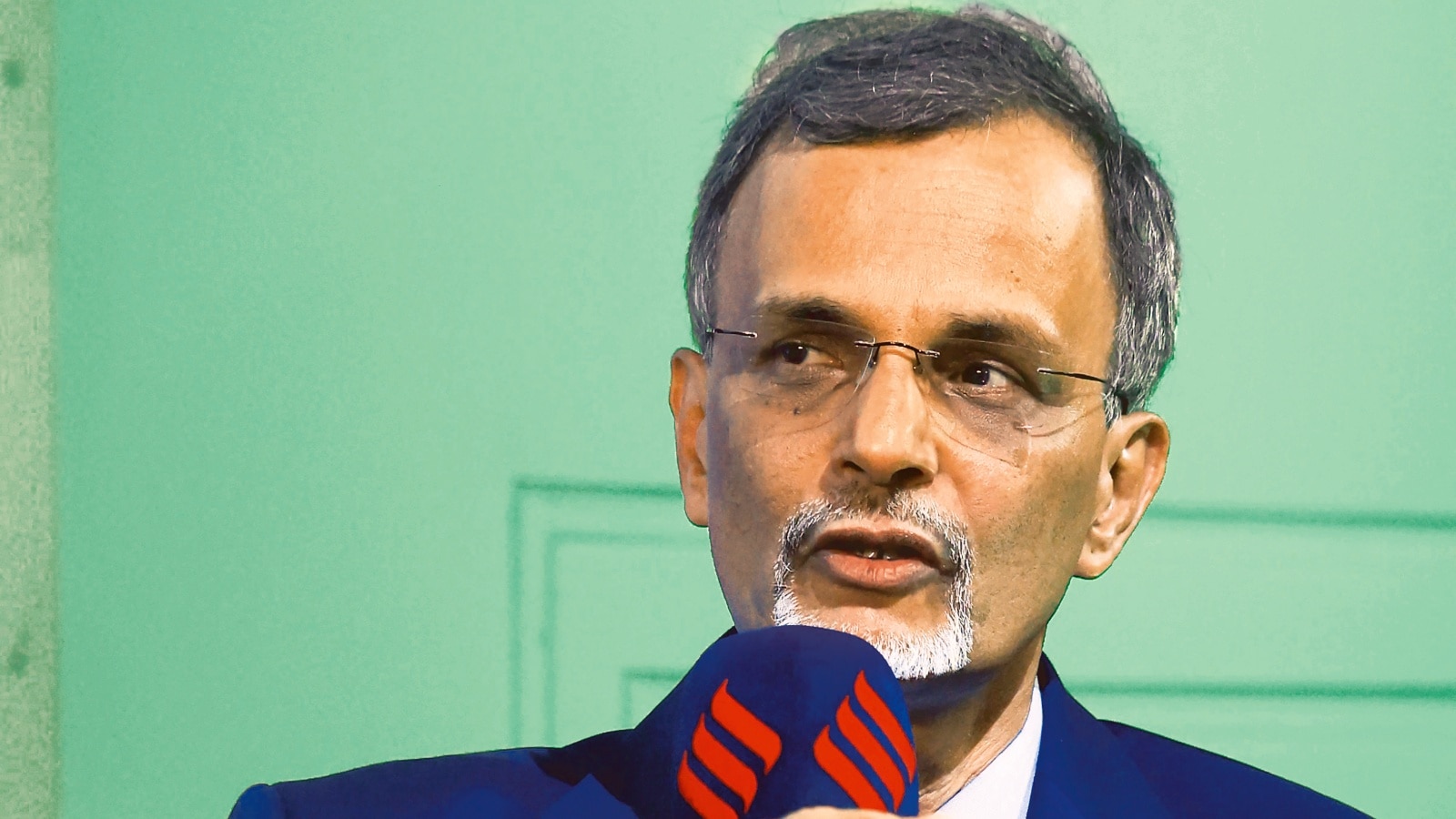 "It (rupee) will come back next year. Right now, it is not impacting inflation or exports," CEA V Anantha Nageswaran added. (Express photo)
The government’s top economist is “not losing sleep” over the rupee’s sharp fall in recent days and the currency’s exchange rate breaking past the 90-per-dollar mark for the first time, with Chief Economic Advisor V Anantha Nageswaran expressing confidence of a reversal in fortunes next year. He also said the foreign direct investment (FDI) “terrain” had become much harder since 2024 and “we need to up our game” to attract FDI and global supply-chain companies.
“I am not losing sleep over it,” he told reporters on the sidelines of the Confederation of Indian Industry’s India Edge summit on Wednesday when asked about the rupee’s weakness. “It (rupee) will come back next year. Right now, it is not impacting inflation or exports,” Nageswaran added.
After flirting with the 90-per-dollar mark on Tuesday, the rupee finally crossed the key psychological level on Wednesday to hit another fresh all-time low. So far this calendar year, the rupee has fallen by over 5 per cent against the US dollar and is the worst-performing Asian currency.
Nageswaran’s comments come after the Finance Ministry said in its Monthly Economic Review report last week that the fall in the rupee has been gradual and in line with emerging market trends.
Several factors have driven the rupee lower this year, with market experts citing the continued delay in the conclusion of a free trade agreement with the US as the primary reason. Since late August, Indian goods have faced a cumulative tariff of 50 per cent while entering the world’s largest economy. This has dented exports. As per latest data, India’s merchandise exports were down 12 per cent year-on-year in October and the trade deficit ballooned to an all-time high of $41.7 billion.
The Reserve Bank of India (RBI) has also seemingly loosened its grip over the exchange rate over the last year or so and intervened to a lesser extent in the foreign exchange market to stem the rupee’s decline. After selling almost $400 billion of foreign currency on a gross basis in FY25 to shore up the rupee, the central bank sold only $44 billion in the first half of FY26. Meanwhile, foreign investors have been exiting domestic equity markets, with outflows so far in 2025 totalling more than $17 billion. This comes on the back of $21 billion of net inflows in 2023, which then slumped to $124 million in 2024.
At the same time, FDI inflows have been weak. In FY25, net FDI inflows into India stood at a mere $959 million. This has increased to $7.6 billion in the first half of FY26. Net FDI is calculated after adjusting for investments that are repatriated by foreign companies and overseas investments made by Indian companies.
Speaking at the CII summit on Wednesday, Nageswaran said it was important for investor confidence that capital could easily enter and exit India. “That is why the net FDI numbers have been under pressure.”
“At the margin, what has changed in the last three years has been, of course, the abrupt increase in developed country interest rates from 0 per cent to 4-5 per cent — depending on the region you look at — from 2022 onwards, which has raised not only the cost of capital in those countries for investing overseas, but also incentivised some of those monies to stay back,” Nageswaran said.
The localisation of supply chains around the world has also altered the dynamic of net FDI, with India having to compete not just with other emerging economies but also developed countries who want to onshore their production. This, Nageswaran said, is one of the reasons why Indian entities’ overseas investments have gone up “because in order to sell into those markets, you have to be present there these days rather than being able to export there”.
While previously rising foreign investments have run into geopolitical and geoeconomic challenges, Nageswaran said he agreed that “we need to up our game with respect to courting FDI, courting global supply chain companies to come here”. This requires addressing tax and infrastructure-related issues as well as last-mile connectivity issues in terms of local governments being able to step in.
Given India’s growth aspirations, Nageswaran said the country will continue to need higher imports and they will have to be financed with exports as well as portfolio and direct investments.
“Even for exports to take off, you need investments coming in, both in terms of financial resources and technology, including in areas of energy sufficiency, etc. So, there is no question, therefore, that we do have to crank up the efforts in respect to FDI,” he said.