


© The Indian Express Pvt Ltd
Tags:


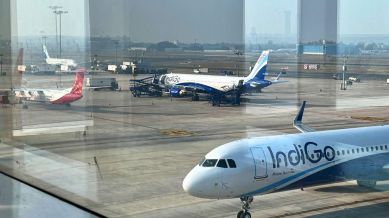
Grappling with widespread flight disruptions over the past few days, IndiGo on Thursday informed aviation regulator Directorate General of Civil Aviation (DGCA) that it will start reducing flight operations from Monday (December 8) to minimise the disruption, and expects normalised and stable operations to be fully restored by February 10, the regulator said. However, more cancellations could be seen over the next two-three days as part of IndiGo’s schedule stabilisation efforts.
The carrier, which is India’s largest and commands a domestic market share of over 60 per cent, also requested the DGCA for exemptions from some night operations-related changes in the new Flight Duty Time Limitation (FDTL) norms for pilots till February 10. The regulator has so far not agreed to it and has asked the airline to submit for review the specific relaxations being sought, but sources indicated that some relief may be on the cards for the airline given the scale of the disruption. IndiGo accepted that it had misjudged its flight crew requirement under the new FDTL rules, which became the primary cause of the disruption.


Under the new FDTL rules, weekly rest period for pilots has been increased to 48 hours from 36, and night landings have been limited to two from six earlier. The new norms have also extended the definition of night hours and capped consecutive night duties to just two days a week, which has also imposed additional constraints on IndiGo’s operations, as the airline operates a significant number of night-time flights. The new norms were implemented in two phases—from July 1 and November 1.
IndiGo has been struggling with severe disruption in flight operations for three days, with scores of flight cancellations and even more flight delays. On Thursday alone, over 250 IndiGo flights are estimated to have been cancelled across major airports. The airline’s on-time performance (OTP) crashed further to 19.7 per cent on Wednesday, down from 35 per cent on Tuesday, and around 50 per cent on Monday. IndiGo, which prides itself for flight punctuality, has typically had an OTP level of over 80 per cent.
The primary reason for this disruption is crew shortages in the wake of the new FDTL rules. As per the DGCA, IndiGo informed it that the disruptions “have arisen primarily from misjudgement and planning gaps in implementing” the second phase of new FDTL rules, with the airline accepting that the actual crew requirement for the new rules exceeded what it had anticipated. According to data presented to the DGCA by IndiGo, with the new FDTL rules, it requires 2,422 captains and 2,153 first officers to operate its Airbus A320 fleet to maintain stable operations. But it currently has 2,357 captains and 2,194 first officers operating the A320 aircraft.
On its part, the DGCA directed IndiGo to submit a mitigation plan for current disruptions, listing the immediate steps to stabilise operations and ensure a progressive reduction in cancellations. It also directed the airline to submit a detailed progress report every 15 days “covering operational improvements, crew availability, and roster stability”.
“IndiGo is directed to submit the FDTL relaxations required to normalize the flight operations for DGCA review,” the regulator added. The airline will also have to submit a detailed roadmap covering projected crew recruitment vis-a-vis induction of aircraft, which shall be reviewed by DGCA. Also, the plan for crew training, roster restructuring, safety-risk assessments, and mitigation measures leading to full compliance with immediate effect.
Although the new FDTL rules apply to all domestic airlines, IndiGo has been the most severely-affected carrier. The factors that have made IndiGo more vulnerable, according to industry sources, include its massive scale of operations, a high-frequency network, significant number of night and wee hour flights, and high aircraft and crew utilisation levels, leaving little elbow room for the airline to manage crew shortages.
IndiGo’s aircraft and crew utilisation levels are higher than other Indian carriers. With its fleet of over 400 aircraft, IndiGo operates over 2,300 flights a day, and follows a lean staffing model. By contrast, the next biggest airline group—Air India—operates less than half the number of flights IndiGo operates.
“The DGCA has been directed to conduct strict real-time monitoring of IndiGo’s operations, including field inspections at major airports, with special emphasis on passenger-handling arrangements and timely communication during delays and cancellations. Officers have been deployed to IndiGo’s operational control centers for continuous oversight,” MoCA said.
The regulator said that it has directed its regional offices to conduct real-time field inspections at major airports to evaluate IndiGo’s management of flight disruptions, with focus on passenger-handling arrangements, crew-deployment and rostering practices, and on-ground coordination during delays and cancellations.


