7 min read


© The Indian Express Pvt Ltd



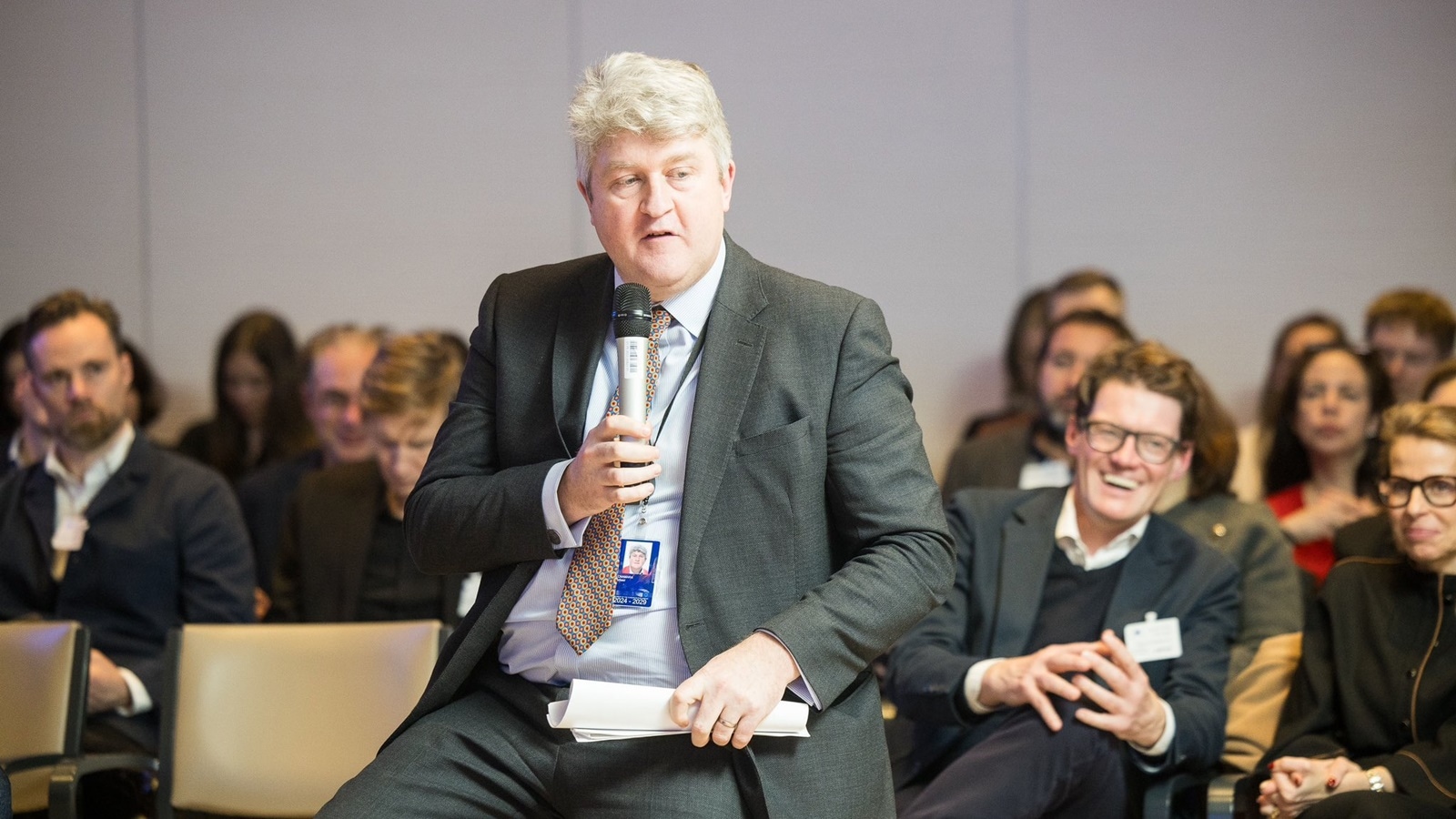 Michael McNamara, member of the European parliament, and co-chair of its AI Working Group. (@McNamaraMEP/X)
It would not be sustainable if developers of artificial intelligence (AI) large language models, who scrape content from the open Internet, did not compensate original creators of that work, such as news publishers, said Michael McNamara, member of the European parliament, and co-chair of its AI Working Group. In an interview with Soumyarendra Barik, McNamara also spoke about the potential for collaboration between India and the EU on AI technology and people transfer, the conversation around over-regulation in Europe, and whether data transfers from the bloc to India would be easy.
Edited excerpts:
In India, and several other countries, news publishers have sued companies like OpenAI over copyright issues. On a fundamental level, do you think the LLM developers, who have scraped the work of original creators, need to compensate the publishers?
It’s a very difficult question, and it’s one that’s obviously a huge issue in Europe as well. There are various working groups developing a code of practice, where it is hoped that developers will sign up to it at the European level. At the moment one of the biggest issues of contention is the copyright issue between copyright holders on the one hand and the large language model developers on the other.
The developers are saying that they can’t possibly publish every single piece of data that they’ve used. In the case of Google, for instance, the entirety of the Internet has been scraped. Nevertheless, they have to comply with the law.
But at a more principled level, taking it back to answer your question, I think it would be wrong to have a situation where people can monetise somebody else’s endeavor and not pay them anything for what they have created. That’s clearly not sustainable.
Do you think the EU AI Act was perhaps a bit premature given the fast changing nature of the AI industry?
I wouldn’t necessarily agree that the law in Europe was premature. I think it will be useful, it is necessary, particularly with regard to high-risk AI. We see more and more computing power, risks evolving, like catastrophic risk, but then on a different level we see a risk of child pornography, and abuse, more generally.
Some EU lawmakers seem to be hinting that the bloc might loosen its regulatory grip for AI. Are we seeing an Europe that is detracting from its image of being a tough tech regulator?
The AI Act bans high risk AI and guidelines on prescribed practice AI have already been published by the European Commission, which will be implemented by the member states from August. But for most small businesses, it will have relatively little impact. I think the Commission is setting up an SME office so that SMEs can go and find out exactly what impact it will have and what they need to do to be compliant. They will be pleasantly surprised that they need to do very little to be compliant, that this is something that will affect high-risk AI, large developers to an extent.
There’s a certain conflation of the GDPR, and in the way it was applied in a very fragmented manner. Different member states adopting slightly different perspectives, that brought its own fragmentation. Frankly, if we see that with AI, it would be catastrophic for Europe in my view. But, lessons have been learnt, and I don’t believe we will see that with regard to AI.
The proposed AI liability directive was withdrawn by the Commission. To Brussels insiders, it wasn’t a huge surprise because it was deadlocked in any event. The European Parliament was in favour of it, but there was no agreement at the Council, so it hadn’t progressed.
The primary conversation at the Paris AI Summit seemed to move away from safety from the first summit that happened in the UK, with ease of business taking centre stage. Broadly do you believe safety will not be the focal point of AI discussions?
I think safety will remain a concern for EU member states, some more than others. India, too, signed the declaration at the Paris Summit, which included calls for AI to be developed safely and the risks to be mitigated. The United Kingdom and the United States didn’t sign the declaration. I suppose the fact that the UK didn’t, came as a surprise to many, given the initial summit that happened in the UK. It appears that both on this issue and data, the new British government seems less concerned about risks and protecting privacy and protecting data rights than the previous Tory government.
India and EU are resuming crucial trade discussions, where AI and chips are expected to feature. From your vantage point in Brussels, what potential areas of collaboration do you see between EU and India on AI – in terms of technology, regulations, and people?
India and Europe seem to share values around openness, and respect for individual rights. There is clearly a huge capacity for trade and also for data sharing, etc. because nobody, I think, sees India as a threat to European values. Equally, I think the degree of hostility that’s developed between Europe and China is deeply unhelpful. Just because you don’t agree with somebody, doesn’t necessarily make them your enemy. And that seems to be an approach which has grown in Europe, one I don’t understand and one that worries me, if I’m to be critical on the European side.
But the way India has maintained its own course, sort of a middle course in the world,is something that I find laudable and very admirable. And I think that is clearly paying dividends now, along with, of course, the huge amount of economic progress the state is making, particularly, and the human capital that the country undoubtedly offers.
More specifically, do you see a possibility of movement of skilled Indians to Europe to work on AI and other cutting edge technologies?
Obviously migration is a very hot topic in Europe at the moment. I think a lot of young graduates leaving a country to work elsewhere is on the face of it a bad news story, but it doesn’t have to be if you can attract them back, though I suppose that is a challenge. It’s a challenge for Ireland, it’s a challenge for India, it’s a challenge for every country.
Data transfers from Europe to other jurisdictions is always tricky given the GDPR and its adequacy requirements. The EU and the US have not been able to agree on a system that works so far. Why would it be any easier for India?
In the cases which challenged the adequacy agreements with the US, the court looked very much at what would happen, what was the legal regime there, and I suppose in the absence of legislation that becomes more difficult but that’s a sovereign matter. The Court of Justice of the European Union has looked in detail and has displayed caution with regard to data transfer agreements. One would expect them to adopt a similar approach if reviewing any future agreements.