Journalism of Courage
 3 min read


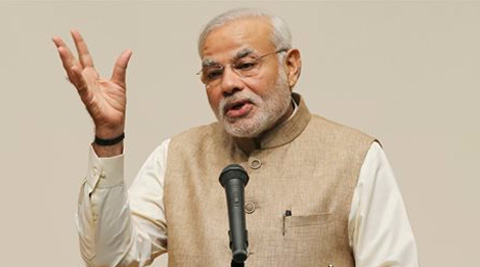
Prime Minister Narendra Modi has asserted that India is not standing in the way of a rule-based global trade agreement at the World Trade Organisation (WTO), but said it cannot sacrifice the interests and food security of the poor and the farmers.
As per a statement issued by the PMO on Tuesday after Modi’s meeting with Director General of the Food and Agriculture Organization (FAO) Jose Graziano da Silva, Modi sought partnership with the FAO for capacity-building in food storage.
He suggested, the statement said, that some portion of such capacity addition brought about by the FAO’s efforts through international financial institutions, could be earmarked for the food and nutritional requirements of the poorest countries.
This comes in the backdrop of India’s near isolation at WTO when its stance on linking the issue finding a permanent solution to the food security issue with the trade facilitation agreement (TFA) led to the breakdown on talks for signing of a TFA protocol by the July 31 deadline.
TFA was meant to ease global customs rules and add $1 trillion to the global economy in addition to creating 21 million jobs.
India had then expressed concerns that the developed countries are not serious about finding a permanent solution on public stockholding for food security of hundreds of millions of poor.
New Delhi had maintained that the Bali package has not collapsed and said it is ready to resume talks this month for arriving at a consensus by this year-end on the outstanding issues.
The Prime Minister described da Silva as one of the champions of the “No Hunger Project” in Brazil, and called upon the FAO
to take the lead in protecting the interests of the poor and farmers at the WTO.
Modi also sought FAO’s cooperation in designing a special campaign targeted at women in India, which would highlight ways to improve nutritional value and food habits.
The Prime Minister discussed a proposal where FAO can contribute towards increasing nutritional value in the Mid-Day Meal scheme for schoolchildren, enhancing production and protein content of pulses, improving production of oilseeds, enhancing milk productivity, and modernization of fisheries sector in India.
fe Bureau | The Financial Express