6 min read


© IE Online Media Services Pvt Ltd



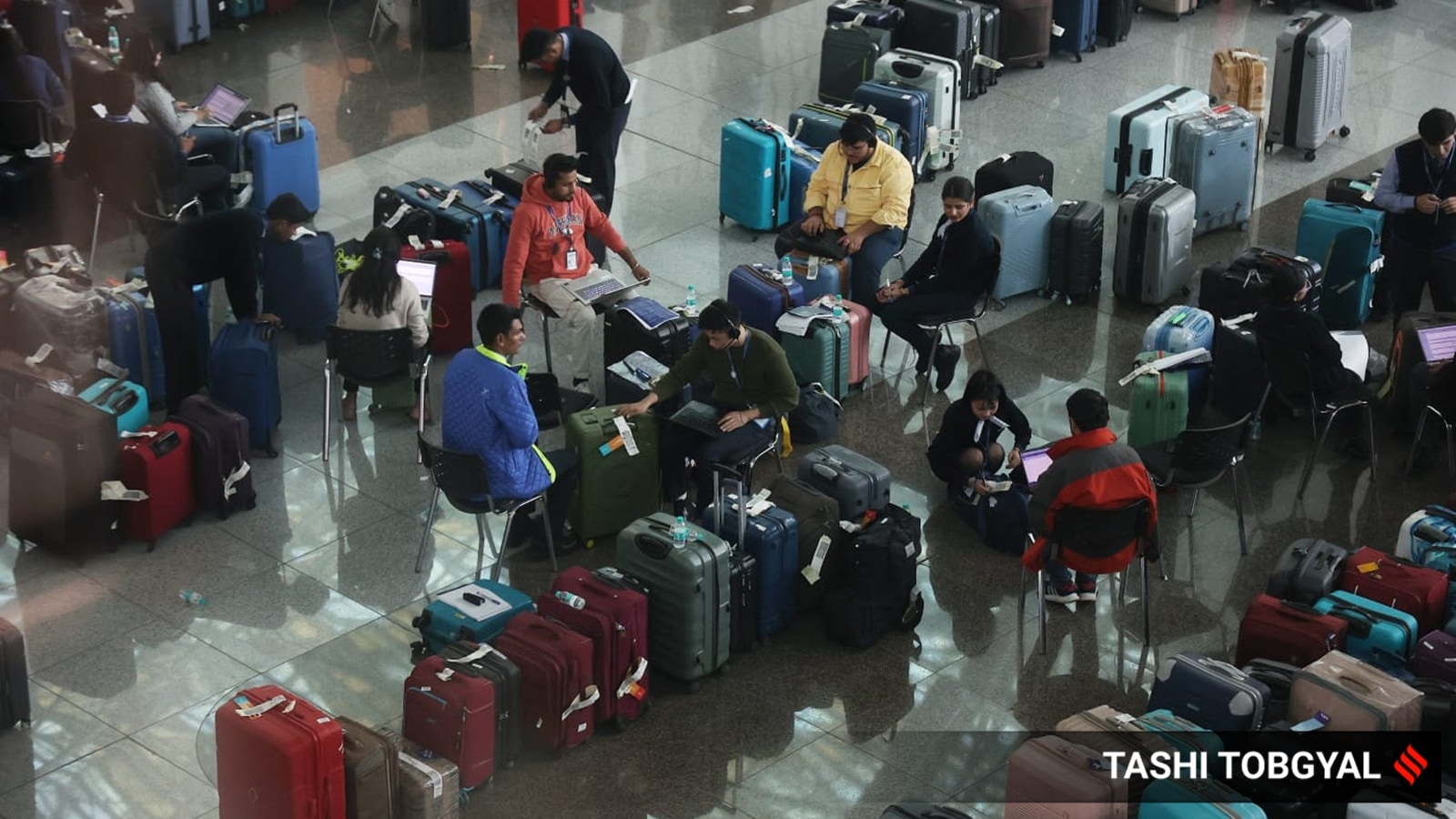 Indigo ground staff help passengers locate their luggage at the IGI airport in New Delhi on Monday. (Express Photo by Tashi Tobgyal)
India’s aviation watchdog Directorate General of Civil Aviation (DGCA) has decided to curtail crisis-hit airline IndiGo’s flight schedule by 5 per cent, or around 115 daily flights, especially on high-demand and high-frequency routes, sources said. The airline has been instructed accordingly and the flights to be cut are being finalised while ensuring that overall air connectivity is not significantly impacted on the routes where the cuts will take place, they said. These slots may be offered to other carriers if they have additional capacity that can be deployed.
IndiGo has been directed by the regulator to submit the revised and truncated schedule by 5 pm on Wednesday (December 10). A further rationalization of IndiGo’s flight schedule could be on the cards and will depend on IndiGo’s daily flight operations, sources indicated.
IndiGo is India’s largest airline with a domestic market share of nearly 65 per cent, and its schedule has over 2,300 daily flights, around 2,150 of which are domestic flights. The airline’s weekly domestic flights had increased to 15,014 in the winter schedule, which took effect from October 26, from 14,158 weekly flights in this year’s summer schedule.
IndiGo, however, faced crew shortages, primarily due to its inadequate preparation for the second phase of the new crew rest and duty norms that took effect on November 1. This led to widespread network-wide disruption in the airline’s operations, leading to scores of flight cancellations on a daily basis since the middle of last week. In view of the disruption, which brought India’s aviation ecosystem to its knees, pilot associations and aviation experts strongly criticised and questioned the DGCA’s earlier decision to allow an increase in flights in the airline’s winter schedule.
The new Flight Duty Time Limitation (FDTL) rules stipulate more rest for pilots and rationalization of their flying duties—particularly late night operations—in a bid to better manage pilot fatigue, which is a key risk to aviation safety. These new norms, which were stipulated in January last year were delayed in their implementation, and took effect in two phase—from July 1 and November 1—with the second phase rollout hitting IndiGo considerably. The new norms meant that airlines either had to have more pilots to maintain their schedule, or shrink the schedule in line with the new requirements.
With the second phase of new FDTL norms taking effect on November 1, IndiGo started feeling the heat with a higher-than-usual number of cancellations and flight delays throughout November. As the delays compounded, with a few other external factors also playing a role, disruptions became widespread over the past few days. According to the DGCA, IndiGo informed the regulator that it had 1,232 flight cancellations in November, 755 of which were due to crew and FDTL-related constraints.
In review meetings, IndiGo also accepted that that the disruptions “have arisen primarily from misjudgement and planning gaps in implementing” the second phase of new FDTL rules, with the airline saying that the actual crew requirement for the new rules exceeded what it had anticipated, as per the DGCA.
The primary reason for this disruption is crew shortages in the wake of the new (FDTL) rules, which IndiGo did not plan for properly. As per the DGCA, IndiGo informed it that the disruptions “have arisen primarily from misjudgement and planning gaps in implementing” the second phase of new FDTL rules, with the airline accepting that the actual crew requirement for the new rules exceeded what it had anticipated.
The massive disruption at IndiGo threw commercial flight operations out of gear all over the country. Given the scale of the disruption, the DGCA on Friday granted IndiGo a temporary one-time exemption from some night operations-related changes in the new FDTL norms for its Airbus A320 pilots. The temporary rollback, which will be in place till February 10, is likely to help IndiGo to get its act together and stabilise operations from heron. The DGCA has also granted a few other temporary relaxations to IndiGo.
But the government and the regulator have turned up the heat on IndiGo with the initiation of an inquiry by a DGCA panel into the disruption. The regulator has also issued show cause notices to the airline’s chief executive officer Pieter Elbers and its chief operating officer Isidre Porqueras. Civil Aviation Minister K Rammohan Naidu has blamed lapses on IndiGo’s part for the disruption and said that strict action will be taken on the basis of the inquiry report to “set an example”. He said that sufficient notice was given by the DGCA to all airlines for the implementation of the new FDTL rules.
In response to show-cause notices issued by the DGCA to IndiGo’s chief executive officer Pieter Elbers and chief operating officer Isidre Porqueras, the airline said that it is realistically not possible to pinpoint the exact cause or causes of the disruption at this stage due to the to the complexity and vast scale of operations, and a comprehensive root cause analysis is being done. But it did share some preliminary contributing factors, whose combination led to the disruption.
“The airline suggests that the disruption resulted from a combination of the following factors, which coincided in lesser or greater measure: 1. Minor technical glitches. 2. Schedule changes linked to the start of the winter season. 3. Adverse weather conditions. 4. Increased congestion in the aviation system. 5. Implementation of and operation under the updated crew rostering rules,” the DGCA said in a release Monday evening.