4 min read

Journalism of Courage



 The Ministry’s notice pointed out that upon successful submission of voluntary disclosure, a Drone Acknowledgement Number (DAN) and an Ownership Acknowledgement Number (OAN) will be issued online.
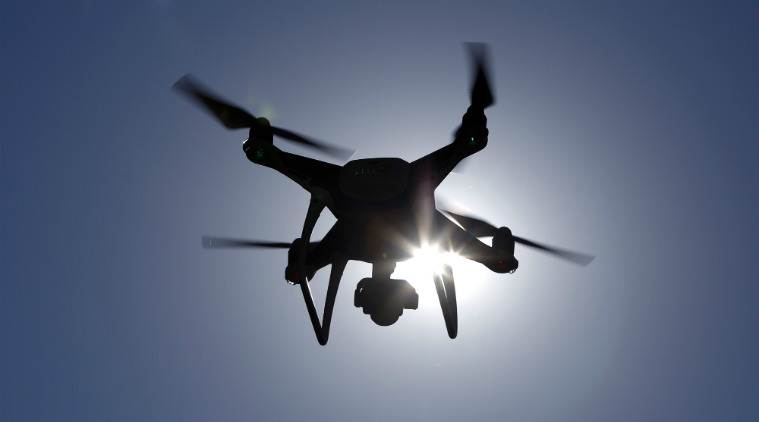
DAYS AFTER a US drone attack killed Iran’s top military commander General Qassem Soleimani, the Civil Aviation Ministry has announced a scheme for voluntary disclosure of “non-compliant” unmanned aerial vehicles (UAVs), or drones, being operated inside India to make up for the lack of a comprehensive database.
“The presence of…drones as well as drone operators has come to the notice of the government, which do not comply with the CAR (civil aviation requirement)… If drones are operated without due permission, the aforesaid process of CAR is violated… In order to facilitate the identification of civil drones and drone operators, a one-time opportunity for voluntary disclosure of such drones and drone operators is now being provided,” the Ministry said in a public notice issued Monday.
Pointing out that the voluntary disclosure scheme was the first step in regulating the drone ecosystem in India, a senior government official told The Indian Express: “Some people say there are 6 lakh rogue drones in the country but we don’t know for sure how many such non-compliant drones are being operated, which is why we are conducting this exercise. We want to bring unregistered drones under the fold.”
The government has asked the owners of unregistered drones to submit the required information to the government by January 31.
The Ministry’s notice pointed out that upon successful submission of voluntary disclosure, a Drone Acknowledgement Number (DAN) and an Ownership Acknowledgement Number (OAN) will be issued online. “However, the DAN or OAN does not confer any right to operate drones in India if it does not fulfill the provisions given in the CAR,” it said.
On Friday, The Indian Express reported that the Centre is likely to tighten drone regulations in the wake of two major global attacks involving UAVs over the last few months — on Saudi Arabian refineries that impacted nearly half of the country’s global crude supply, and the killing of Soleimani in Baghdad.
The Civil Aviation Ministry has finalised the National Counter Rogue Drone Guidelines to lay down an array of counter-rogue measures and guidelines that can be deployed for handling threats to installations from UAVs. The implementation of these guidelines, according to officials, is being expedited in light of the latest developments.
India has a ‘No Permission-No Takeoff’ (NPNT) policy for UAVs, which mandates the drone to be operated only with a regulatory permission received through the Digital Sky Platform. Further, the pilot also needs certification, requiring a remote pilot licence or an unmanned aerial operator permit before operating a drone.
Under regulations issued by the Directorate General of Civil Aviation (DGCA), penalties under the Aircraft Act and the Indian Penal Code have been prescribed for those failing to comply with norms.
“Unregistered drones acquired prior to 2014, when flying of drones was banned in India by the DGCA, are a threat to the country’s security and airspace. We will develop rules as and when technology evolves and would ideally want these aircraft to operate in a regulated manner with a full-fledged flight plan, traffic control, etc,” the government official said.