Premium
This is an archive article published on February 21, 2020

Aadhaar use in PDS ‘not a free lunch,’ finds a study

“Overall, biometric authentication in Jharkhand’s ePOS (electronic Point of Sale machines) was not a free lunch: depending on how it was used, it either did not reduce errors of inclusion or leakage or did so at the cost of increased exclusion error,” it states.

aadhaar, aadhaar port, public distribution system, aadhaar public distribution system, pds system, Indian express Conducted between 2016 and 2018, the study had a sample size of around 4,000 ration cards and was “representative by design” of over 15 million beneficiaries in 17 of the 24 districts of Jharkhand.

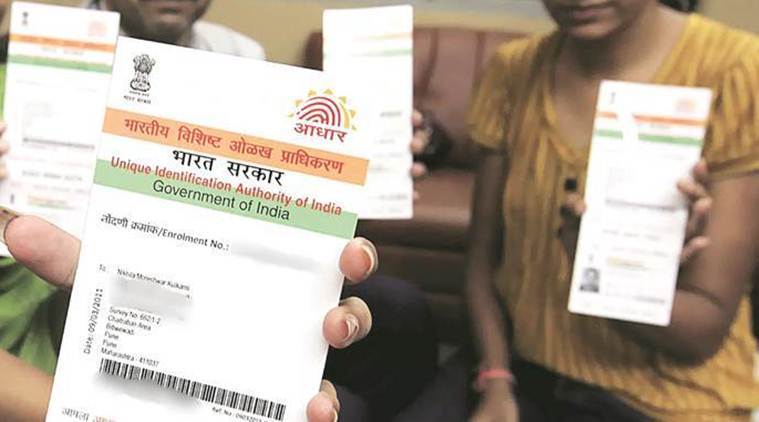
A new study on the use of Aadhaar in the functioning of the Public Distribution System (PDS) in Jharkhand has found that biometric authentication did little to reduce leakages, while increasing the transaction costs for beneficiaries and, more importantly, excluding genuine beneficiaries.

“Overall, biometric authentication in Jharkhand’s ePOS (electronic Point of Sale machines) was not a free lunch: depending on how it was used, it either did not reduce errors of inclusion or leakage or did so at the cost of increased exclusion error,” it states.

Conducted between 2016 and 2018, the study had a sample size of around 4,000 ration cards and was “representative by design” of over 15 million beneficiaries in 17 of the 24 districts of Jharkhand.

Titled ‘Identity verification standards in welfare programs: Experimental evidence from India’, the study was undertaken by three researchers — Karthik Muralidharan and Paul Niehaus (of University of California, San Diego) and Sandip Sukhtankar (of University of Virginia) — and published in US’ National Bureau of Economic Research. It is the first-ever study to have analysed the impact of Aadhaar on a welfare scheme using the Randomised Control Trial (RCT) methodology, popularised by Nobel winners Abhijit Banerjee and Esther Duflo, under the aegis of Jameel Poverty Action Lab (J-PAL).

Reacting to the findings of the study, economist Jean Drèze said: “The J-PAL study reinforces earlier evidence that compulsory biometric authentication severely disrupted the PDS in Jharkhand, with dire consequences for many poor households. Unfortunately, none of this evidence seems to affect the central government’s determination to impose this technology across the country”. The use of Aadhaar for authenticating beneficiaries in welfare schemes like PDS, which provides subsidised food grains to numerous poor Indians, has been a polarising issue since its inception.

Its proponents have argued that use of Aadhaar would reduce identity frauds (also referred to as ‘ghost ration cards’) and provide significant financial savings for the government. Its opponents, like Drèze, however, have long argued that most of the “leakages” from the PDS were essentially in the form of quantity fraud (for example, fair price shop owners delivering just 2 kg of subsidised rice to a beneficiary instead of the 5 kg that one is entitled to), and not identity fraud. In fact, Dreze and other critics have repeatedly argued that use of Aadhaar is not a solution for curbing quantity fraud, and will lead to a high number of deserving candidates being “excluded by design”. That is because of a variety of issues ranging from poor internet connectivity to failure of biometrics, to the inability of the poor to transition to a more technical-demanding system.

The study estimates ghost accounts at just 3 per cent at most. “This is noteworthy as it suggests that the scope for eliminating leakage by removing ghosts (or non-existent households) from the beneficiary list was relatively limited in this setting,” it states.

Story continues below this ad

In their conclusion, the researchers point to the use of smart cards for PDS delivery — a solution preferred by activists like Drèze — instead of Aadhaar. “Our findings … also caution against a simplistic attempt to characterize the effects of new technologies such as biometric authentication without paying careful attention to design details and to the beneficiary experience,” they state.

Udit Misra is Senior Associate Editor at The Indian Express. Misra has reported on the Indian economy and policy landscape for the past two decades. He holds a Master’s degree in Economics from the Delhi School of Economics and is a Chevening South Asia Journalism Fellow from the University of Westminster. Misra is known for explanatory journalism and is a trusted voice among readers not just for simplifying complex economic concepts but also making sense of economic news both in India and abroad. Professional Focus He writes three regular columns for the publication. ExplainSpeaking: A weekly explanatory column that answers the most important questions surrounding the economic and policy developments. GDP (Graphs, Data, Perspectives): Another weekly column that uses interesting charts and data to provide perspective on an issue dominating the news during the week. Book, Line & Thinker: A fortnightly column that for reviewing books, both new and old. Recent Notable Articles (Late 2025) His recent work focuses heavily on the weakening Indian Rupee, the global impact of U.S. economic policy under Donald Trump, and long-term domestic growth projections: Currency and Macroeconomics: "GDP: Anatomy of rupee weakness against the dollar" (Dec 19, 2025) — Investigating why the Rupee remains weak despite India's status as a fast-growing economy. "GDP: Amid the rupee's fall, how investors are shunning the Indian economy" (Dec 5, 2025). "Nobel Prize in Economic Sciences 2025: How the winners explained economic growth" (Oct 13, 2025). Global Geopolitics and Trade: "Has the US already lost to China? Trump's policies and the shifting global order" (Dec 8, 2025). "The Great Sanctions Hack: Why economic sanctions don't work the way we expect" (Nov 23, 2025) — Based on former RBI Governor Urjit Patel's new book. "ExplainSpeaking: How Trump's tariffs have run into an affordability crisis" (Nov 20, 2025). Domestic Policy and Data: "GDP: New labour codes and opportunity for India's weakest states" (Nov 28, 2025). "ExplainSpeaking | Piyush Goyal says India will be a $30 trillion economy in 25 years: Decoding the projections" (Oct 30, 2025) — A critical look at the feasibility of high-growth targets. "GDP: Examining latest GST collections, and where different states stand" (Nov 7, 2025). International Economic Comparisons: "GDP: What ails Germany, world's third-largest economy, and how it could grow" (Nov 14, 2025). "On the loss of Europe's competitive edge" (Oct 17, 2025). Signature Style Udit Misra is known his calm, data-driven, explanation-first economics journalism. He avoids ideological posturing, and writes with the aim of raising the standard of public discourse by providing readers with clarity and understanding of the ground realities. You can follow him on X (formerly Twitter) at @ieuditmisra           ... Read More


Latest Comment
Post Comment
Read Comments
Advertisement
Advertisement
Advertisement
Advertisement
Advertisement