‘The traditions and social movements that upheld compassion, solidarity and ordinary contentment are in retreat’: Writer Pankaj Mishra
Mishra speaks on returning to fiction after two decades with his novel Run and Hide, exploring the inner lives of New India's beneficiaries and the changing nature of filial affections.
Pankaj Mishra’s return to fiction over two decades after his very successful The Romantics (1999) traces the trajectory of neo-liberal aspirations and estrangements through the story of three IIT students — Arun, Aseem and Virendra — and the futures they create for themselves. In Run and Hide, in a reprisal of concerns that run through his non-fiction work, Mishra explores how the confluence of caste, capitalism and globalisation is shaping the emotional and political fabric of the country. In this interview, Mishra, 53, speaks about the freedom afforded by fiction to examine India at the present moment, making sense of the emotional baggage that led up to this moment and the pronounced alienation between generations in the country. Excerpts:
What a writer finds in fiction is the multiplicity of his selves — the different and contradictory ways in which consciousness always registers the world, the ways in which we are always a bundle of shifting possibilities, no matter whatever public persona we project, or whatever ideas we claim.
Did the return to fiction allow you to go to places that non-fiction, perhaps, did not?
Oh, absolutely. The boundaries of non-fiction are small and rigorously policed. Fiction is an unfenced and pathless land. You can roam freely through it, put ideas and memories and images in new combinations and juxtapositions. You can speculate about the deeper motivations of characters, annotate their behaviour, focus on details and evoke atmosphere with much greater liberty than in non-fiction.
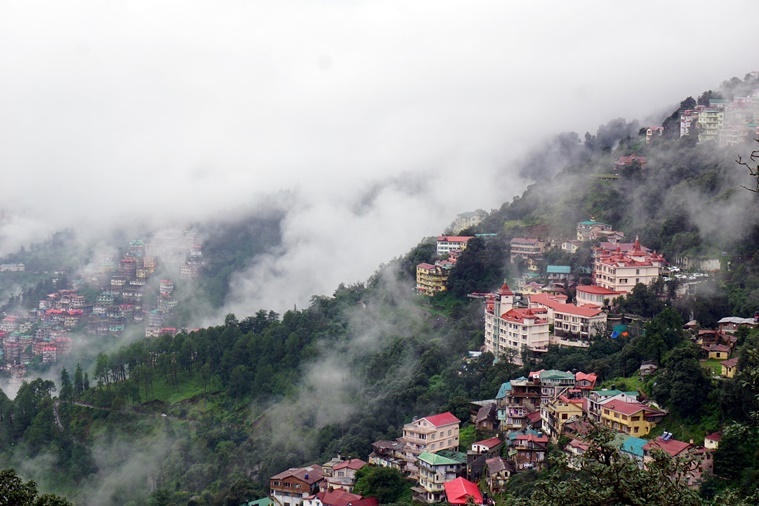
Worlds Apart: Pankaj Mishra’s new novel, largely set in a small hill station in Himachal Pradesh, examines the nature of neo-liberal aspirations and afflictions. (Source: Getty Images)
You have written about the rise of New India extensively in your non-fiction work. Was there anything specific that led you to situate the novel at this particular juncture in time?
Yes, it seems to me that India’s Hindu-nationalisation, which I had written about from the 1990s onwards, is now an inexorable process, and I have little new to say about the frustrations and resentments that made more and more people seek a saviour in (Narendra) Modi. I wanted to explore the emotional pre-history of the present — for instance, the inner lives of New India’s beneficiaries, the class of aspirers who came out of nowhere, starting in the 1990s, and became very rich very quickly. I wanted to explore through their eyes the old Lutyens elite that refused to give up their entitlements until they were forced to by Modi. I also wanted to write about a displaced and now isolated social class — the feudal-aristocratic Muslim elite of the Congress party. Hardly any non-fiction or fiction set in India has dealt with their experiences.
Story continues below this ad
If you were to locate yourself in this novel, would it be through Arun?
Actually, through all the main characters in the novel. I share superficially with Arun a biographical detail — a long stint in Himachal Pradesh and a fascination with the Himalayas. But I feel closer to the female protagonist, Alia.
In Arun’s withdrawal, Aseem’s egotism or Alia’s detachment, did you conceive of a larger pattern of a crisis of masculinity that makes slipping into ambiguous moral territory easy?
Yes, but I see the crisis of masculinity as part of a larger problem of modernity — the way in which men have pursued power and control over others, their natural environment, and, increasingly, outer space. Modern ideologies, whether of socialism, capitalism, white supremacism, Chinese nationalism or Hindutva, have upheld human desire and limitless expansion as a good, overturning the long religious and philosophical traditions that enjoined a deep suspicion of human desire and humility before, among other things, the mysteries of death and the afterlife. By rejecting this immemorial wisdom, we crossed over into a darkly ambiguous moral territory a long time ago. It is not surprising that we face multiple crises — political, economic, social — and cannot even be sure that life on this planet will continue to be viable beyond a few decades.
Story continues below this ad
And, in such a situation, is there any alternative to running and hiding?
Probably not for Arun, the narrator of Run and Hide. A damaged man, he has gone through and exhausted all the secular possibilities — from literature to wealth and sex — that could have sustained his existence and given it meaning. For the rest of us, running and hiding are not morally serious options — they are a form of cowardice. We have to stay and fight to make the future less bleak for ourselves and the generations to come.
When you look at India in 2022, with its heightened inequities, where do you see it poised? What space do women have in it?
Politically, women have increased their participation, and this should be welcomed even if the current beneficiary is Yogi Adityanath, as was the case in the recent UP elections. Emotionally, we can hardly claim to be in a good place. The ideologies glorifying power and its crudest expressions have been internalised by too many of us. And the traditions and social movements that upheld compassion and solidarity and ordinary contentment are in retreat.
One of the most moving sections in the novel was Arun’s later engagement with, and partial discovery of, his mother. Could you tell us about the influence your mother had on you and how it shaped you?
I am glad you asked me this question. I am perplexed when people describe as a ‘book of ideas’ a novel I wrote in order to explore some challenging human intimacies and the painfully complex emotions they provoke. I am fortunate to have parents I feel close to. But I know from other experiences how in India parents and children become strangers to each other when the latter move away from their homes for education and jobs, start to dress, eat and speak differently, and assume membership in a different social class. This happens everywhere to a certain extent, but the feelings of estrangement and contempt and self-loathing among children have been deeper in India where the transition from pre-modern to ultra-modern lifestyles has been so fast. For those with aged parents, the dilemma is: how do you reconnect with the original sources of unconditional tenderness? Especially when the world outside your old home is such a harshly demanding if not soul-killing place. And how do you respond when old or infirm parents who live with you constrict your own life, especially your pursuit of pleasure and freedom? These were some of the questions I wanted to explore in Arun’s relationship with his mother.
Paromita Chakrabarti is Senior Associate Editor at the The Indian Express. She is a key member of the National Editorial and Opinion desk and writes on books and literature, gender discourse, workplace policies and contemporary socio-cultural trends.
Professional Profile
With a career spanning over 20 years, her work is characterized by a "deep culture" approach—examining how literature, gender, and social policy intersect with contemporary life.
Specialization: Books and publishing, gender discourse (specifically workplace dynamics), and modern socio-cultural trends.
Editorial Role: She curates the literary coverage for the paper, overseeing reviews, author profiles, and long-form features on global literary awards.
Recent Notable Articles (Late 2025)
Her recent writing highlights a blend of literary expertise and sharp social commentary:
1. Literary Coverage & Nobel/Booker Awards
"2025 Nobel Prize in Literature | Hungarian master of apocalypse" (Oct 10, 2025): An in-depth analysis of László Krasznahorkai’s win, exploring his themes of despair and grace.
"Everything you need to know about the Booker Prize 2025" (Nov 10, 2025): A comprehensive guide to the history and top contenders of the year.
"Katie Kitamura's Audition turns life into a stage" (Nov 8, 2025): A review of the novel’s exploration of self-recognition and performance.
2. Gender & Workplace Policy
"Karnataka’s menstrual leave policy: The problem isn’t periods. It’s that workplaces are built for men" (Oct 13, 2025): A viral opinion piece arguing that modern workplace patterns are calibrated to male biology, making women's rights feel like "concessions."
"Best of Both Sides: For women’s cricket, it’s 1978, not 1983" (Nov 7, 2025): A piece on how the yardstick of men's cricket cannot accurately measure the revolution in the women's game.
3. Social Trends & Childhood Crisis
"The kids are not alright: An unprecedented crisis is brewing in schools and homes" (Nov 23, 2025): Writing as the Opinions Editor, she analyzed how rising competition and digital overload are overwhelming children.
4. Author Interviews & Profiles
"Fame is another kind of loneliness: Kiran Desai on her Booker-shortlisted novel" (Sept 23, 2025): An interview regarding The Loneliness of Sonia and Sunny.
"Once you’ve had a rocky and unsafe childhood, you can’t trust safety: Arundhati Roy" (Aug 30, 2025): A profile on Roy’s recent reflections on personal and political violence.
Signature Beats
Gender Lens: She frequently critiques the "borrowed terms" on which women navigate pregnancy, menstruation, and caregiving in the corporate world.
Book Reviews: Her reviews often draw parallels between literature and other media, such as comparing Richard Osman’s The Impossible Fortune to the series Only Murders in the Building (Oct 25, 2025). ... Read More