
Opinion History Vs cultural memory? Rajputs also collaborated with British
Although one cannot but agree with Pratap Bhanu Mehta, as a ‘secular’ historian who asserts that Padmavati existed only in legend, let me say that more than being a trap, pitting history against cultural memory will go against the established and respected practices of modern historians’ craft. In fact, cultural memory too has a history.
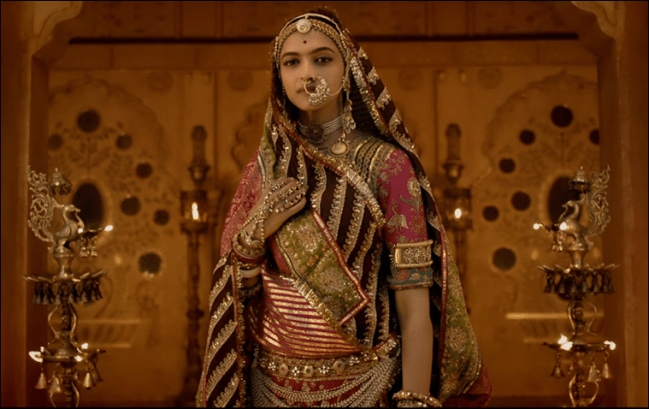



 Padmavati: Myths might not be based on facts, but the fact of their ‘popular’ legitimacy, their circulation and their claims to truth cannot be ignored.
That the Padmavati controversy gave another excuse to the media and their manipulators to keep the public attention away from issues of health, education and livelihood was bad enough. Now two sets of binaries on the issue, coming from opposite sides of the ideological spectrum, have left us completely nonplussed. One sees ‘Padmini’s jauhar as a symbol of the importance for women of their honour’ (Tarun Vijay, Indian Express, 22 November) and cites cherished cultural memory in its favour even as it condemns the secular historians.
The second one also admonishes historians, first for insisting that Queen Padmini ‘is at best a part of cultural memory, not historical truth’, and second for falling into ‘the trap of pitting history against cultural memory’ (Pratap Bhanu Mehta, Indian Express, 23 November).

Although one cannot but agree with much of what Prof Mehta says in his piece, as a ‘secular’ historian who asserts that Padmavati did exist in legends but not in historical fact, I feel obliged to respond briefly to his charge. Let me begin by saying that more than being a trap, pitting history against cultural memory will go against the established and respected practices of modern historians’ craft. In fact, cultural memory too has a history. Myths might not be based on facts, but the fact of their ‘popular’ legitimacy, their circulation and their claims to truth cannot be ignored.
Historians need to juxtapose the myriad versions of mythic tales to reveal the contested character of their truth claims as well as to assert the equally popular sanction for the tradition of contradictory retellings of the same story. As for history, facts have to be ascertained, no doubt. But facts do not speak for themselves. It is only when facts are arranged in a particular order and yoked into a narrative that they reveal a certain pattern.
So just like historical reconstruction, cultural memories too are meaningful only in their multiplicity. This does not mean that constitutional rights should be enforced only after ascertaining their historical sanction. In fact, the issue at stake here is not just the enforcement of legal rights and freedoms alone. It is also critical to counter the ostensibly saner ‘official’ narrative peddled by the ruling BJP that any irreverent portrayal of Rani Padmini in any art form violates the sacred traditions of ‘Hindus’, even though it might not transgress law.
It is equally important to refute the divisive parallel narrative that any favourable portrayal of Allauddin Khilji must hurt the sentiments of Hindus. It is incumbent upon historians and folklorists to point out that there are many, varied, and sometimes contradictory, retellings of the Padmini story. And that the queen from Lanka (Singhaldvip) that some Rajput communities indeed hold in high esteem was first popularized in an allegorical tale composed by a Muslim Sufi saint.
Anyone familiar with the Persian, Sanskrit and Apabhransha/Rajasthani records of the time must point out that the memories of Allauddin Khilji’s invasions over various Rajput principalities vary wildly. If he is portrayed as an aggressor in some, he is also praised for his valour in others. Indeed, in the ‘Kanhadde Prabandh’ Rajasthani text, composed by Padmanabh (in praise of a Rajput prince of Jalor) a full century before Malik Mohammad Jayasi’s ‘Padmavat’, three different manifestations of the Khilji sultan are demonstrated. And in one of them he is even compared to Rudra, or Lord Shiva.
It is no less crucial to expose the fallacy of presuming that Hindus must ‘naturally’ identify with the fate of Rajput and other Hindu rulers, and Muslims must identify with the fate of Muslim rulers. Of course the rights of movie-makers and movie-goers must be defended and those who take the law in their own hands be brought to justice. To leave the matter there, however, is to win the battle and lose the war.
Those who vandalized movie sets, indulged openly in violence and announced cash prizes for murder must be condemned. Moreover, the irony of the aggressor playing the victim card to claim that their sentiments have been hurt must also be exposed. When we are asked to believe in the binary of Muslim aggressor and Hindu honour, is it not significant to point out that in most legends Padmini’s husband, Raja Ratan Sen, was killed by another Rajput prince?
Indeed historians must put in the reminder that most Rajput ruling families, including that of Mewar, collaborated with British colonialists in modern times. They must point out that male patriarchs of ruling dynasties often arranged the marriages of ‘their’ daughters and sisters to strike better political deals. The purpose is simply to alert everyone to the fact that the historical legacy of rulers, whether Hindus or Muslims, is difficult to identify with.
Indeed, the fault line did not lie between Hindus and Muslims – not then, not now. It lay between rulers and ruled, between genders and castes. To glorify ‘jauhar’ and ‘sati’ is to celebrate an extremely regressive medieval sense of women’s honour: it was a woman’s meek submission to the wishes of their male ‘custodians’ that was seen to be most honourable for her in the middle ages. Women who dared to challenge this ‘ideal’ and move out on her own were seen to have disgraced herself. That is why even today, it is not Meera Bai but Padmavati and Roop Kanwar who are often held aloft as the icon of woman’s honour.
If protecting the honour of women means protecting the rights of her family’s men over her body and behaviour, we better question this notion of honour. The Rajasthani retellings of the Padmini story (but not Jayasi’s) depict Prince Ratan Sen as winning the princess of Singhaldvip from her father in a game of chess, along with several thousand horses, elephants and female companions. It should be safe to assume that it was not a very happy situation for women to be ‘taken away’ by a winning ruler, whether from her own community or from another.
It was an ‘honourable’ norm for Rajput Rajas to have several Rajput wives and concubines mostly from ‘lower’ castes, including Muslims. In this, as in so much else, they were hardly different from their Turkish and Mughal counterparts. In the medieval period, Rajput princes took pride in ‘winning their women’ either in real wars or symbolic contests sometimes euphemistically referred as ‘svayamvars’ [literally, choosing one’s husband].
Non-princely households ritually replicated this ideal by making the bridegroom ride a horse, dress like a warrior, and lead a retinue of the extended family’s men in a symbolic attack [‘cha?hai’] over the bride’s family territory. Is it a coincidence that most north Indian Hindu marriages today relive this upper caste male fantasy?
Let us remind ourselves that the state at the centre of these controversies is Rajasthan. Child sex ratio (0-6 years) is one of the worst in Rajasthan, 808 girls (per 1000 boys) as per the 2011 census, down from 909 in 2001. Female literacy stands at 52.12% and Maternal Mortality Ratio (MMR) is among the three worst in the country. While the politician who announced a reward on Deepika Padukone’s head along with Bhansali’s belongs to Haryana, a state which has been struggling with the menace of killing girls in the name of honour. Chillingly, while refusing to take back his open call for the murder of the actress, the politician in question very fondly and painfully referred to her as ‘desh ki beti’. How much longer should India’s daughters wait to be truly acknowledged as equal?
 Share
Share


