5 min read
📣 For more lifestyle news, click here to join our WhatsApp Channel and also follow us on Instagram
© IE Online Media Services Pvt Ltd



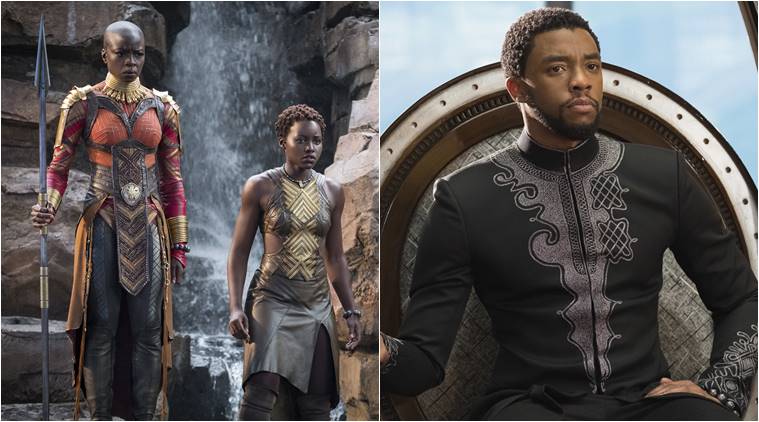 The colours and costumes of Black Panther characters have been inspired by disparate African cultures. (Source: AP)
Caught in the Black Panther fever? While the movie has proven to be a top-grossing film, according to The Hollywood Reporter with its dramatic plots and heart-racing action sequences, the larger-than-life characters are no less iconic in the global socio-cultural scenario.
The movie is not only being viewed as a great addition to the Marvel universe, but is also being called a milestone in the Black culture’s impact on Hollywood. What is also interesting are the elaborate and detailed costumes and accessories used in the film that draw inspiration from various African cultures. Costume designer Ruth Carter used colours and costumes from different African societies and tribes to come up with the characters’ looks, and an interesting Twitter thread by @diasporicblues, aka Waris, whose Twitter bio describes her as “somali • pan-african • intersectional feminist”, shows parallels of some of the iconic looks from the movie and the cultures they have been borrowed from.
The lip plate of the counsellor called the Mursi and Surma lip plate is a ceremonial form of body modification by cultures. They are associated with the Mursi and Surma tribes in Ethiopia.
Mursi and Surma Lip Plates. Lip plates or disks are a form of ceremonial body modification. While many cultures use them they’re best known by the Surma and Mursi tribes in Ethiopia. #BlackPanther #Wakanda pic.twitter.com/gkrfA3AC70
— Waris (@diasporicblues) February 17, 2018
The distinct headdress worn by Queen Ramonda looks like the reed flared hats or “Isicholos” and is known as the Zulu headdress. They are traditionally worn by married women for ceremonial celebrations.
Zulu headdress. Queen Ramonda wears a distinct headdress. It’s reminiscent of the reed Zulu flared hats or “Isicholos.” The Zulu headdresses are traditionally worn by married women for ceremonial celebrations. pic.twitter.com/5YSIqKjkMg
— Waris (@diasporicblues) February 17, 2018
The costumes of the all-women special forces have vivid hues and futuristic ornamentation. These were inspired by the Maasai people of East Africa in Southern Kenya and Northern Tanzania.
Many of the costumes have unique and futuristic ornamentation and details. These were made by emulating styles of the Masai people. The Maasai people of East Africa live in southern Kenya and northern Tanzania. #BlackPanther #Wakanda pic.twitter.com/SjTE7kMGYL
— Waris (@diasporicblues) February 17, 2018
In many scenes, W’Kabi and some tribesman are seen wearing wrapped blankets around their necks. They are called the Besotho blankets, which are originally from the Lesotho people but the designs are reminiscent of the Sesotho tribe.
Basotho Blanket. In several scenes, W’Kabi (Daniel Kaluuya) and others are shown wearing Basotho blankets around their necks. Though the blankets are originally from the Lesotho people the designs are synonymous with the Sesotho people. #BlackPanther #Wakanda pic.twitter.com/XU1RlspXTt
— Waris (@diasporicblues) February 17, 2018
The Ndebele Neck Rings are a prominent part of Shuri and the Dora Milaje’s outfits. The South Ndebele peoples of Zimbabwe/South Africa wear neck rings as a sign of wealth and status.
Ndebele Neck Rings. Shuri and the Dora Milaje have outfits with a prominent collar. The South Ndebele peoples of Zimbabwe/South Africa wear neck rings as part of their traditional dress and as a sign of wealth and status. #BlackPanther #Wakanda pic.twitter.com/3L010CrUAU
— Waris (@diasporicblues) February 17, 2018
Many characters had a red earthy paint all over them. This was inspired by the Himba people of North-West Namibia. Himba people are known for applying a red paste all over their hair and skin.
Many of the costumes have a distinctive red earthy tone. This was done by studying the colors used by the Himba people of north-western Namibia. Himba people are known for applying a red ochre paste, known as “otjize”, to their skin and hair. #BlackPanther #Wakanda pic.twitter.com/K8eqmwNpcg
— Waris (@diasporicblues) February 17, 2018
The distinct masks that appeared in many scenes were taken from the Dogon people. They live in the central plateau of Mali in West Africa. The movie borrowed many traditions from the Dogon people.
There was a lot of inspiration taken from the Dogon people. They live in the central plateau region of Mali, in West Africa. #BlackPanther Wakanda pic.twitter.com/PmcfrDiEWb
— Waris (@diasporicblues) February 17, 2018
Can you draw similar parallels in an Indian movie? Tell us in the comments below.