Journalism of Courage



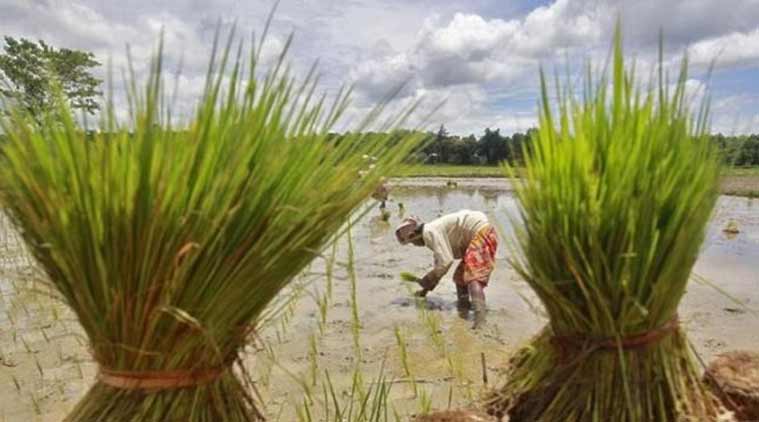 National Agriculture Market (NAM) — the online trading portal for farm produce being launched by Prime Minister Narendra Modi. (Reuters)
Can the National Agriculture Market (NAM) — the online trading portal for farm produce being launched by Prime Minister Narendra Modi today — make a difference to farmers?
On the face of it, yes. The current state-level APMC laws permit the first sale of crops — after harvesting by farmers — to take place only in regulated market yards or mandis. It, thus, restricts the farmer’s universe of buyers to just the traders licensed to operate in the mandi under the concerned APMC’s jurisdiction. Even traders have to procure separate licences to operate in different mandis within the same state. NAM would essentially be a common electronic platform allowing farmers to sell their crops to buyers anywhere in the country and vice versa. The benefits to buyers — be it large retailers, processors or exporters — are obvious, as they can log into the platform and source from any mandi in India connected to it. They don’t need to be physically present or depend on intermediaries with trading licenses in those mandis.
[related-post]
But with farmers, it may not be as simple. Most farmers do not take their crop to the mandis; they sell off to the local arhatiya or produce aggregator even before that. Even the ones who take would offer a trolley load or two at most — hardly enough to excite distant buyers bidding online. To that extent, the possibilities for better price discovery through a widened universe of buyers, both local and online, are quite limited for them.
Farmers can, however, still benefit if they were to find ways for aggregating produce on their own, bypassing the arhatiya and even the local mandi in the process. This is where farmer producer organisations and cooperatives can play a role, by facilitating aggregation and creation of volumes that is intrinsic to the success of any ambitious virtual marketplace experiment.

 2 min read