2 min read





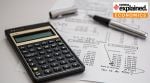
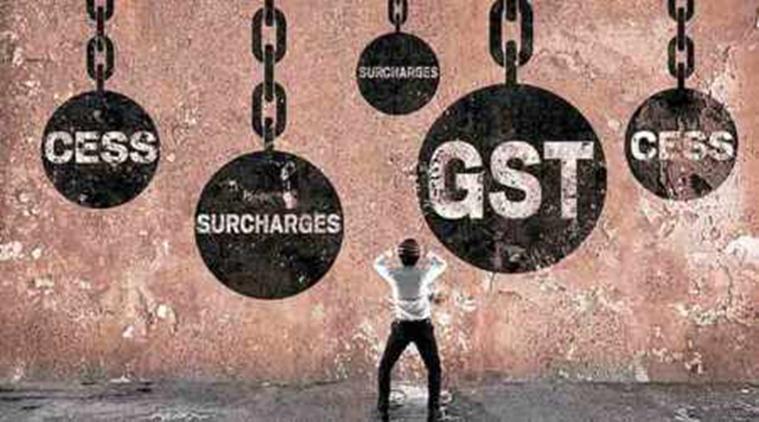 Under the GST regime, tax liability arises when the taxable person crosses the turnover threshold of Rs 20 lakh (Rs 10 lakh for Northeastern and “Special Category” states). (Representational photo)
Under the GST regime, the Centre and states/Union Territories shall simultaneously levy indirect taxes on a common tax base. Within the umbrella of GST, the GST levied by the Centre on intra-state supply of goods and/or services will be called Central GST (CGST), and that levied by states/UTs, State GST (SGST/UTGST). Integrated GST (IGST) will be levied and administered by the Centre on the inter-state supply of goods and services.
This was decided keeping in mind the federal structure of the country, where both the Centre and the states have the powers to levy and collect taxes through appropriate legislation.
The CGST and SGST will be levied simultaneously on every transaction of supply of goods and services except exempted goods and services, goods which are outside the purview of GST, and transactions which are below the prescribed thresholds.
Both will be levied on the same price or value — unlike state VAT, which is levied on the value of the goods inclusive of CENVAT. While the location of the supplier and recipient within the country is immaterial for the purpose of CGST, SGST will be chargeable only when the supplier and recipient are both located within a state.
IGST shall be levied and collected by the Government of India, and such tax shall be apportioned between the Centre and the states.
Under the GST regime, tax liability arises when the taxable person crosses the turnover threshold of Rs 20 lakh (Rs 10 lakh for Northeastern and “Special Category” states). Cross-utilisation of input credit of one component of tax against the other is allowed except utilisation of credit of CGST for SGST and vice versa. For example, input tax credit of CGST is allowed only for the payment of CGST and IGST, while input tax credit of SGST is allowed only for the payment of SGST and IGST.
(Series concluded)