Journalism of Courage
 3 min read


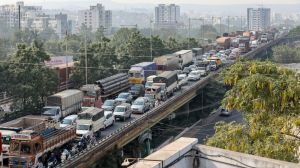
After the Union Minister for Road Transport and Highway Nitin Gadkari said on Sunday that Pune was sitting on a “volcano” vis-a-vis the rising number of vehicles and accompanying pollution and called for a shift to electric buses, PMPML said on Tuesday that for implementation of the suggestion they will have to prepare a plan and set up an infrastructure.
Civic activists, however, said no amount of buses could fulfill the demand and the city should, instead, go for transit oriented development.
PMPML Chairman and Managing Director Tukaram Mundhe said, “We do have a plan to run e-buses, but, since electric buses are not plying anywhere in the country, we will have to rope in the buses and plan accordingly. We need to set up an infrastructure to run the system.”
He reiterated that PMPML was already in the process of purchasing 800 buses, which would be available in its fleet in next one and half year. While agreeing with Gadkari’s contention, activists, however, called for proper planning keeping in mind the future of the city.
Prashant Inamdar, convenor of Pedestrians First, said, “It is true that Pune is currently poised as a recipe for traffic disaster. Therefore, it calls for proper planning before we talk of providing extra floor to space index (FSI), like it is happening on Metro or BRTS routes.”
If extra FSI was provided along Metro routes or BRTS routes, he added, it would led to over-densification. “In such a scenario, it would be difficult to cater to the growing demand for public transport. How many buses can you keep providing ? Today, we have 1,200 buses, in 4-5 years, the number of buses on roads would go upto 5,000. In this case, there will be further clogging of the roads and it would only led to complete traffic disaster,” he said.
Inamdar added that efforts should be made to ensure that there is lesser demand for transportation. “Our focus should be on transit oriented development. Development should be such that demand for transportation is reduced. If workplaces are near residential areas, people won’t need to travel the distance. The should be able to walk down or cycle to their workplaces. Ensuring lesser demand for transportation should be the core principle of city planning,” he said.
“If there is still demand for public transport, it can be fulfilled. But if the demand is extensive, supply will never be able to catch. In such a case, private vehicles will be unavoidable, thereby adding to the existing traffic chaos,” he added.