5 min read
Stay updated with the latest - Click here to follow us on Instagram

Journalism of Courage



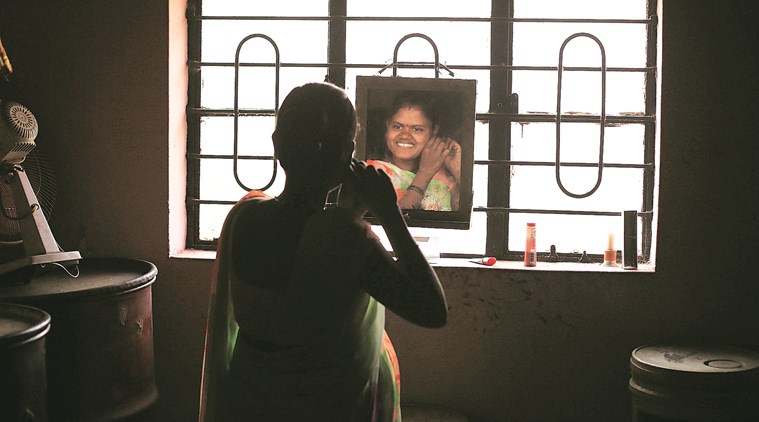 Sanchita at her home in Satara. Express Photo by Janak Rathod
In Satara’s Kamathi village, Sanchita Chavan (22), an expectant mother, recalls her childhood when her name was the bane of her life. “My aunt named me ‘Nakushi’. She believed that my parents would conceive a boy if she named me that. I hated my name as boys in my school would tease me by that name. I would never give such a name to my child,” she said. The community believed that by naming the third girl child ‘Nakushi’, which means ‘unwanted’ in Marathi, a girl would not be born in the family again.
But in 2011, 291 girls shunned this name, which was a constant reminder of their parents preference for a male child, and took up names of their choice. Sanchita was one of these girls. While Sanchita’s name changed, the preference for a male child in the village is yet to dwindle. Seven years down the line, many girls have found acceptance for their new names. Even as they recall the journey from their previous to new names and how their their lives changed in between, economic and social empowerment for them means more than the change of name. Even Sanchita hopes that her child is a boy as her in-laws would want an heir to the family.
Officials from the district collector’s office in Satara, under the then Congress-led administration, had persuaded the families that had a girl named ‘Nakushi’ to change in their names. Bhagwan Prasad, District Health Officer of Satara, who headed the post in 2011 as well, said, “The seven-month-long campaign in 2011, which involved changing their names aimed to end the vicious practice. Families believed that by naming the third girl child ‘Nakushi’, a girl child would not be born in the family. Many families came forward to change the names of their girls, saying it was a step in the right direction.”
“For the first year after the name was changed, it felt like an adventure and a dream,” Asmita Chavan (20) said. She is the third girl child to be born in the family but claims that she is the most-educated among her siblings. Her adventure that began with the name she chose for herself, however, did not last long enough.
“I completed my Bachelors in Arts whereas my sisters and brother are matric (Class 10) qualified. My parents don’t want me to take up a job as they think I have reached a ‘marriageable’ age. My brother does odd jobs to support the house,” she added. Asmita’s grandfather, Gulab Chavan, who named her Nakushi at birth, says he later regretted his decision. “It was the practice then to name the third girl child Nakushi. I feel sorry for it but how does changing her name to Asmita now make any difference? I still cannot pronounce it,” he added. Asmita is still called ‘Nakki’, short for ‘Nakushi’, at home. Still many girls in the area aren’t allowed to work in spite of being educated.
While the girls in Satara do relate to the protagonist of a popular Marathi television show titled Nakushi that ran on TV earlier, the docile, submissive character did not inspire them. In the series, the third girl child named Nakushi was first unwanted by the father and later her husband, they said. But not many of them want their lives to take the course that that of their television counterpart did. “I felt disgust when people called me Nakushi like the character in the show. In real life, I would like to be a fighter unlike her,” Asmita added.
For Aishwarya Pawar (14), the erstwhile Nakushi, who took the name of her favourite movie star, memories of her name change bring tears to her eyes. “It was a painful exercise as she has painful memories associated with the name (Nakushi). She is happy with her new name,” Sabina Bhagwan, her teacher in New English Modern school in Kamathi village said.
Aishwarya now studies in Class XI in the school. Her friends call her the “naughtiest girl” among them but unlike her favourite film star, she does not nurse dreams of fame or glamour. “I have not decided what I will do in life. My two elder sisters have got married and so will I,” she added.
In a the Jayli village, 15 km from Kamathi, Aishwarya Vagade (13) said she is happy for both her sister Sunita and herself for losing the ‘unwanted’ tag. “As we both have different names now and are no more called Nakushi, the confusion has gone. The new names are exciting. However, I still get teased about my old name sometimes,” she recalled.
“The government should go back to these girls and improve their financial condition. We have been asking authorities to financially compensate their families who are from poor social economic background. While their names have changed, they are not empowered, “ said Samindra Jadhav, head of Mahila Vikas Samithi, Satara and a National Congress Party (NCP) worker.
Locals believe the practice of naming the girls Nakushi is becoming a thing of the past. “In some villages outside Satara, girls are still named Nirasha (disappointment) and Dhondu (burden). It is necessary this practice ends at the earliest,” Jadhav added.
Stay updated with the latest - Click here to follow us on Instagram