Journalism of Courage
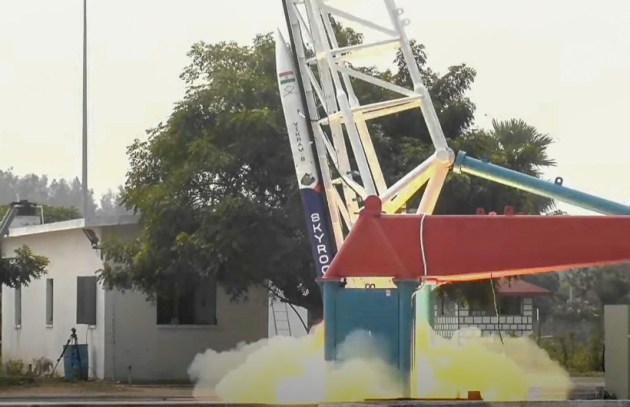
The private sector in India marked its first foray into the space launch market on Friday, when the Vikram-S rocket took-off from the Indian Space Research Organisation’s (ISRO) launchpad in Sriharikota. In the picture, the rocket built by Skyroot Aerospace lifts off from a launch pad. (PTI Photo)
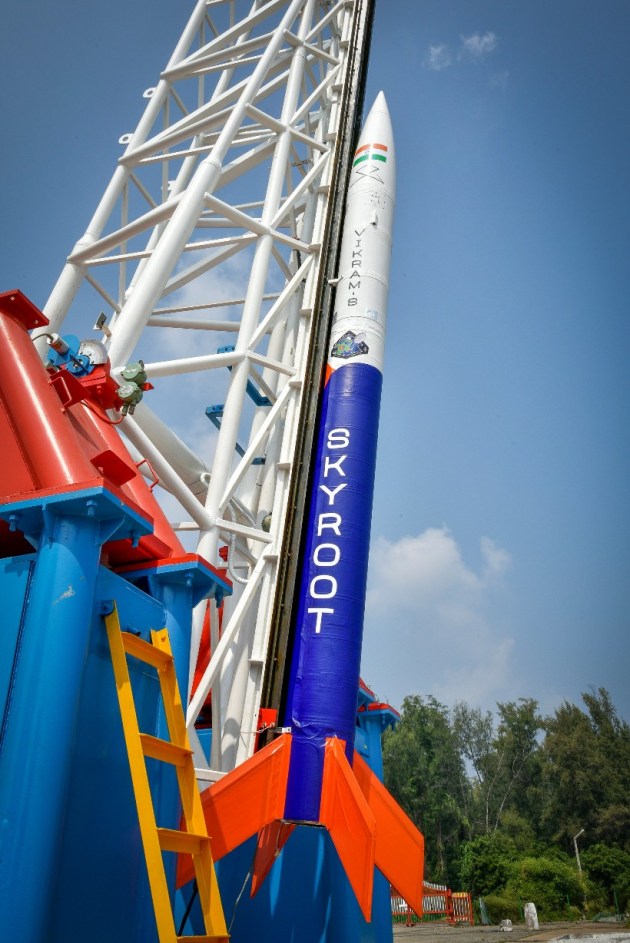
The small 6-metre tall Vikram-S suborbital vehicle, developed by a four-year-old startup called Skyroot Aerospace, reached an altitude of 89.5 km around 2.5 minutes after the launch from the Indian Space Research Organisation’s (ISRO) sounding rocket facility at Sriharikota. (PTI photo)
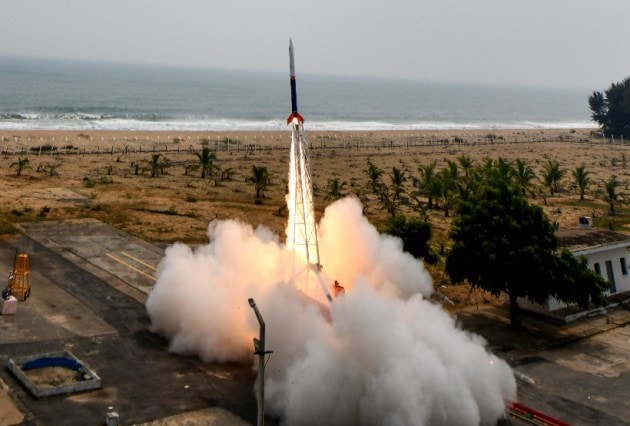
The mission, named Prarambh, would have been considered a success even at an altitude of 50 km, considering its main goal — checking most of the subsystems that will be used in the company’s first orbital flight using the Vikram-1 vehicle, scheduled for next year. (PTI)
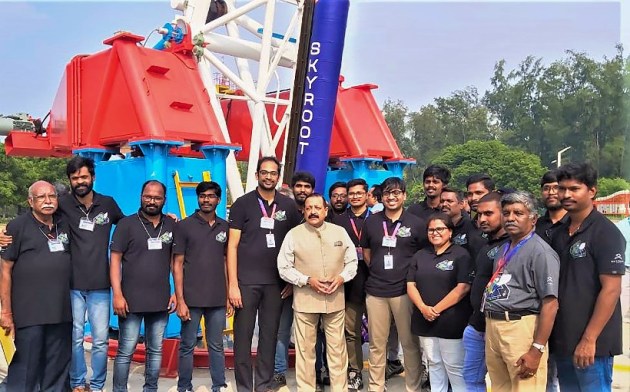
Friday was considered ideal for the launch, pushed by a couple of days owing to weather conditions, because the winds were mild at about 7 to 8 metres per second; the rocket was designed to withstand about 25 metres per second. In this photo, Union MoS for Science and Technology Jitendra Singh poses for a photo with the team of Skyroot Aerospace before the rocket's lift-off. (PTI photo)
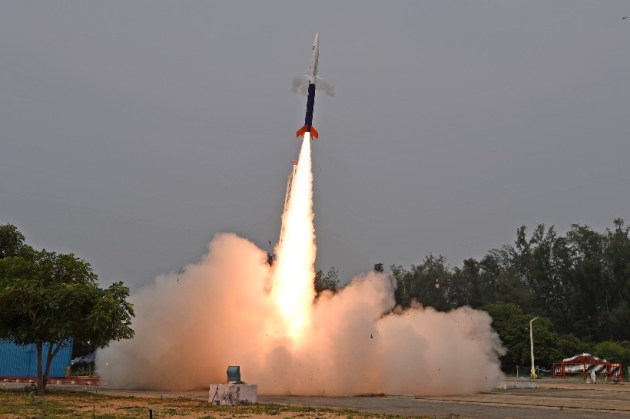
The liftoff was swift, with the rocket spending under a second (0.73 second) on the rails and reaching a speed of Mach 5 — five times the speed of sound — in about 20 seconds. (PTI photo)
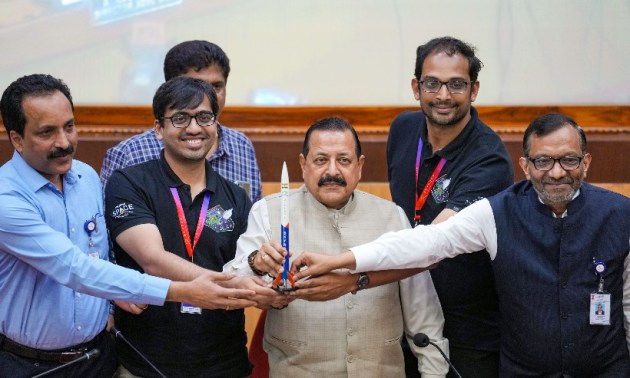
Union MoS for Science and Technology Jitendra Singh with ISRO Chairman S. Somanath, INSPACe Chairperson Pawan Goenka and Skyroot Aerospace co-founders Pawan Kumar Chandana and Naga Bharath Daka poses for a photo with a model of India's first private rocket 'Vikram-S', during a press conference after its successful launch, in Sriharikota. (PTI Photo/R Senthil Kumar)
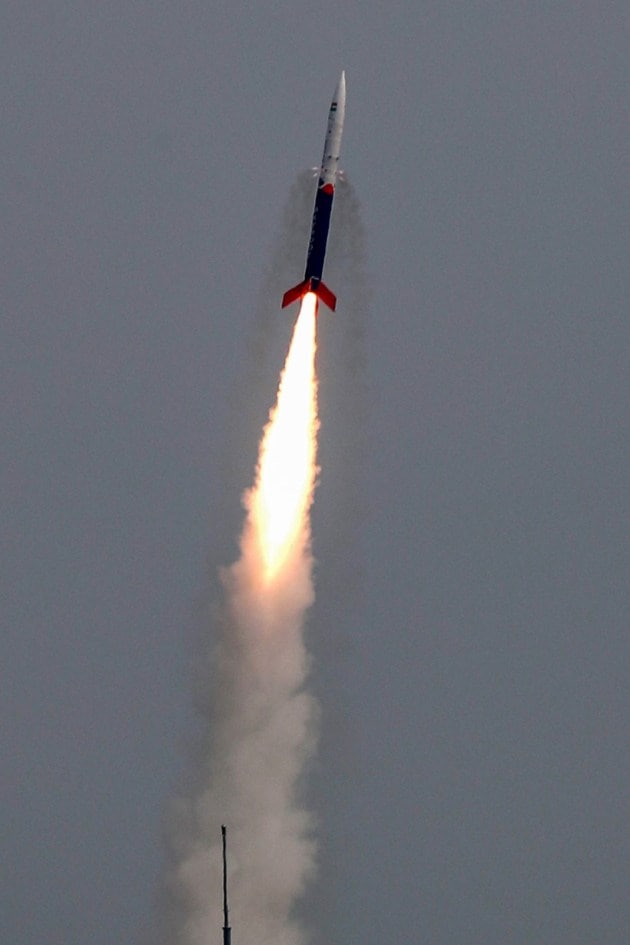
Skyroot is developing a series of rockets, all of them named after Vikram Sarabhai, the founder of the Indian space programme. (PTI photo)