5 min read


© The Indian Express Pvt Ltd



 Sripati Mishra
Accounting for 80 of the Lok Sabha’s 543 seats, and a 403-member Assembly, Uttar Pradesh, with its over 15 crore voters, is India’s most politically significant state. Since January 25, 1950, when the United Provinces was renamed as Uttar Pradesh, the state – through 17 Assembly elections — has determined the course of national politics, throwing up a legion of stalwarts, chief ministers, and Prime Ministers. Of its 21 CMs though, only Yogi Adityanath, Akhilesh Yadav and Mayawati have completed a full five-year term, reflecting the intense volatility of its politics. In the line-up of CMs, also lies the truth about the state’s caste equations. Ten of its 21 CMs have been Brahmins or Thakurs. The remaining include three Yadavs, three Baniyas, one Lodh, one Jat, one Kayasth, one Dalit and one Sindhi. A series looking at UP’s political history and changes through its CMs.
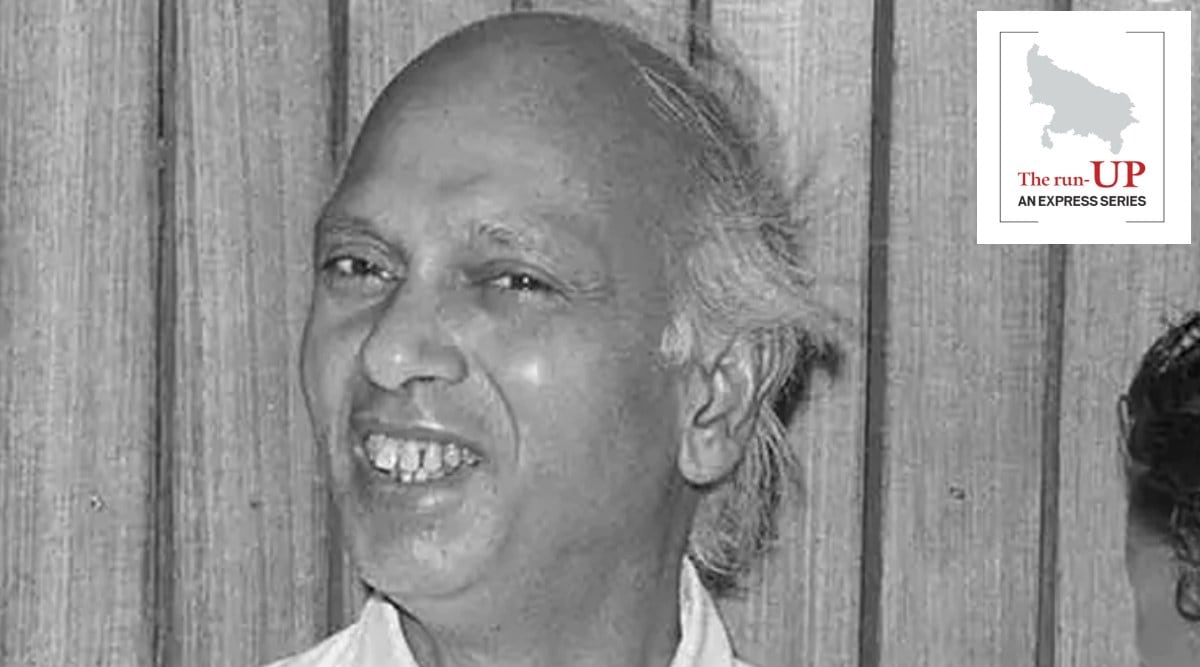
Like Banarsi Das, Sripati Mishra was also the Speaker of the Uttar Pradesh Assembly before becoming the Chief Minister.
Mishra, who was born in a village in Jaunpur on January 20, 1924, had deep interest in politics from his student days. After completing his MA from Banaras Hindu University and LLB from Lucknow University, he, while preparing for the judicial services examination, contested the Lok Sabha elections from Sultanpur district (north)-cum-Faizabad district (southwest) seat on the Socialist Party ticket but lost.
He took a government job as a judicial magistrate in 1954, but resigned in 1958 to practise law in Sultanpur. He returned to active politics in 1962 when he joined the Congress party and got elected to the UP Assembly on its ticket from Kadipur in Sultanpur district.
In 1967 Mishra again won as a Congress candidate, from the neighbouring Jaisinghpur constituency, and was elected as the Deputy Speaker.
With the Congress gripped by crises, Mishra joined Chaudhary Charan Singh’s Bharatiya Kranti Dal (BKD) in 1969. He then contested a by-election from the Sultanpur Lok Sabha seat on the BKD ticket and won. Soon afterwards, he resigned as the MP since he was inducted into the Charan Singh-led UP government as a minister and was elected to the state Legislative Council.
In 1971 Mishra quit the BKD to return to the Congress fold, whose UP government, in 1976, appointed him as the vice-chairman of the State Planning Commission.
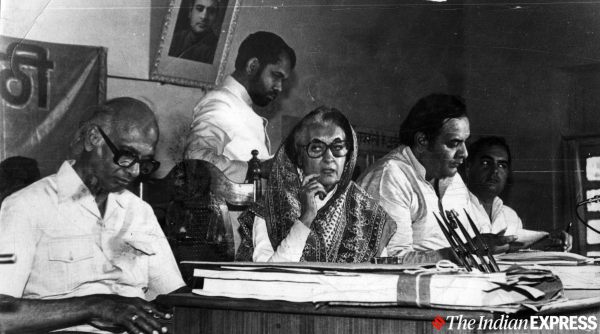 Prime Minister Indira Gandhi presides over a seminar on development of Rai Bareilli on May 1, 1983 at Rai Bareilli. From left: CM of UP Sripati Mishra, Arun Nehru and Rajiv Gandhi. (Express Archive)
In the 1980 UP Assembly polls, Mishra won Sultanpur’s Issauli seat as a Congress nominee and was elected as the Speaker. In the wake of the then CM VP Singh’s sudden resignation, Mishra was picked by the Congress leadership as his successor. He was unanimously elected as the Congress Legislature Party leader on July 18, 1982. He resigned from the Speaker’s post, and on July 19, 1982, he was sworn in as UP’s 13th CM.
A no-confidence motion against the Sripati Mishra government was moved by Janata Party (Secular) member Choudhary Rajendra Singh on September 2, 1983, levelling allegations against the government over “corruption and inefficiency” and the state’s “poor economic condition”.
Moving the motion, Rajendra Singh demanded an inquiry by a high court judge into corruption allegations against some ministers.
In his reply, Mishra said the Lokayukta had sent his report about only one minister and that no charges were proved against him. An inquiry was in progress against another minister, he said.
The cane-growers’ problems were also discussed during the discussion on the no-confidence motion, which was defeated by a voice vote.
However, on August 2, 1984, nearly seven months before the end of the 8th UP Assembly term, the Congress leadership asked Mishra to resign. His chief ministerial tenure could thus last only for about two years. He was succeeded by N D Tiwari, who had also served as the UP CM during the Emergency.
In 1985, Mishra was elected to the Lok Sabha from Machhlishahar seat on the Congress ticket. He decided to leave politics in 1989.
The Congress veteran passed away in Lucknow on December 8, 2002, after a prolonged illness.
In November last year, Prime Minister Narendra Modi had charged that Sripati Mishra was “humiliated” by his own Congress party leaders. Mishra’s son Rakesh Mishra joined the Bharatiya Janata Party (BJP) in 2016. Rakesh was a Congress MLC in late 1980s and had also been an office-bearer in the UP Congress Committee. Rakesh’s brother Pramod has continued to be with the Congress.