Journalism of Courage



 Share
Share


 Greg Biffle climbs out of his car during qualifying for Sunday's NASCAR Sprint Cup series auto race at Phoenix International Raceway, Friday, Nov. 13, 2015 in Avondale, Ariz. (AP Photo/Ralph Freso, File)
 Federal investigators in the US are trying to figure out why a business jet carrying retired NASCAR driver Greg Biffle and six others tried to return to a North Carolina airport just after take-off but crashed into light poles and a tree line short of the runway, killing everyone on board.
The Cessna C550 erupted into a large fire when it hit the ground Thursday morning, about 550 meters from the airport’s runway.
Investigators at the National Transportation Safety Board (NTSB) also don’t know who the lead pilot was. Biffle was one of three people on board with a pilot’s license.
Federal Aviation Administration records show Biffle was rated to fly helicopters, and single, and multi-engine planes. Also on board was pilot Dennis Dutton, Dutton’s son, Jack — who had a private pilot’s license for single-engine planes — and Biffle’s friend Craig Wadsworth.
Dennis Dutton was licensed and rated to fly this model of plane, but even then, he was supposed to fly with a co-pilot. Even though Biffle was rated to fly a multi-engine plane, he wasn’t listed as qualified to fly this particular jet or be a second officer. Dutton’s son, Jack, also had a pilot’s license but was only rated for single-engine planes.
“There is nobody else that has a second-in-command type rating in the airplane. So there’s a question on the crew,” aviation safety expert John Cox said.
The jet had departed Statesville Regional Airport, about 72 kilometres north of Charlotte, 10 minutes earlier, but crashed while trying to return and land.
Flight records indicate the plane was registered to a company run by Biffle. Investigators from NTSB began examining the wreckage on Friday to help determine the cause of the crash and why the plane had returned to the airport in drizzle and cloudy conditions.
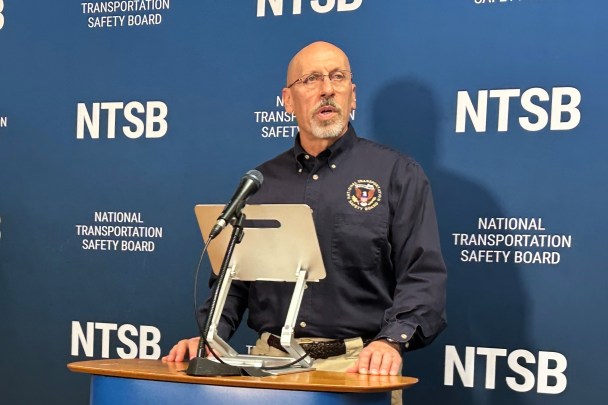
Investigators recovered the cockpit voice recorder, which could provide important clues about what happened. They were not aware of any emergency calls from the jet, NTSB member Michael Graham said at a Friday news conference.
Biffle’s wife, Cristina, and children Ryder, 5, and Emma, 14, were also killed in the crash, the North Carolina State Highway Patrol said.
Cristina Biffle’s mother told People magazine that her daughter sent her a text message saying, “We’re in trouble,” before she didn’t hear from her again.
The plane’s speed and altitude fluctuated significantly during the brief flight, and its path was consistent with a flight crew that experienced an issue and needed to return quickly, said former NTSB and FAA crash investigator Jeff Guzzetti.

At one point, the plane quickly soared from 1,800 feet (550 meters) up to 4,000 feet (1,220 meters) before descending again. Just before the crash, it was only a couple of hundred feet off the ground.
“One thing is certain: They were low. They were too low to make a safe landing on that runway,” Guzzetti said.
It’s unclear why the pilots didn’t make an emergency call, but their top priorities are flying the plane and figuring out where to land — not radioing for help. It’s possible they were too busy trying to control the plane and dealing with the problem.
Cox said it’s also possible that the problem they encountered wasn’t considered an emergency. And the pilots may not have made it a priority to make a radio call with no tower or firefighters at the airport.
 Share
Share