6 min read
Stay updated with the latest - Click here to follow us on Instagram
© IE Online Media Services Pvt Ltd



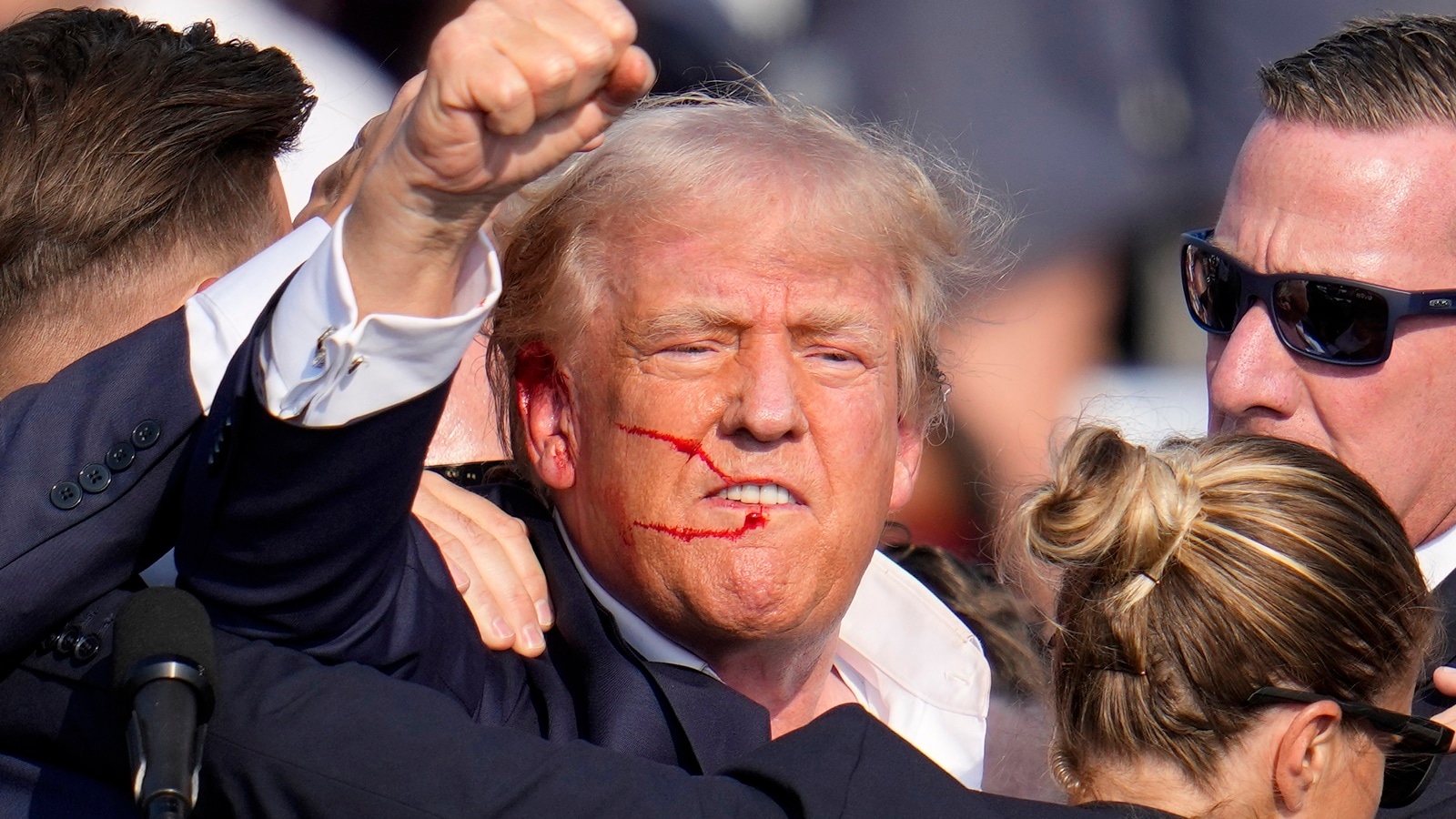 Republican presidential candidate former President Donald Trump reacts following an assassination attempt at a campaign event in Butler, Pa., on Saturday, July 13, 2024. Trump Media surged in the first day of trading, Monday, July 15, following the assassination attempt. (AP Photo)
An independent panel investigating the attempted assassination of Donald Trump at a campaign rally in Pennsylvania criticised the Secret Service for poor communication and failing to secure the building from which the gunman fired.
The panel highlighted broader, systemic issues within the agency, such as a lack of understanding of the unique risks facing Trump and a culture of doing “more with less”.
The 52-page report, released on Thursday, identified specific failings at the July 13 rally in Butler and deeper problems within the Secret Service’s culture. It recommended bringing in new, external leadership and refocusing the agency on its protective mission.
“The Secret Service as an agency requires fundamental reform to carry out its mission,” the authors wrote in a letter to Secretary Alejandro Mayorkas of the Department of Homeland Security, the Secret Service’s parent agency. “Without that reform, the Independent Review Panel believes another Butler can and will happen again.”
One rally attendee was killed, and two others wounded, when Thomas Michael Crooks climbed onto the roof of a nearby building and opened fire as Trump spoke. The former president was grazed by a bullet in the ear before Secret Service agents rushed him off the stage. This shooting, along with another incident in Florida – where a gunman never had a clear line of sight or fired a shot – has led to a crisis of confidence in the agency.
The report, compiled by four former law enforcement officials from national and state government, follows investigations by members of Congress, the Secret Service’s internal investigators, and the Department of Homeland Security’s oversight body.
The panel echoed earlier reports pointing to the failure to secure a nearby building, which provided a clear line of sight to Trump, and identified numerous communication problems between the Secret Service and local and state law enforcement.
“The failure to secure a complex of buildings, some within approximately 130 yards of the protectee and containing numerous positions with high-angle line of sight risk, represents a critical security failure,” the report stated.
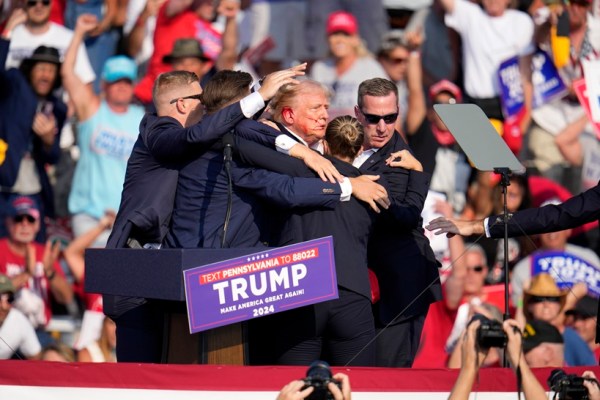 Former President Donald Trump was hurriedly taken off stage during a rally in Pennsylvania after gunshots were heard. Trump raised his hand to his ear in reaction, before being shielded and escorted away by security agents. (AP photo)
The panel also criticised the planning between the Secret Service and local law enforcement, noting that the agency did not ask about securing the building: “Relying on a general understanding that ‘the locals have that area covered’ is simply not good enough, and in Butler, this attitude contributed to the security failure.”
The panel found that there were two separate command posts at the rally: one for local law enforcement and another for the Secret Service. This division created a structural communication breakdown at the highest level.
There were additional communication issues, including the need for the Secret Service to change radio channels as traffic from agents protecting first lady Jill Biden at an event in Pittsburgh was interfering with the Butler rally.
The report also noted that law enforcement personnel were using a “chaotic mixture” of radio, cell phone, text, and email throughout the day. Furthermore, the panel said it was unclear who had ultimate command on the day.
The report delved into the Secret Service’s internal culture, portraying an agency struggling to think critically about its protective mission, especially when it came to safeguarding Trump. Agency personnel operated under the assumption they had to “do more with less,” the report said, pointing out that extra security measures taken after the Butler shooting should have been implemented earlier.
The panel did not find evidence of malicious intent but criticised the overreliance on categorising protectees (such as former presidents, candidates, or nominees) instead of conducting an individual risk assessment.
The panel also highlighted a “back-and-forth” between Trump’s security detail and Secret Service headquarters regarding the number of personnel needed to protect him. Some senior-level staff involved in the rally were criticised for a “lack of ownership”, with one senior agent failing to walk the rally site beforehand or brief state police counterparts on communication plans.
Two agents were singled out for their inexperience. One, responsible for coordinating security, had only been with the Trump detail since 2023 and had minimal experience with site security planning. Another, tasked with operating a drone detection system, had only used the technology at two prior events.
The panel suggested having a unified command post at large events, with representatives from the Secret Service and other law enforcement agencies all in one place. They also recommended using overhead surveillance at all outdoor events, addressing line of sight concerns up to 1,000 yards, and improving training on how to extract protectees from dangerous situations.
The panel called for new, external leadership at the agency and a renewed focus on its core protective mission. It also expressed scepticism about the Secret Service’s continued involvement in investigations, such as those into financial crimes, arguing that the agency should focus on its protective role.
“In the Panel’s opinion, it is simply unacceptable for the Service to have anything less than a paramount focus on its protective mission, particularly when that function is currently suboptimal,” the report said.
The panel included Mark Filip, former deputy attorney general under President George W. Bush; David Mitchell, who held various state and local law enforcement roles in Maryland and Delaware; Janet Napolitano, former homeland security secretary under President Barack Obama; and Frances Fragos Townsend, Bush’s former assistant for homeland security and counterterrorism.
(With inputs from AP)
Stay updated with the latest - Click here to follow us on Instagram