5 min read
Stay updated with the latest - Click here to follow us on Instagram
© IE Online Media Services Pvt Ltd



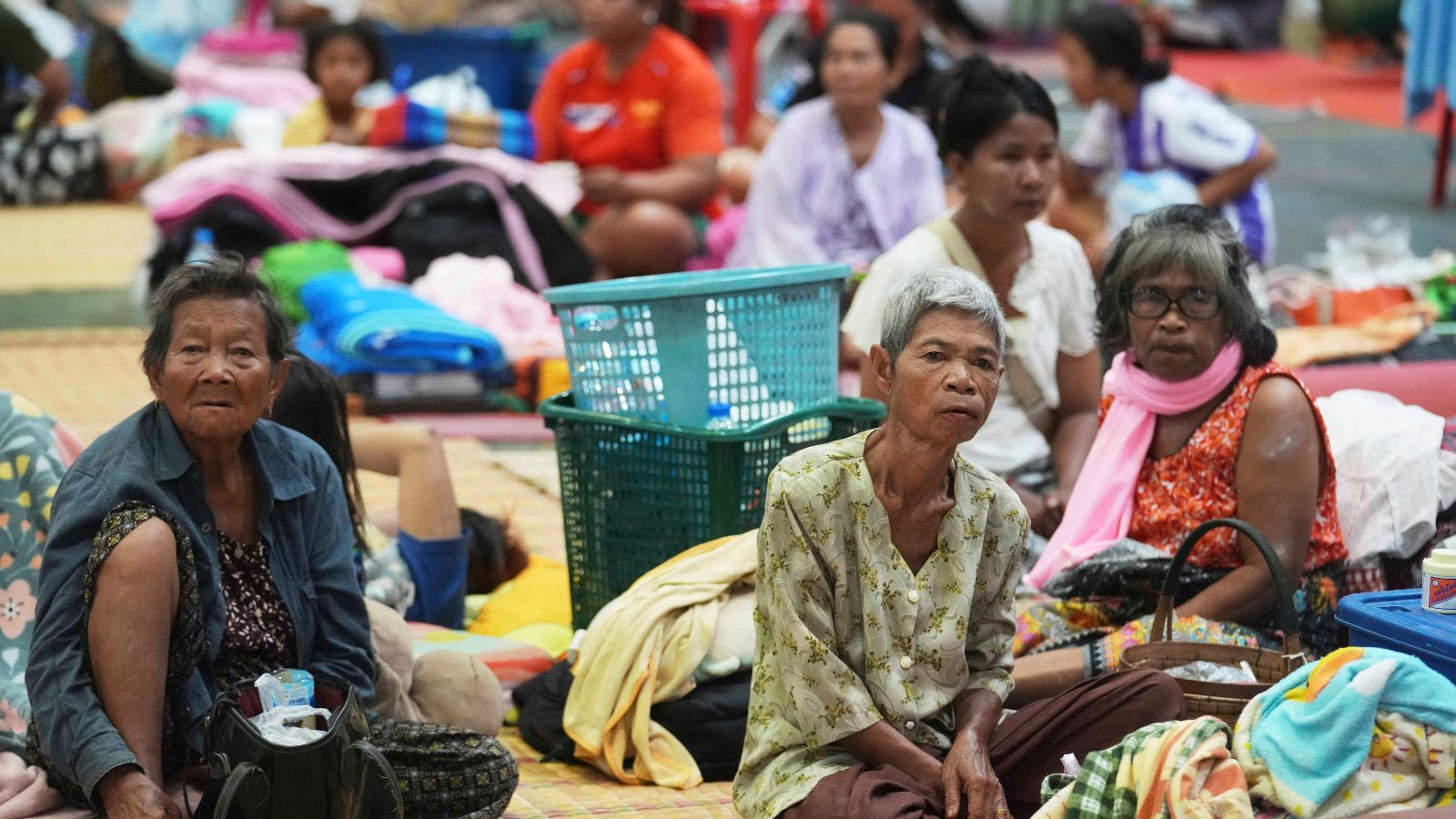 Thai residents who fled homes following clashes between Thai and Cambodian soldiers rest at an evacuation center in Surin province, Thailand. (AP Photos)
Acting Thai Prime Minister Phumtham Wechayachai on Friday warned that rising military tensions with Cambodia could potentially spiral into war. He noted that the ongoing clashes have already involved the use of heavy weaponry.
Clashes between the two countries entered its second day as Thailand reported that Cambodia launched sustained bombardments using artillery and BM-21 rocket systems across disputed border zones. The Thai military said it responded with “appropriate supporting fire in accordance with the tactical situation,” as per Reuters.
Thailand’s Health Ministry confirmed on Friday that the conflict has claimed 15 Thai lives so far, up from previous estimates. Casualty figures from Cambodia remain unclear.
On Thursday, Thailand deployed an F-16 fighter jet in a rare precision strike on Cambodian military targets, marking a sharp escalation. The strikes followed heavy exchanges of artillery fire that had already killed several civilians and displaced thousands along the volatile border.
Cambodia’s Foreign Ministry has condemned the airstrike as “reckless and brutal military aggression,” while Thailand has defended its actions as self-defense in the face of “provocation.” The conflict has prompted over 40,000 Thai civilians to evacuate border areas, as per Reuters‘ figures, many seeking shelter in makeshift bunkers and reinforced shelters.
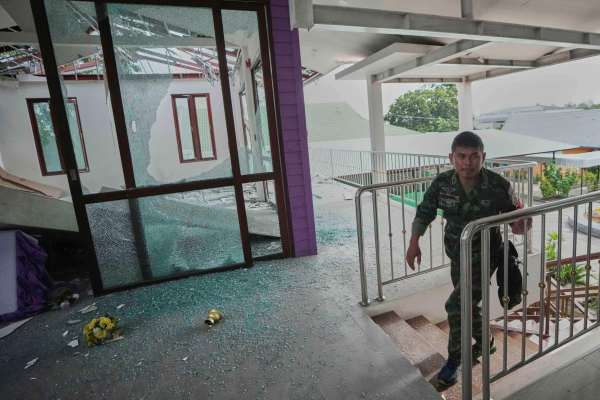 A Thai soldier walks at the Phanom Dong Rak hospital damaged after Cambodia fired artillery shells at Surin Province, Thailand. (AP Photo)
In Surin province, shelling hit a hospital, prompting Thai Health Minister Somsak Thepsuthin to denounce the act as a potential war crime. Video footage showed black smoke billowing from a gas station in Sisaket province, and residents described chaotic scenes as explosions rocked nearby areas.
Cambodian Prime Minister Hun Manet has appealed to the UN Security Council, calling Thailand’s actions “unprovoked and premeditated military aggression.” Thailand insists its military advantage, including its air force, was used for targeted defense.
Neighbouring countries have expressed concern. Vietnam and the Philippines have called for restraint, while China has offered to mediate. The United Nations Security Council is expected to meet Friday to discuss the escalating crisis. The US has called for an immediate cessation of hostilities and urged both countries to protect civilians and seek peaceful resolution.
📌 Tensions had been simmering since May, when a brief shootout between Thai and Cambodian soldiers in a disputed area resulted in the death of a Cambodian soldier. Both countries claimed they acted in self-defense. Despite pledges to de-escalate, the confrontation deepened as each side took retaliatory steps short of open warfare.
📌 A recent trigger was a landmine explosion earlier this week that injured Thai soldiers. Thailand blamed Cambodia for laying new mines near the border, prompting Bangkok to expel Cambodia’s envoy and recall its own ambassador. Cambodia rejected the claim as baseless and retaliated with trade restrictions, banning Thai fuel, food, and media imports.
📌 The ongoing hostilities now span six separate locations along a 209-kilometre stretch of the border, according to Thailand’s Defense Ministry. Initial clashes occurred near the 11th-century Ta Muen Thom temple, straddling Thailand’s Surin province and Cambodia’s Oddar Meanchey.
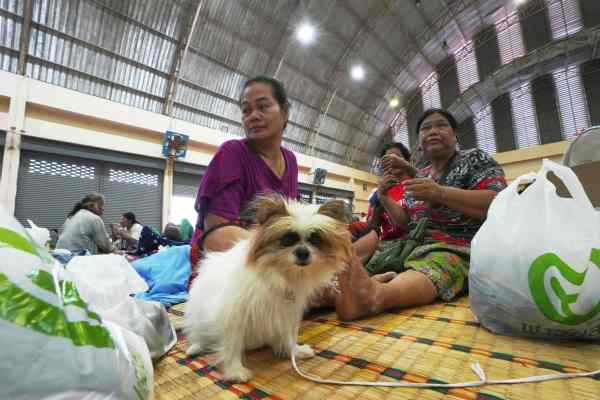 Tensions had been simmering since May, when a brief shootout between Thai and Cambodian soldiers in a disputed area resulted in the death of a Cambodian soldier. (Photo: Thai residents who fled homes at an evacuation centre/ AP)
📌 At the heart of the dispute lies an 817-kilometre land border shaped by colonial-era maps. The most contentious points are near ancient Hindu temples, most notably Preah Vihear and Ta Moan Thom, which both countries claim.
📌 The International Court of Justice (ICJ) ruled in 1962 that Preah Vihear belongs to Cambodia, a decision that has continued to anger many in Thailand. Tensions flared again in 2008 when Cambodia sought to list the temple as a UNESCO World Heritage site, prompting a series of deadly confrontations.
📌 In 2011, after more clashes killed around 20 people, Cambodia again took the case to the ICJ, which reaffirmed its earlier ruling in 2013. This year, Cambodia returned to the ICJ seeking further resolution, but Thailand has refused to recognise the court’s jurisdiction, preferring bilateral negotiations.
The conflict has caused deep political ripples in Thailand, destabilising Prime Minister Paetongtarn Shinawatra’s coalition government.
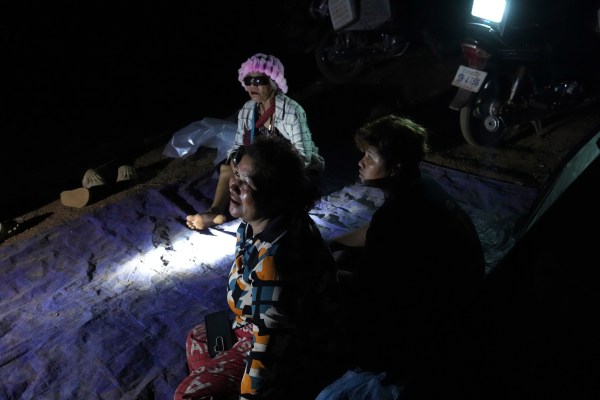 Cambodians take refuge at the Batploa primary school in the Oddar Meanchey province, Cambodia. (AP Photo)
Earlier this month, Paetongtarn was suspended from office pending an ethics investigation after a leaked phone call with former Cambodian leader Hun Sen. In the call, she referred to Hun Sen as “uncle” and criticised her own military. The backlash was swift.
Paetongtarn’s Pheu Thai party saw its key coalition partner, the Bhumjaithai Party, withdraw support, citing her “softness” toward Cambodia.
Protesters took to the streets, demanding stronger action. Acting Prime Minister Phumtham Wechayachai has since taken charge, vowing to defend Thailand while emphasising the need for peaceful dialogue. “We remain committed to peaceful means,” Phumtham said on Thursday, reported Reuters. “But what happened was a provocation, and we had to defend ourselves.”
(With inputs from Reuters, AP)
Stay updated with the latest - Click here to follow us on Instagram