Journalism of Courage



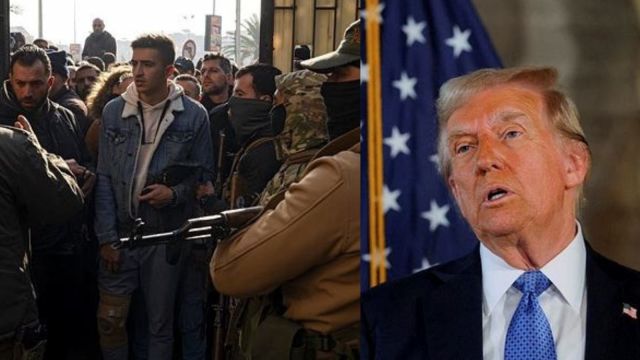 US President-elect Donald Trump is shaking up Nato’s defence spending landscape, while the country has significantly intensified its military campaign in Syria, aiming to prevent the resurgence of ISIS. (Reuters, AP Photos)
Welcome to this week’s roundup of key global events and developments shaping politics, economics, and society. From groundbreaking policy shifts and diplomatic manoeuvres to emerging stories of resilience and upheaval, we bring you the latest updates and insights. For Indian audiences, understanding these developments is not just about keeping informed — it’s about identifying the ripple effects that could influence India’s foreign policy and its position in an increasingly fragmented world.
Whether it’s a headline grabbing the world’s attention or an underreported issue with far-reaching consequences, we aim to provide a clear, concise, and comprehensive overview of what matters most.
US President-elect Donald Trump is shaking up Nato’s defence spending landscape. Reports indicate Trump’s team has told European officials that he intends to demand member states raise their defence budgets to 5 per cent of GDP — more than double the current 2 per cent target, which only 23 of Nato’s 32 members currently meet.
This dramatic increase comes as Nato allies are already debating a rise to 3 per cent during their upcoming leadership meeting in June. Key members like France, Germany, and the UK are wary of the fiscal strain this could impose. The proposed hike would likely necessitate significant policy adjustments, particularly for countries already grappling with tight budgets.
Trump’s approach to NATO has long been controversial.
During his initial White House campaign, he threatened to withdraw US support for allies unless they contributed more to defence. He also proposed cutting off aid to Ukraine and pushing Kyiv into immediate peace talks. However, sources now suggest that while Trump remains opposed to Ukrainian Nati membership, he plans to continue US military aid to Ukraine, believing it aligns with his vision of achieving “peace through strength.”
This shift provides cautious optimism for European allies. German Chancellor Olaf Scholz, after a recent call with Trump, expressed confidence that “the US and Europe will continue their support to Ukraine.” Meanwhile, British officials have visited Washington to gauge Trump’s potential policy directions, underlining the high stakes for Nato’s future cohesion.
For Nato, the stakes go beyond budgets. Trump’s insistence on burden-sharing reflects his broader scepticism of multilateral commitments, but his readiness to maintain arms supplies to Ukraine hints at a pragmatic streak. As European capitals brace for these demands, the question remains: how much unity can Nato muster under such pressure?
New revelations highlight Syrian President Bashar al-Assad’s reliance on Moscow during his nation’s darkest days. Between 2018 and 2019, Assad’s central bank reportedly airlifted over $250 million in cash directly to Moscow’s Vnukovo airport. These funds were deposited in sanctioned Russian banks, underscoring the deepening financial and military ties between Syria and Russia.
The Financial Times uncovered these transactions, showing that while Syria’s economy struggled under the weight of war, Assad’s regime prioritised payments to its primary military ally.
The cash transfers coincided with significant Russian involvement in Syria’s war effort. Russian military advisers bolstered Assad’s forces, while Moscow-based companies integrated into Syria’s critical phosphate supply chains. Despite Assad’s dependency on Kremlin support, critics, including former regime loyalists, view these actions as prioritising personal survival over national sovereignty.
The financial arrangements go deeper. Assad’s relatives and close associates reportedly moved substantial assets into Russia during this period. First Lady Asma al-Assad, with her background as a JP Morgan banker, played a pivotal role in consolidating regime control over Syria’s shattered economy. Meanwhile, Assad’s allies were linked to illicit networks, including drug trafficking and fuel smuggling, as noted by US sanctions authorities.
In addition to direct cash shipments, Assad’s regime benefited from Iranian-backed schemes funnelling hard currency into Syria. Figures like Yassar Ibrahim, Assad’s economic adviser, leveraged companies tied to Iran’s Revolutionary Guard Corps to move millions of dollars for the regime’s benefit.
These financial manoeuvres demonstrate Assad’s strategy to survive and consolidate power, even as his government faces widespread accusations of looting national wealth and engaging in criminal enterprises. For Russia, the partnership ensures a foothold in Syria and strengthens economic and military ties, further complicating the regional and global power dynamic.
The United States has significantly intensified its military campaign in Syria, aiming to prevent the resurgence of ISIS amid the chaos left by the fall of Bashar al-Assad’s regime. In a sharp escalation, US forces have conducted over 75 airstrikes in the past two weeks, targeting ISIS leaders and training camps. These strikes have resulted in the deaths of at least 12 militants and have hit areas previously under the control of Syrian regime forces and Russia, one of Assad’s key international allies.
This surge in military activity coincides with the regime’s collapse, following Assad’s December 8 flight to Moscow as rebel forces captured Damascus. The rapid developments underscore US concerns about the risks posed by ISIS’s ability to exploit the current instability.
General Michael Kurilla, head of the US Central Command (CENTCOM), visited northeastern Syria during this critical period. His visit included discussions with American troops and the Syrian Democratic Forces (SDF), Washington’s primary partner in the fight against ISIS. The SDF, a Kurdish-led coalition, has played a pivotal role in combating ISIS but faces increasing threats from regional actors, complicating the United States’ efforts to stabilise the region.
National Security Advisor Jake Sullivan articulated the administration’s worries, emphasising the stakes of the current moment. “The single biggest risk I see is that ISIS comes back because ISIS wants to take advantage of any vacuum or instability in Syria following a civil war. I will not sugar-coat it. This is a real threat — the threat of jihadism and terrorism returning in Syria,” he said.
Syria remains a critical node in ISIS’s global operations. The country was once part of the group’s self-proclaimed “caliphate,” which at its peak stretched across large parts of Iraq and Syria, controlling territory roughly the size of Britain. While international coalitions dealt a decisive blow to ISIS by 2019, dismantling its territorial base, the group has adapted, operating as an underground network with sleeper cells spread across the region.
CENTCOM estimates there are still about 2,500 active ISIS fighters across Iraq and Syria. These militants operate mainly in isolated pockets of central and eastern Syria, often in areas previously controlled by the Assad regime and Russian forces. This year, ISIS has become increasingly active, with CENTCOM reporting 153 attacks in the first half of the year alone — double the activity recorded in the same period in 2023. Analysts, however, believe the situation may be even graver.
Charles Lister, a senior fellow at the Middle East Institute, noted in a recent report: “The reality is far worse than CENTCOM suggests. ISIS claims only a fraction of its attacks, and we’ve seen an increase in the scale and complexity of their operations, including coordinated ambushes, assassinations, and assaults on oil and gas facilities.”
Adding to the complexity of the situation is the fractured landscape of post-Assad Syria. The fall of the regime has created a power vacuum that multiple actors are vying to fill. Turkey, one of the most influential foreign players in Syria, has declared that its strategic priority is to neutralise Kurdish militants associated with the SDF. Turkey’s military presence in northern Syria and its support for the Syrian National Army (SNA) — a coalition of rebel groups — have brought Ankara into direct conflict with the SDF, even as both claim to be fighting ISIS.
The United States, with approximately 900 troops stationed in Syria, finds itself in a precarious position. It must balance its alliance with the SDF, crucial in countering ISIS, with its obligations to Turkey, a Nato ally. As local and international actors pursue their conflicting interests in Syria, the US risks being drawn deeper into a complex web of rivalries while attempting to prevent a resurgence of jihadist forces.
In a high-profile act of targeted violence, Lieutenant General Igor Kirillov, a senior Russian military figure, was assassinated in Moscow this week. Kirillov, head of Russia’s Radiation, Chemical, and Biological Protection Forces, was killed along with his assistant Ilya Polikarpov when an explosive device concealed in an electric scooter detonated outside his apartment building.
The assassination has been linked to Ukraine, with Russian authorities detaining a 29-year-old Uzbek man they claim was recruited by Ukrainian intelligence services. In a video released by the Russian Federal Security Services (FSB), the suspect, appearing handcuffed and visibly shaken, stated he had been offered $100,000 and a European passport to carry out the attack. The explosive device was reportedly delivered to him in Moscow, and he used a car equipped with a live-streaming camera to coordinate with organisers based in the Ukrainian city of Dnipro.
While Ukraine’s Security Service (SBU) has not officially claimed responsibility, Ukrainian officials have called Kirillov a “legitimate target,” accusing him of overseeing the use of chemical weapons during Russia’s invasion of Ukraine. Just a day before the assassination, Ukraine charged Kirillov in absentia for alleged war crimes, including the deployment of banned chemical agents. Moscow has dismissed these allegations, maintaining that it destroyed its chemical weapons stockpiles in 2017 in compliance with international treaties.
Kirillov’s killing marks the most significant assassination of a Russian military figure on home soil since the full-scale invasion of Ukraine began in February 2022. The attack has sent shockwaves through Moscow, with President Vladimir Putin expressing his condolences and Russian officials vowing to bring those responsible to justice. The Russian Foreign Ministry has announced plans to raise the matter at the United Nations Security Council, framing the incident as a terrorist act orchestrated by Kyiv.
Images from the blast site reveal the devastating impact of the attack. The entrance to Kirillov’s apartment building in southeastern Moscow was badly damaged, with scorch marks on the walls and shattered windows. Two body bags were seen near the site, underscoring the deadly precision of the strike.
Kirillov’s death comes at a time of heightened tension and escalating violence in the ongoing conflict between Russia and Ukraine. While Ukraine has not directly confirmed involvement, the assassination highlights a new phase in the war, where high-profile figures on both sides are increasingly targeted.
Kirillov’s role in the alleged use of chemical weapons made him a controversial figure internationally. The UK had previously sanctioned him over accusations of war crimes, and Ukraine’s SBU claims that under his leadership, Russia used chemical agents over 4,800 times during the war. Moscow denies these charges, framing Kirillov as a patriot and victim of Ukrainian aggression.
The attack also underscores the growing sophistication and reach of Ukrainian intelligence operations. If confirmed, it represents a significant escalation in the shadow war between the two nations, signalling Kyiv’s willingness to take the fight directly to Russia’s leadership. As the Kremlin scrambles to respond, the assassination could further escalate the conflict, both on the battlefield and beyond.

 11 min read