Journalism of Courage



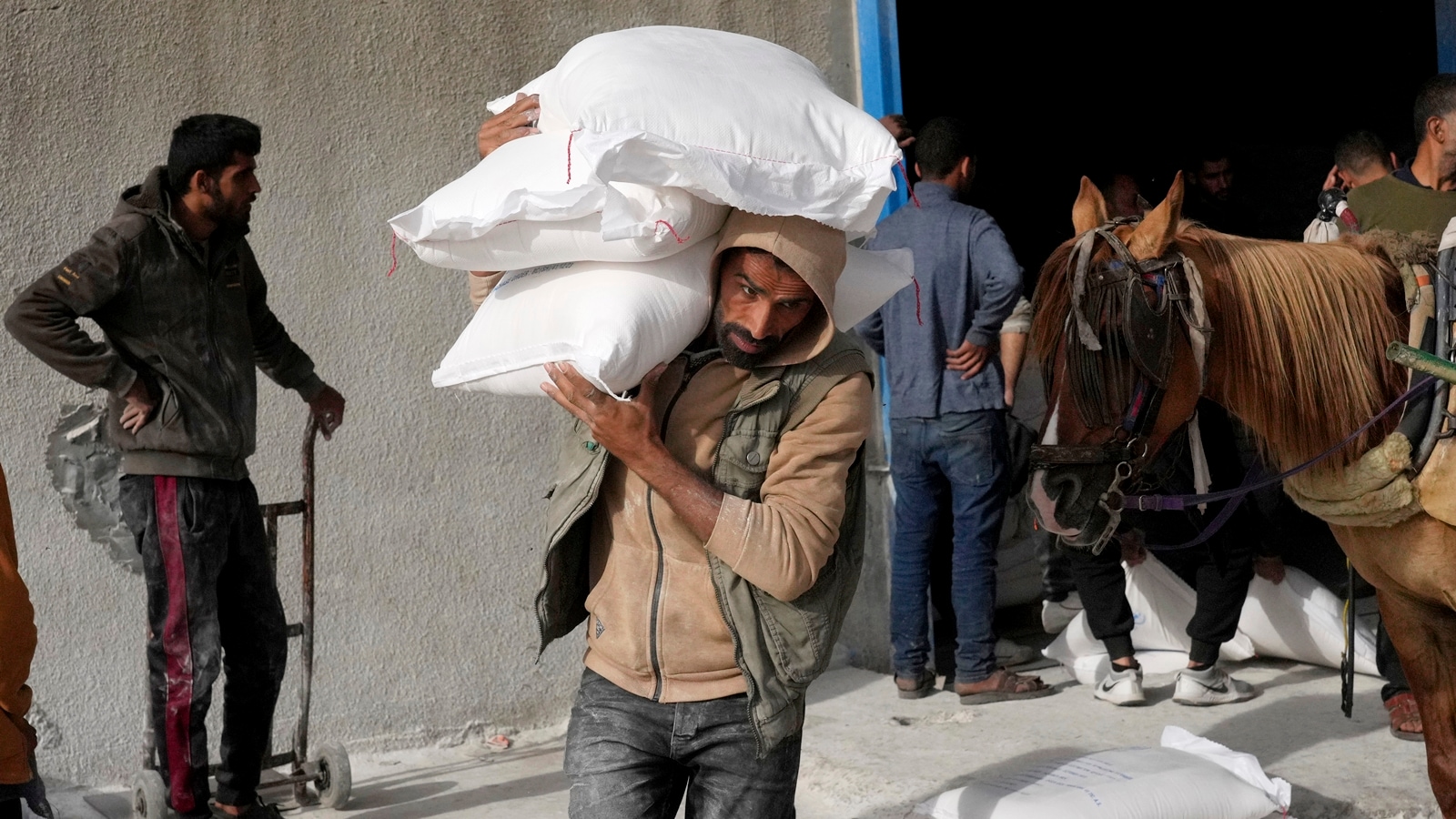 Palestinians take wheat from a UN distribution center in the Bureij refugee camp in the Gaza Strip on Dec. 10, 2023. (AP)
Two months into the Israel-Hamas war, calls for a ceasefire gained momentum with a United Nations General Assembly resolution demanding an “immediate humanitarian ceasefire” passing with a large majority earlier this week. The move came days after United Nations Secretary-General Antonio Guterres invoked the rarely-used Article 99 of the UN Charter in a bid to establish a ceasefire.
2023 has been the deadliest year for Palestinians killed in the West Bank since the UN began recording casualties in 2005, UNRWA said in its daily report.
However, Israel has remained defiant, with President Benjamin Netanyahu and Foreign Minister Eli Cohen doubling down on their stance that the military offensive against the Hamas group will continue “until the end.” Visiting a military facility in southern Israel, Netanyahu told the soldiers “we are continuing until the end, until victory, until the elimination of Hamas”. “Nothing will stop us,” he said, adding, “Let there be no doubt on this matter.”
The United Nations warned that the conditions triggered by the war has led to a widespread lack of food, clean drinking water, and sanitation facilities, making it an apt situation for the spread of infectious diseases.
Humanitarian Coordinator Lynn Hastings told UN News that less than a third of all hospitals are at least partially functioning and shelters have long ago exceeded their capacity.
People seeking safety in overcrowded shelters in Gaza are facing the spread of infectious diseases as well as inadequate food, water and basic services.
A humanitarian ceasefire is the only way to help desperate people in need. https://t.co/IJ3rZGfXE6pic.twitter.com/NDqRljYFeA
— United Nations (@UN) December 13, 2023
The latest Israeli offensive, in response to the October 7 Hamas attack that killed 1,200 Israelis, has led to the death of at least 18,600 Palestinians (of which 70% are reportedly women and children), as per the Gaza health ministry’s latest update. Over 50,500 people have been injured in the airstrikes as well.
In a report from November 18, the Associated Press said that Gaza streets have started resembling graveyards.
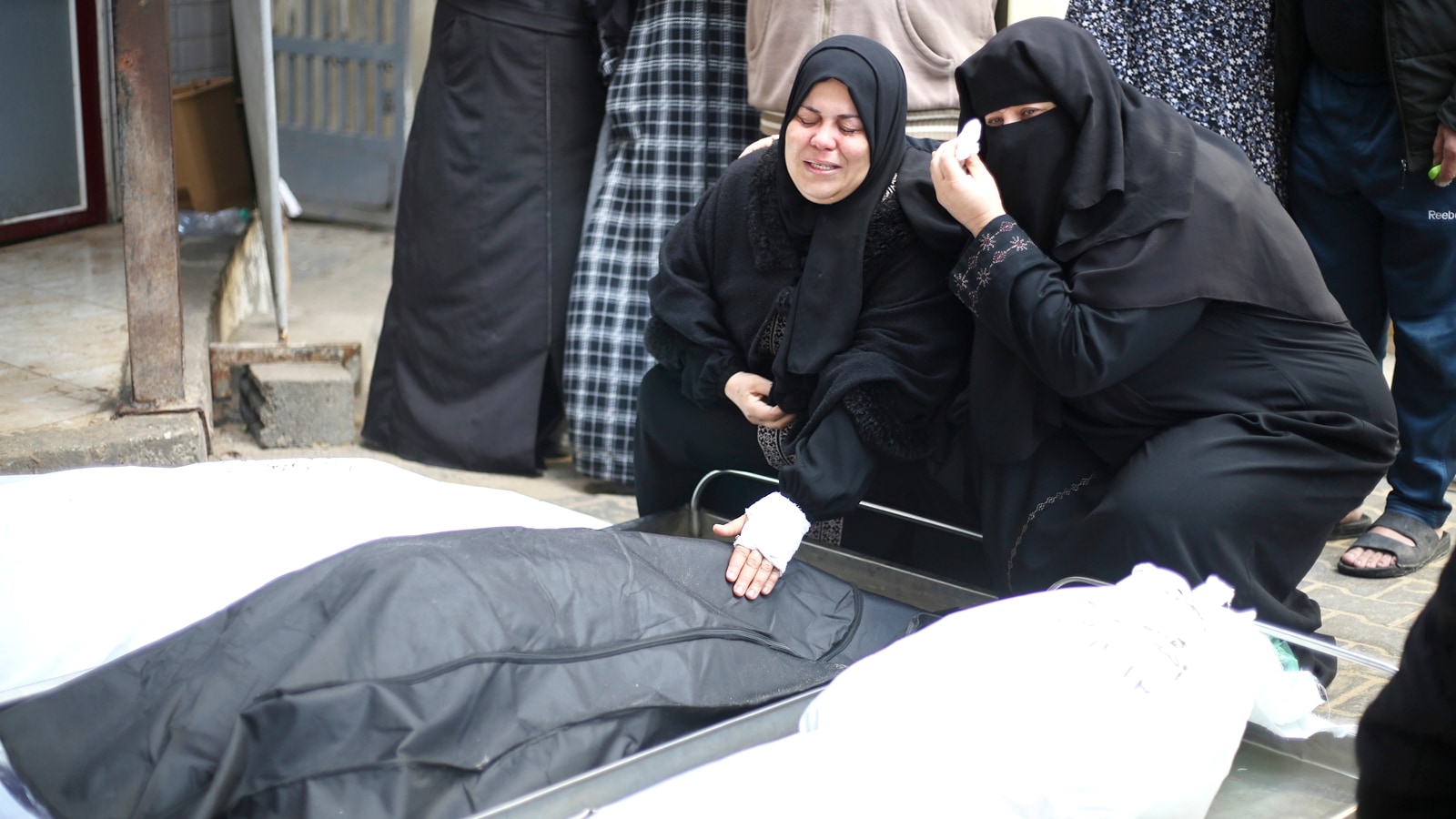 Palestinian women mourn relatives killed in the Israeli bombardment of the Gaza Strip in Rafah on Thursday, Dec. 14, 2023. (AP Photo/Hatem Ali)
“Will those bodies remain under the rubble until the war ends? OK, when will the war end?” said Abu Sama, 30, told AP, describing how families dig through the wreckage of buildings downed in airstrikes without tools as lack of fuel has rendered several bulldozers useless. “The bodies will be decomposed. Many of them have already decomposed.”
More than 85% of the 2+ million inhabitants of the besieged enclave have been displaced in the Israeli airstrikes, according to UNRWA, the UN agency functioning in Palestine.
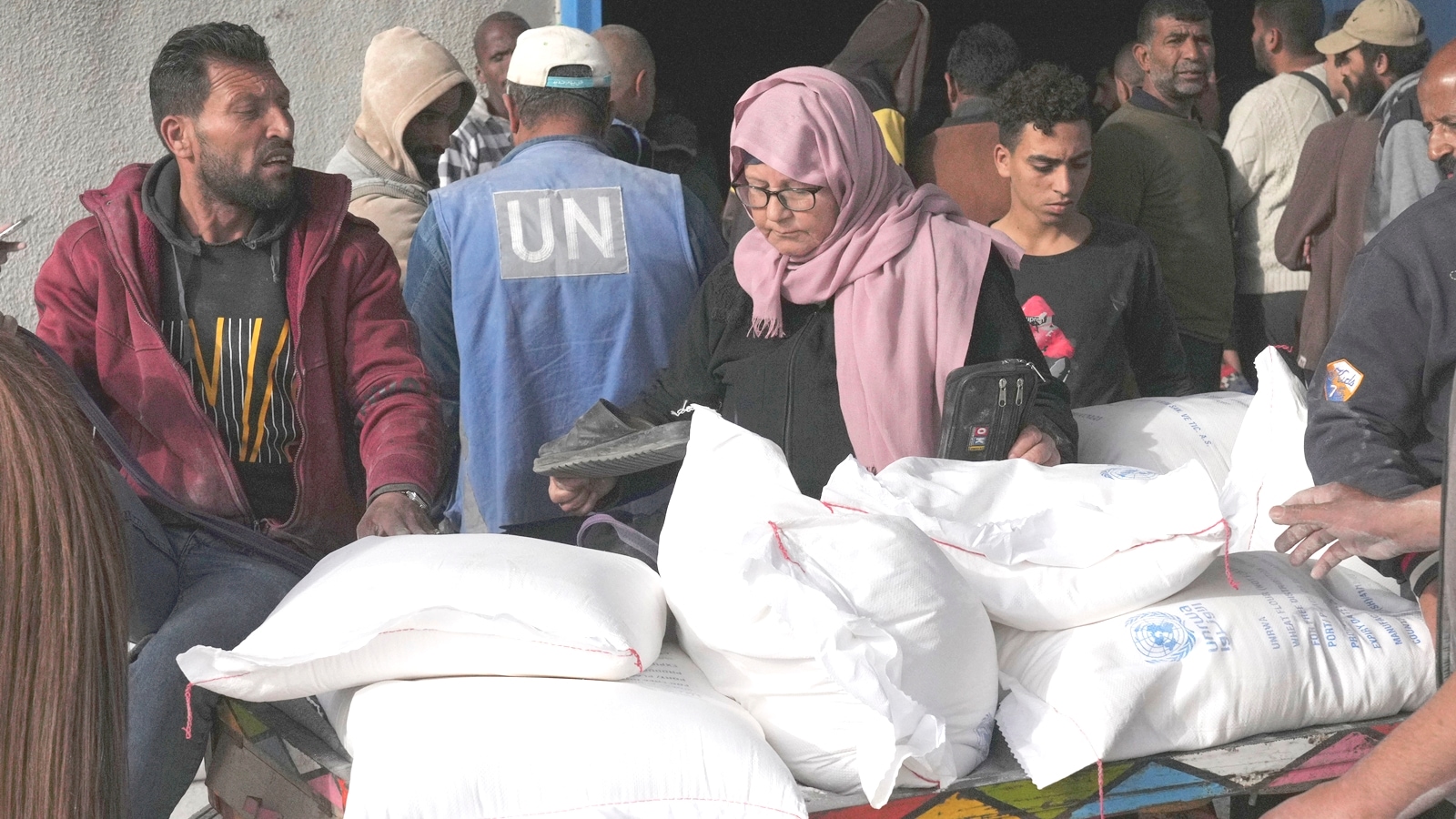 Palestinians take wheat from a UN distribution center in the Bureij refugee camp in the Gaza Strip on Dec. 10, 2023. (AP)
Up to 1.9 million people have been forced to move from place to place as Israel updates its target areas. “As of 11 December, nearly 1.3 million internally displaced persons (IDPs) were sheltering in 155 UNRWA facilities across all five governorates of the Gaza Strip, including in the North and in Gaza City,” UNRWA said in its latest report.
“More than 1.1 million IDPs are sheltering in 98 UNRWA facilities in the Middle, Khan Younis and Rafah areas,” it said, adding, “the average number of IDPs in UNRWA shelters located in middle and southern areas is 11,480, more than four times their capacity.”
Meanwhile, heavy rains and cold winds in the narrow strip of land over the past day has worsened the situation, with displaced families now being forced to huddle inside flimsy and flooded tents for shelter. While some of the refugees in camps lived in tents, others used tarpaulin or plastic sheets to protect themselves from rains, and had to sit on wet sand, as per an Al Jazeera report.
A Palestinian man holds the body of Palestinian girl who was killed by an Israeli airstrike in Jabalia despite the heavy rain. #Gazagenocide #Gaza pic.twitter.com/L4xrAJbAQ5
— Wafa News Agency – English (@WAFANewsEnglish) December 13, 2023
“My son is sick because of the bitter cold and my daughter is barefoot. It’s like we are beggars,” 38-year-old Aziza al-Shabrawi told the Qatari media house. “No one cares, and no one helps.”
Yasmin Mhani, another mother with young children, described the horror of having to flee from on camp to another. “Our house was destroyed, our child was martyred and I remain facing it all. This is the fifth place we have had to move to, fleeing from one place to another, with nothing but a T-shirt on,” she said.

 5 min read