7 min read
Stay updated with the latest - Click here to follow us on Instagram

Journalism of Courage



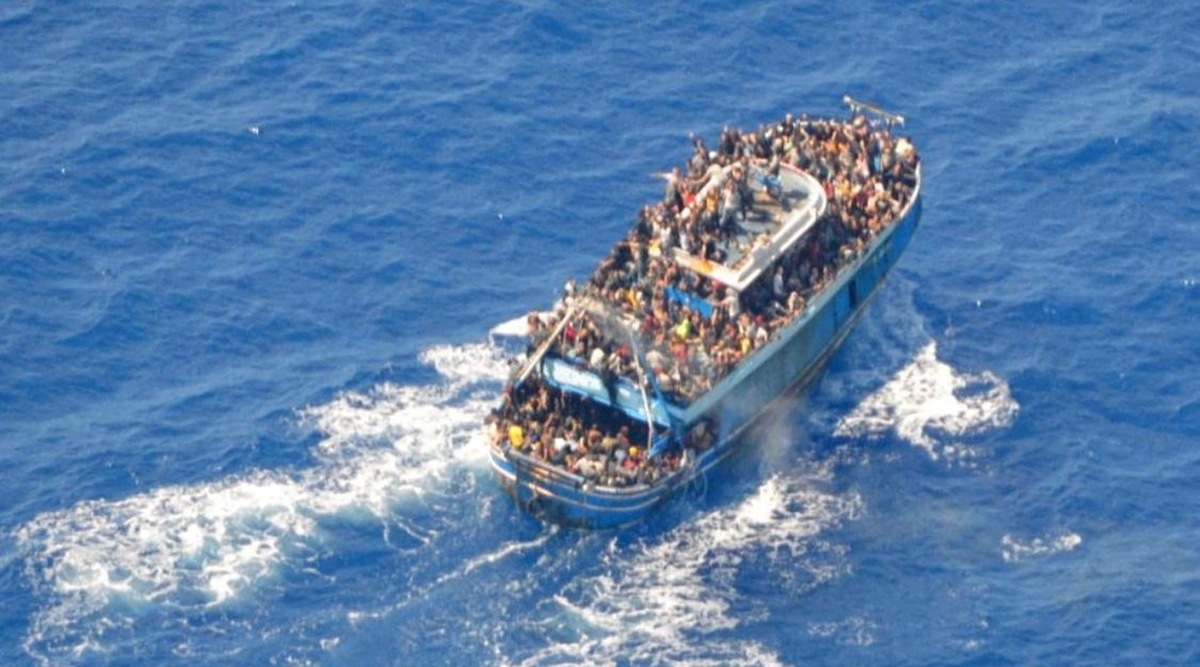 A undated handout photo provided by the Hellenic Coast Guard shows migrants onboard a boat during a rescue operation, before their boat capsized on the open sea, off Greece, June 14, 2023. (Hellenic Coast Guard/Handout via Reuters)
 The number of confirmed victims from one of the worst migrant shipwrecks in the Mediterranean rose to 81 Monday after three more bodies were found off southern Greece, as more survivors claimed that the battered trawler had been under tow by another vessel just before it sank with hundreds of people aboard.
The new accounts raised further questions about the Greek coast guard’s response from the moment it located the ship until it went down.
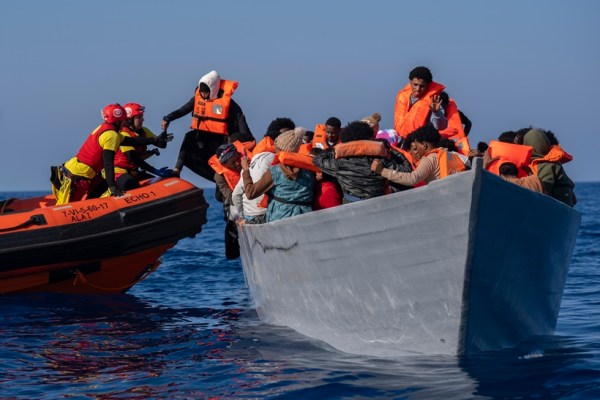 Migrants from Eritrea, Libya and Sudan crowd the deck of a wooden boat as they are assisted by aid workers of the Spanish NGO Open Arms, in the Mediterranean sea, about 30 miles north of Libya, June 17, 2023. (AP)
Officials in Athens have insisted that the metal fishing boat carrying migrants from Libya to Italy was at no point under tow, and only had a line briefly attached to it hours before it capsized and foundered.
The coast guard has also been widely criticised for not trying to rescue the migrants before their vessel sank. It argued that they refused any assistance and insisted on proceeding to Italy, adding that it would have been too dangerous to try and evacuate hundreds of unwilling people off an overcrowded ship.
The full details of the incident remain unclear.
Ali Sheikhi, a Kurdish man from the war-scarred town of Kobani in northeast Syria, had hoped the vessel would take him to a better life in Europe. Then, he would eventually bring over his wife and three young sons.
Instead, the ship sank in international waters two hours after midnight on June 14.
Only 104 survivors have been found so far, and 81 bodies recovered. But many accounts — backed by Sheikhi — say up to 750 people were on board.
He told Kurdish TV Rudaw that he and other relatives from Kobani, including a younger brother who died, had agreed to pay smugglers $4,000 each for the trip — a sum later raised to $4,500.
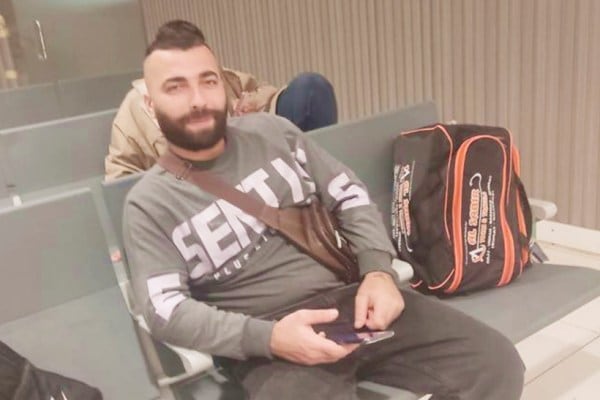 In this photo from May 2023 by a relative, Ali Sheikhi, 29, poses for a photograph at an airport in an undisclosed location. (Courtesy of family of Ali Sheikhi via AP)
“We said ‘no problem,’ so long as the boat was big and in good shape,” he told Rudaw late Sunday, speaking by phone from a closed reception center near Athens where survivors have been moved. “They told us we should not bring any food or anything else because it is all available on the boat.”
The smugglers didn’t let anyone bring lifejackets, and threw whatever food the passengers had into the sea, he added, echoing accounts from other survivors.
Sheikhi said he and his companions were directed to the ship’s hold — a deathtrap where hundreds, including women and children, are believed to have drowned — but got onto the deck after paying extra money to the smugglers.
By the time the ship sank, they had been five days at sea. Water ran out after a day and a half, and some passengers resorted to drinking seawater.
Crucially, Sheikhi said the trawler went down after its engine broke down and another vessel tried to tow it. “In the pulling, (the trawler) sank,” he said. “We don’t know who it belonged to.”
Similar claims have been made by other survivors in accounts posted on social media, and other survivors were anonymously quoted in Syrian media Monday saying the ship was being towed.
“One side went up and the people fell from there into the sea,” Sheikhi told Rudaw. “The people started to scream” in the dark. “Every person tried to hold on to the other and pull him under so he stayed above water. I thought then no one will survive.”
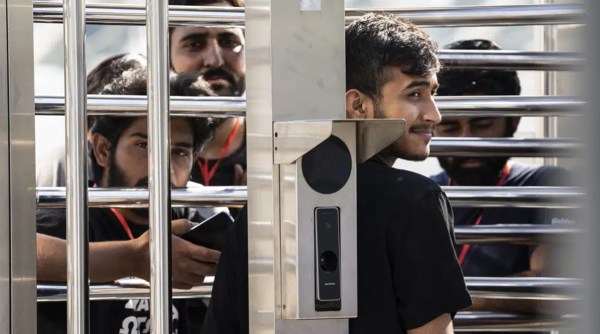 A man waits at the turnstiles and speaks with survivors of a deadly migrant boat sinking at a migrant camp in Malakasa north of Athens. (AP)
Greek authorities have insisted that the ship wobbled violently before sinking after an abrupt shift in position by many of its passengers.
A Greek navy frigate, with four other vessels and two aircraft continued to search the area Monday, and recovered three more bodies — the first found since Wednesday — that raised the confirmed toll to 81.
In the southern port of Kalamata, where survivors were initially taken, a court postponed for Tuesday a hearing for nine Egyptian alleged crew members of the trawler. The men face multiple charges including negligent manslaughter and people smuggling.
The court gave the suspects and their lawyers time to review the testimonies of nine Syrian and Pakistani survivors, provided over the weekend.
Meanwhile, passengers’ relatives who flew in from several European countries arrived at the migrant center in Malakasa, north of Athens, trying to track down people known to have been on the boat. About 20 people were allowed into a restricted area next to the facility: they spoke to relatives through the fence, passing them documents, snacks and soft drinks.
Zohaib Shamraiz, a Pakistani man living in Barcelona, didn’t know if his 40-year-old uncle, Nadeem Muhamm, was alive. “I spoke to him five minutes before he got on the boat. I told him not to go. I was afraid. He said he had no choice,” Shamraiz told The Associated Press.
 Zohaib Shamraiz holds up a photograph of his missing uncle, 40-year-old Nadeem Muhamm, outside a migrant camp in Malakasa north of Athens. (AP)
In their last conversation, Muhamm described being herded onto the ship with others by smugglers carrying swords, Shamraiz said. “He told me there were too many people but if the (passengers) didn’t get on the ship, they would kill them.”
Shamraiz travelled to Greece Monday attempting to trace his uncle and to provide a sample to crossmatch DNA retrieved from recovered bodies. “I had to come to find” him, he said.
His uncle is married and has three young children in Pakistan. He is very poor and he was trying to help his family have a better life, Shamraiz said.
The other survivors, all men and youths, were from Egypt, Syria and the Palestinian territories.
Duccio Staderini, a senior official for Greece at the Doctors Without Frontiers (MSF) international charity, said smuggling networks were growing stronger due to migration “bottlenecks” resulting from Europe’s tight border policies.
“The smugglers, these criminal networks are emerging because of these bottlenecks,” he told the AP after visiting survivors in Malakasa. “And it’s getting worse and worse, and uglier and uglier.”
In a separate incident Monday, Greece’s coast guard said 68 people were rescued in the eastern Aegean Sea after the sailboat they were on sent a distress signal off the island of Leros. Another 40 migrants were rescued from a sailboat in distress northwest of Lesbos.
Stay updated with the latest - Click here to follow us on Instagram