24 min read


© IE Online Media Services Pvt Ltd



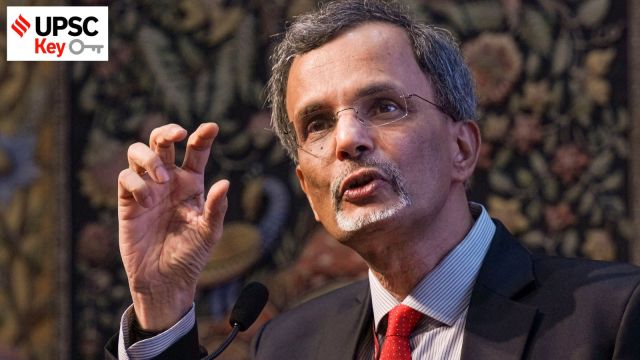 Chief Economic Advisor V. Anantha Nageswaran held a press conference on the Economic Survey 2023-24. Know more in our UPSC Key. (PTI).
🚨 Attention: UPSC Key is now all 7 Days a Week!🚨
Important topics and their relevance in UPSC CSE exam for July 23rd, 2024. If you missed the July 22nd, 2024 UPSC CSE exam key from the Indian Express, read it here.
UPSC Syllabus:
Preliminary Examination: current events of national importance, economic development
Mains Examination: GS-II, GS-III: Indian economy and Government budgeting.
What’s the ongoing story- On Tuesday (July 23), Finance Minister Nirmala Sitharaman will present the first Budget of the third successive government under the leadership of Prime Minister Narendra Modi.
Prerequisites:
— What is an interim budget?
— What are the constitutional provisions regarding the budget?
— What are the components of the budget?
Key takeaways:
— A budget presentation is typically a quinquennial event in India. Once every five years, the Union Budget is presented twice — first as an interim budget (in February) by the outgoing government and then as a full budget by the newly-formed government. Sitharaman had presented an interim Budget for the current financial year (2024-25) on February 1.
— A Budget is essentially an exercise where the government tells the Parliament (and through it, the whole country) about the health of its finances. This means coming clean on three main things: income, expenditure and borrowing.
— Further, since a Budget typically comes at the end of one financial year and the start of another, it tells the citizens not only how much money the government raised last year, where did it spend it, and how much did it have to borrow to meet the gap but also gives an estimate about what it expects to earn in the next financial year (in the present case, the current financial year), how much and where it plans to spend it, and how much would it likely have to borrow to bridge the gap.
— The budget essentially discusses the citizen’s money. The government’s borrowing (the fiscal deficit) is, in no uncertain terms, an addition to a debt that citizens and their future generations will have to pay back
For Your Information:
— Union Finance Minister Nirmala Sitharaman presented the Union Budget 2024 on Tuesday. She highlighted the four main focus points of the first budget under the Modi 3.0 government. It includes: ‘Garib’ (Poor), ‘Yuva’ (Youth), ‘Annadata’ (Farmer) and ‘Nari’ (Women). In her 7th Union Budget speech, the finance minister highlighted that this year’s Budget envisages sustained efforts on nine priorities: productivity & resilience in agri, employment & skilling, inclusive human resource development & social justice, manufacturing & services, urban develpoment, energy securities, infrastructure, innovation, R&D and next gen reforms.
Points to Ponder:
— How does a Union Budget influence the economy?
— What are the key highlights of Union Budget 2024-25?
— What is fiscal deficit?
— What are the important Budget documents?
Post Read Question:
Consider the following pair:
1. Annual Financial Statement (AFS): Article 112
2. Demands for Grants : Article 113
3. Finance Bill : Article 110
Which of the pairs given above are correct?
(a) 1 and 2 only
(b) 2 and 3 only
(c) 1 and 3 only
(d) 1, 2 and 3
Other Important Articles Covering the same topic:
Union Budget 2024 : Key highlights for UPSC Prelims and Mains exam
UPSC Syllabus:
Preliminary Examination: current events of national importance, economic development
Mains Examination: GS-II, GS-III: Government policies and interventions, Indian economy and Government budgeting.
What’s the ongoing story- The Economic Survey for 2023-24 stands out from previous economic surveys in that it provides a more realistic picture of the challenges before India’s economic growth. As such, despite India’s GDP growing at more than 8% in FY 2023-24, the survey pegs the GDP growth rate for the current financial year (FY 2024-25) between 6.5% and 7%.
Prerequisites:
— Why economic survey is published?
— Who prepares the Economic Survey?
— How is the economic survey different from the Union Budget?
— What is the theme of economic Survey 2023-24?
Key takeaways:
Some key challenges that the survey flags are:
1. Global headwinds: The environment for foreign direct investment (FDI) to grow in the coming years is not highly favourable….economies such as India have to compete with industrial policies in the developed world involving considerable subsidies that encourage domestic investment. Geopolitical uncertainties also continue to play spoilsport.
2. China challenge: The Chief Economic Advisor (CEA) underscored how India continues to be overly dependent on China for imports, especially for renewable energy.
3. AI threat: The Survey notes that while there has been a boom in telecommunications and Internet facilitated business process outsourcing (BPO), the next wave of technological evolution might bring the curtains down on it.
4. Employment imperative: The Indian economy needs to generate an average of nearly 78.5 lakh jobs annually until 2030 in the non-farm sector to cater to the rising workforce.
5. Data deficiency: A constant refrain against the government has been the lack of good quality and timely data especially related to employment.
6. Lifestyle disadvantages: The Survey notes that “social media, screen time, sedentary habits, and unhealthy food are a lethal mix that can undermine public health and productivity and diminish India’s economic potential.”
Recommended solutions
1. Job creation by the private sector: The government had hoped that the private sector would create jobs. The Survey reiterated that hope: “…It is in the enlightened self- interest of the Indian corporate sector, swimming in excess profits, to take its responsibility to create jobs seriously.”
2. Lifestyle changes by private sector: “India’s traditional lifestyle, food and recipes have shown how to live healthily and in harmony with nature and the environment for centuries. It makes commercial sense for Indian businesses to learn about and embrace them, for they have a global market waiting to be led rather than tapped,” writes the CEA.
3. Farm sector as the saviour : : The CEA states, “A return to roots, as it were, in terms of farming practices and policy making, can generate higher value addition from agriculture, boost farmers’ income, create opportunities for food processing and exports and make the farm sector both fashionable and productive for India’s urban youth”.
4. Removing regulatory bottlenecks: “The Licensing, Inspection and Compliance requirements that all levels of the government continue to impose on businesses is an onerous burden. Relative to history, the burden has lightened. Relative to where it ought to be, it is still a lot heavier,” stated the CEA. He singled out the Medium, Small and Micro Enterprises (MSMEs) as one sector that required to be relieved of regulatory burden the most.
Points to Ponder:
— What is the significance of an economic survey?
— What are the challenges and issues faced by various sectors in India?
— What are the recommendations proposed in the economic survey 2023-24?
— What are the main takeaways of the Economic Survey in the areas of GDP growth, Inflation and Unemployment?
Post Read Question:
Consider the following statements:
1. The Economic Survey of India is prepared by the Economic Division of the Department of Economic Affairs.
2. Article 112 of the Constitution of India provides provisions concerning the economic survey.
Which of the statements given above is/are correct?
(a) 1 only
(b) 2 only
(c) Both 1 and 2
(d) Neither 1 nor 2
Other Important Articles Covering the same topic:
UPSC Syllabus:
Preliminary Examination: Current events of national and international importance
Mains Examination: GS-I, II: History of India, Government policies
What’s the ongoing story- The Centre has decided that the “mention of Rashtriya Swayamsevak Sangh (RSS)” as an organisation that government officials cannot be part of, should be “removed”. This bar on officials participating in activities of the RSS first came into effect almost six decades ago.
Prerequisites:
— What is the role of the Department of Personnel and Training (DoPT)?
— What is the history of RSS?
Key takeaways:
— On July 9, the DoPT, which manages the central government’s human resources, said the government has “reviewed” instructions issued in 1966, 1970, and 1980, “and it has been decided to remove the mention of Rashtriya Swayamsevak Sangh (RSS) from the impugned OMs (Official Memorandums) dated 30.11.1966, 25.07.1970 and 28.10.1980”.
— Rule 5 of the 1964 Rules is about “Taking part in politics and elections”. Rule 5(1) says: “No Government servant shall be a member of, or be otherwise associated with, any political party or any organisation which takes part in politics nor shall he take part in, subscribe in aid of, or assist in any other manner, any political movement or activity.”
— The All India Services (Conduct) Rules, 1968, which apply to officers of the IAS, IPS, and Indian Forest Service, has a similar Rule 5(1).
— During the Emergency (1975-77), orders were issued to take action against workers of the RSS, Jamaat-e-Islami, Ananda Marg and CPI-ML, whose activities had been banned.
— Before the notification of the Central Civil Services (Conduct) Rules, 1964, and the All India Services (Conduct) Rules, 1968, there was the Government Servants’ Conduct Rules, which were framed in 1949, when Sardar Vallabhbhai Patel was home minister. Rule 23 of 1949 was the same as Rule 5 of 1964 and 1968.
— July 9 Circular means that the RSS is not a “political” organisation, and that central government employees can now take part in RSS activities without fear of attracting action under Rule 5(1) of the Conduct Rules.
For Your Information:
— The RSS has been banned thrice in independent India. Government employees were not allowed to join the RSS, though several states have lifted this ban over the years.
— Days after Mahatma Gandhi was killed by Nathuram Godse, the RSS was banned on February 4, 1948. In a statement, the government said the ban was being imposed to “root out the forces of hate and violence” at work in the country.
Points to Ponder:
— Why RSS was formed?
— What is the role of RSS in the Indian Independence Struggle?
— Why government officials are not allowed to join political parties?
Post Read Question:
Who was the founder of RSS?
(a) Veer Savarkar
(b) Madan Mohan Malviya
(c) Madhav Sadashiv Golwalkar
(d) Keshav B Hegdewar
Other Important Articles Covering the same topic:
Short history of the bans imposed on RSS since 1947
UPSC Syllabus:
Preliminary Examination: Current events of national importance, economic development
Mains Examination: GS-II, GS-III: Government policies and interventions, Indian Economy and issues relating to planning, mobilisation, of resources, growth, development and employment.
What’s the ongoing story- The Economic Survey tabled by Finance Minister Nirmala Sitharaman in the Lok Sabha on Monday stated that the demand under the Mahatma Gandhi National Rural Employment Guarantee Scheme (MGNREGS) is not a real indicator of rural distress but predominantly linked with the state’s institutional capacity and other considerations.
Prerequisites:
— What is the MGNREG scheme?
— Who are eligible to benefit from the MGNREG scheme?
— How are wage rates for MGNREGS workers fixed?
Key takeaways:
— Examining whether spending on MGNREGS is an indicator of rural distress, the Survey noted that a state’s institutional capacity is “crucial” for effectively tapping MGNREGS funds.
— “Additionally, calculations reveal that there is little correlation between MGNREGS fund usage and rural unemployment rates,” it noted.
— “It is evident from the data that MGNREGS work demand does not directly correlate with increased rural distress at a micro level,” it said.
— The Survey said, “States with lower per-capita incomes and higher poverty levels often have weaker institutions, thereby tapping fewer funds per work executed and generating less employment per capita for the rural poor.”
— The Survey also highlighted differences in registering demand and increased leakages in the MGNREGS.
For Your Information:
— Under MGNREGA, every rural household, whose adult member volunteers to do unskilled manual work, is entitled to get at least 100 days of wage employment in a financial year.
Points to Ponder:
— Who are the key stakeholders of MGNREG scheme?
— How schemes such as MGNREG schemecan help alleviate distress migration?
— What are the issues and challenges associated with the MGNREG scheme?
Post Read Question:
With reference to the Mahatma Gandhi National Rural Employment Guarantee Scheme (MG-NREGS), consider the following statements:
1. The scheme guarantees 100 days of wage employment in a financial year to every rural household whose adult members volunteer to do unskilled manual work.
2. Uttar Pradesh had the highest share, as 17 per cent of families availed the benefits from the scheme in June 2023.
Which of the statement(s) given above is/are correct?
(a) 1 only
(b) 2 only
(c) Both 1 and 2
(d) Neither 1 nor 2
Other Important Articles Covering the same topic:
NREGA: low funds, caste-based payment delays, and implications for the economy
UPSC Syllabus:
Preliminary Examination: Economic development
Mains Examination: GS-II, GS-III: Government policies and interventions, Indian economy, Infrastructure, growth and development
What’s the ongoing story- India must boost private sector participation to maintain its infrastructure growth momentum, which has been largely driven by public sector investment, according to the Economic Survey 2023-24.
Prerequisites:
— What are the public-private partnership (PPP) models?
— What is the current status of the infrastructure sector in India?
Key takeaways:
— The survey also called for improving quality of data on infrastructure development, financing, and utilisation to drive more effective policy-making and identified delays in land acquisition and obtaining land-related clearances as key challenges for the sector.
— “The addition to the stock of infrastructure in the last five years owed predominantly to public sector financing. Private sector participation is not forthcoming to the extent desired,” the survey said.
— Despite substantial investments in connectivity and energy-related infrastructure, issues such as land acquisition delays and the slow digitization of land records persist, it said.
The survey also highlighted long payback periods for large projects, the absence of an independent regulator for infrastructural sectors, and problems with contractual and project structuring as major barriers to private sector participation.
— “Many novel PPP financing models, like hybrid annuity model, have been introduced to mitigate this constraint. But private sector participation through these modes has so far been limited to only certain sectors like roads and water,” the survey noted.
— To encourage private sector investments, the survey recommended numerous initiatives at the subnational level, which includes state and local governments, to facilitate resource mobilisation for infrastructure development. “Examples include pooled financing mechanisms for municipal projects, specialised municipal intermediaries, asset recycling programs, tax increment financing and land sales and development rights among other innovative approaches,” the survey said, taking examples from across the world.
— For better tracking of infrastructure projects, the survey suggested consolidating data from multiple sources to provide a comprehensive inventory of projects at different levels.
— It also recommended detailed sub-sector assessments of infrastructure demand and tracking utilisation of existing facilities.
Points to Ponder:
— What are the issues and challenges faced by the infrastructure sector in India?
— What initiatives have been undertaken by the government to promote investment in infrastructure?
— What measures should be taken to boost private investment in infrastructure projects?
Post Read Question:
With reference to ‘National Investment and Infrastructure Fund’, which of the following statements is/are correct? (UPSC CSE 2017)
1. It is an organ of NITI Aayog.
2. It has a corpus of `4,00,000 crore at present.
Select the correct answer using the code given below:
(a) 1 only
(b) 2 only
(c) Both 1 and 2
(d) Neither 1 nor 2
UPSC Syllabus:
Preliminary Examination: Current events of national and international importance
Mains Examination: GS-III: Agriculture
What’s the ongoing story- Stating that improving the market infrastructure by incentivising states can be explored, Economic Survey 2024 has said it is “worth” considering providing financial incentives for states to undertake necessary interventions to modernise agriculture marketing as recommended by the 15th Finance Commission.
Prerequisites:
— What is the purpose of the Finance Commission?
— What are Farmers Producer Organisations (FPOs)?
— What are APMCs (agricultural produce market committees)?
Key takeaways:
— The Survey indicated that implementing the e-National Agriculture Market (e-NAM), supporting Farmers Producer Organisations (FPOs), and enabling cooperatives to participate in agri-marketing could enhance market infrastructure and facilitate better price discovery.
— The Economic Survey 2023-24 observations are significant as the government’s top think tank NITI Aayog has revived the 15th Finance Commission’s idea of providing financial incentives to states to encourage them to implement agriculture reforms.
— The Finance Commission had recommended performance-based incentives for the implementation of agrarian reforms by the states. The agriculture sector’s performance is crucial for the economy’s growth, with an average growth rate of 4.18 per cent over the last five years, as stated in the Economic Survey.
— The Survey further stated that enhancing private sector investment in agriculture is vital to providing impetus to the sector. Investment in technology, production methods, marketing infrastructure, and reduction in post-harvest losses need to be scaled up.
— The Survey said, “Promoting crop diversification towards oilseeds, pulses, and horticulture requires addressing critical issues such as investment in agri-infrastructure, credit accessibility and appropriate market institutions…
For Your Information:
— Agriculture and allied sectors were allocated 1.52 Lakh Crore in the Union Budget 2023-24.
— Digital Public Infrastructure (DPI) for Agriculture in the budget: The government in partnership with states will facilitate the implementation of DPI in three years. The government will enable Jan Samarth-based Kisan Credit cards in five states.
Points to Ponder:
— What is the significance of private investment in agriculture?
— What is the significance of e-technology in agriculture?
— What are the challenges faced by the agriculture sector?
Post Read Question:
How does e-Technology help farmers in production and marketing of agricultural produce? Explain it. (UPSC CSE 2023)
Other Important Articles Covering the same topic:
Key takeaways from the 2023-24 Economic Survey
UPSC Syllabus:
Preliminary Examination: Current events of national and international importance
Mains Examination: GS-II: Government Policies and intervention, issues related with Health
What’s the ongoing story- This year’s Economic Survey takes note of economic impact of an increasing burden of non-communicable diseases and mental health issues, stating: “For India’s working-age population to be gainfully employed, they need skills and good health. Social media, screen time, sedentary habits, and unhealthy food are a lethal mix that can undermine public health and productivity and diminish India’s economic potential.”
Prerequisites:
— What are non-communicable diseases?
— What is demographic dividend?
Key takeaways:
— The report states that obesity and diabetes are on the rise in the country. Citing data from the National Family Health Survey (NFHS-5 in 2019 and 2021), the survey says obesity has increased by four percentage points in men and 3.4% in women over previous round of the survey in 2015-16.
— Blaming the upsurge in the consumption of highly processed food containing sugar and fat, it says: “If India needs to reap the gains of its demographic dividend, it is critical that its population’s health parameters transition towards a balanced and diverse diet.”
— The report states that 56.4% of total disease burden is due to unhealthy diets, as the National Institute of Nutrition had said in its recent dietary guidelines for Indians.
— The survey goes on to say the incidence of Type 2 diabetes has increased from 2% to 20% over the last 50 years… The government has planned screening for non-communicable diseases such as diabetes, hypertension, and the three-most common cancers through its network of over 1.6 lakh health an wellness centres across the country.
— On mental health, it stated that 10.6% adults suffered from mental disorders in India according to National Mental Health Survey 2015-16. It also mentions the negative impact of social media on mental health of the children.
Points to Ponder:
— How are non-communicable diseases a hurdle in utilising the demographic dividend?
— What changes need to be made to diet habits to tackle it?
— What is the impact of mental health issues on the Indian economy?
Post Read Question:
Discuss the various factors contributing to the increase in the burden of non-communicable diseases in India. Outline the government’s initiatives in addressing this issue.
Other Important Articles Covering the same topic:
World Health Day: Indians face 3 key health issues, here’s how to fight them
UPSC Syllabus:
Preliminary Examination: Current events of national and international importance
Mains Examination: GS-III: Environment, Climate change
What’s the ongoing story- Making a strong departure from the global narrative on climate change, India on Monday said risking the economic welfare of the people in developing countries for keeping global temperatures within some threshold was a “flawed” way of dealing with the problem.
Prerequisites:
— What are the Nationally Determined Contribution commitments?
— What are climate adaptation and climate mitigation?
— What is the 2015 Paris Agreement?
Key takeaways:
— V Anantha Nageswaran, Aparajita Tripathi write: “As the fifth-largest economy in the world, expected to become the third largest before 2030, our energy needs are expected to grow about 1.5 times faster than the global average in the next 30 years.”
— “Therefore, our developmental requirements stand head-to-head with our climate commitments, and we have to continually resist being swayed by the characterisation of being one of the largest polluters. It’s a delicate balance that we must strike.”
— “Chapter 13 of the Economic Survey — a Special Essay on Climate and Mission LiFE — examines threadbare the issues hidden in the chosen Goldilocks mean… India has, time and again, stood firm on the principle of historical emissions. The developed world used global resources in the most destructive ways possible to usher in a capitalist’s dream and get the world to the point it is at now. But it refuses to accept any responsibility for this.”
— “To correct wrongs done to nature, one must go back to it. This means adopting a life strategy that is in accordance with nature instead of only focusing on a few industrial pathways.”
— “It’s ironic that the same developed world that evaluates progress on a per-capita basis on almost all fronts does not acknowledge emissions comparison on the same metric. India’s per-capita carbon emissions are significantly low at ~2.5 tons compared to the global average of 6.3 tons.”
— “This is where India must step back and reevaluate its options because, if it were to change the lifestyle of its large population and mimic the energy-consuming unsustainable patterns of the developed world, it would soon run into a massive problem.”
— “Hence, accepted climate-suitable pathways need to account for a variety of approaches with optimality at their core. Sustainability is embedded in the Indian traditional ethos and in our belief in the power of small individual actions to make a great difference. India has a great many individual-led sustainable behaviours — using cloth for kitchen cleaning instead of tissue paper…”
For Your Information:
— The Economic Survey argued that a more sustainable solution to the climate problem lay not in replacing one form of energy fuel with another, but in avoiding overconsumption and wastage and making lifestyle changes…
— India said the world needed a more “balanced” approach to the problem of climate change. “It should also focus on nearer-term policy goals of improving human welfare rather than excessively preoccupied with one large, longer-term goal of global climate management… When we assess the best course of action going forward, we must compare alternative systems…
Points to Ponder:
— What is the significance of Mission LiFE?
— What are the problems with the one-size-fits-all approach?
— What are the problems faced by the Developing countries in climate mitigation?
Post Read Question:
Prelims
With reference to the Agreement at the UNFCCC Meeting in Paris in 2015, which of the following statements is/are correct? (UPSC CSE 2016)
1. The Agreement was signed by all the member countries of the UN and it will go into effect in 2017.
2. The Agreement aims to limit the greenhouse gas emissions so that the rise in average global temperature by the end of this century does not exceed 2°C or even 1.5°C above pre-industrial levels.
3. Developed countries acknowledged their historical responsibility in global warming and committed to donate $ 1000 billion a year from 2020 to help developing countries to cope with climate change.
Select the correct answer using the code given below.
(a) 1 and 3 only
(b) 2 only
(c) 2 and 3 only
(d) 1, 2 and 3
Mains
‘Climate Change’ is a global problem. How India will be affected by climate change? How Himalayan and coastal states of India will be affected by climate change? (UPSC CSE 2017)
Other Important Articles Covering the same topic:
‘Wordly Wise’ from The Editorial Page
“The difficulty lies not so much in developing new ideas as in escaping from old ones.”
— John Maynard Keynes.
(Thought Process: Ponder on what ideas are and why they are important. Why does it become important to come up with new ideas and discard the old ones? Are old ideas always obsolete and the new ones will always be transformative? Why is it ‘difficult’ to move to a new idea? In fact, do all humans find it difficult to move towards the new idea? If not then why the difficulty? Is it because of prejudices, apprehensions, difficulty in adapting to a ‘change’ or emotional attachment? Discuss with the help of examples from past and present where it was difficult to move from old ideas to new ones.)
Subscribe to our UPSC newsletter and stay updated with the news cues from the past week.
Stay updated with the latest UPSC articles by joining our Telegram channel – IndianExpress UPSC Hub, and follow us on Instagram and X.
https://www.youtube.com/watch?v=nC4ckaj-dJI?si=XGsNhriKiRVYDOZn&w=560&h=315

Read UPSC Magazine