32 min read


© IE Online Media Services Pvt Ltd



 UPSC Key September 2023: Here's what you should be reading from the September 28, 2023 edition of The Indian Express
Important topics and their relevance in UPSC CSE exam for September 28, 2023. If you missed the September 27, 2023 UPSC CSE exam key from the Indian Express, read it here
THE WORLD
US federal shutdown nears: Congress has four days to fund govt
Syllabus:
Preliminary Examination: Current events of national and international importance.
Mains Examination: General Studies II: Effect of policies and politics of developed and developing countries on India’s interests, Indian diaspora.
Key Points to Ponder:
• What’s the ongoing story-Republican U.S. House Speaker Kevin McCarthy on Wednesday rejected a stopgap funding bill advancing in the Senate, bringing Washington closer to its fourth partial shutdown of the U.S. government in a decade with just four days to go.
• But, why Republican U.S. House Speaker Kevin McCarthy rejected a stopgap funding bill advancing in the Senate?
• Why this will lead to Government shutdown?
• What do you understand by Government shutdown?
• For Your Information-According to CBS news, many federal government agencies are funded annually by a dozen appropriations bills that need to be passed by Congress and signed by the president before the start of the new fiscal year on Oct. 1. These are often grouped together into one large piece of legislation known as an “omnibus” bill.
If the funding deadline passes without Congress authorizing more spending, the government must fully or partially shut down, depending on which agencies are already funded. Lawmakers usually buy themselves more time by passing what’s known as a continuing resolution, which temporarily extends current funding levels to keep agencies functioning while they work to reach an agreement on new spending.
The Constitution says the Treasury Department cannot spend money without a law authorizing it. Under a statute known as the Antideficiency Act, agencies are required to cease operations — with certain exceptions — in the absence of funding authorized by Congress. The act, a version of which first passed in 1870, with several significant updates since, also prohibits the government from entering into financial obligations without congressional sign-off.
“Treasury cannot pay out any money if there’s not a law providing for who gets the money,” said Matt Glassman, a senior fellow at the Government Affairs Institute at Georgetown University. “If those annual bills expire, then there is no law appropriating money for certain functions.”
• What happens during a government shutdown?
• What is “omnibus” bill?
• Does India also have “omnibus” bill?
• What happens during a government shutdown, and who is affected?
• Do You Know- According to CBS news, in a shutdown, the federal government must stop all non-essential functions until funding is approved by Congress and signed into law. Each agency determines what work is essential and what is not. Members of Congress make that determination for their own staff, as well.
“No money can come out of Treasury whether you’re essential or not essential. But who can keep working and incur obligations, even when there are no appropriations — there are three exceptions,” Glassman said.
Those exceptions are defined by the Antideficiency Act. They allow the government to fund operations to protect human life and property, and keep officials involved in the constitutional process on the job, like the president, his staff and members of Congress.
All active-duty military members, many federal law enforcement officers and employees at federally funded hospitals are considered essential, along with air traffic controllers and Transportation Security Administration officers.
Essential employees, even though they continue to work during the shutdown, are not paid while the government is shut down. They receive back pay once funding is restored to their agency. Employees in nonessential positions are furloughed until the government is funded again and don’t come into work or get a paycheck. Under a 2019 law, however, they’re guaranteed to receive back pay once the shutdown is over.
During a 16-day partial shutdown in 2013, roughly 850,000 federal employees out of a total of 2.1 million were furloughed at some point, according to the Office of Management and Budget.
• What is open and closed during a shutdown?
• When was the last government shutdown?
• For Your Knowledge-Here are the three occasions when funding lapsed and significant government shutdowns occurred.
November 1995
Government funding elapsed for five full days from November 14 to 19 and about 800,000 workers were furloughed after Democratic President Bill Clinton vetoed spending legislation passed by the Republican-controlled Congress, according to a CRS report.
December 1995 and January 1996
Clinton’s continued clash with congressional Republicans over funding levels for the Medicare health insurance program for the elderly, education and other issues resulted in a second lapse in government funding for 21 full days from December 16, 1995 to January 6, 1996, when about 280,000 workers were furloughed, according to the CRS.
October 2013
During this standoff, government funding elapsed for 16 full days from October 1 to 17 and about 800,000 federal workers were furloughed, according to the CRS. More than 1 million more reported to work without knowing when they would be paid, according to media reports.
The shutdown occurred after conservative Republicans in the House of Representatives attempted to use the budget process to delay or defund implementation of Democratic President Barack Obama’s Affordable Care Act, known as Obamacare. The impasse between the House and the Democratic-controlled Senate, along with Obama, ended after both chambers passed a Senate-brokered bill with stricter income verification requirements on people obtaining health insurance through Obamacare. The deal to end the shutdown coincided with a deadline to raise the U.S. debt ceiling, the country’s borrowing limit.
• What was the longest government shutdown?
• Will the government shut down this time? When?
Other Important Articles Covering the same topic:
📍A government shutdown is nearing this weekend. What does it mean, who’s hit and what’s next?
📍A look at past US government shutdowns
FRONT PAGE
Orders to vacate National Museum by year-end, new one set for 2025
Syllabus:
Preliminary Examination: History of India and Indian National Movement
Main Examination: General Studies I: Indian culture will cover the salient aspects of Art Forms, literature and Architecture from ancient to modern times.
Key Points to Ponder:
• What’s the ongoing story- The National Museum may be shut to researchers by the end of the year and the building is likely to be demolished in March 2024. The new museum, Yug Yugeen Bharat, will come up at the North and South Blocks, possession of which will likely be taken by the Ministry of Culture by March 2025.
• National Museum for India-Know in detail
• In 1946, the idea of building a National Museum for India was proposed by the Gwyer Committee-True or False?
• For Your Information-The National Museum houses artefacts from the prehistoric period to the contemporary era. They represent over 5,000 years of Indian art and craftsmanship.
It was established on August 15, 1949 at the Rashtrapati Bhavan with artefacts first exhibited at Burlington House, London. The present building on Janpath was opened on December 18, 1960.
• What is the Yuge Yugeen Bharat National Museum?
• Yuge Yugeen Bharat National Museum and the National Museum-compare
• Yuge Yugeen Bharat National Museum-Know its objectives and key components
• For Your Information-Divided into eight thematic zones, the museum will showcase historical events, personalities, ideas and achievements related to India’s past that have contributed to the making of India’s present. It will tell the story of 5,000 years of Indian civilisation, said officials, adding that the name signifies the civilisation’s “perennial” nature. The museum will be designed to have 950 rooms across three storeys and a basement, which will showcase India’s ancient town planning systems, the Vedas, Upanishads, ancient medical knowledge, and a number of empires including Mauryan, Gupta, Vijayanagara and Mughal. Though the project is slated for completion by 2026, no concrete deadline has been set yet. Sources said that North and South Block, where the museum will come up, are office buildings and will take time to be converted into visitor-friendly spaces.
• What is the role of a Museum?
• How museums play a crucial role in preserving culture and heritage?
• Why museums are important?
• What are the major issues and challenges with museums in India?
Other Important Articles Covering the same topic:
📍India@75, Looking at 100: Imagine the ideal museum
Upcoming digital Bill may widen the ambit of online censorship
Syllabus:
Preliminary Examination: Current events of national and international importance.
Mains Examination: General Studies II: Government policies and interventions for development in various sectors and issues arising out of their design and implementation.
Key Points to Ponder:
• What’s the ongoing story- Even as the number of content-blocking orders from the Centre to social media platforms has soared significantly over the last five years, the government is attempting to widen the horizon of a key legal provision that empowers it to issue takedown orders, The Indian Express has learnt.
Under the upcoming Digital India Bill, the imminent successor to the Information Technology Act, 2000, the Centre is considering some tweaks to what is the erstwhile Section 69 (A) of the IT Act.
• What is the rationale for the increasing issuance of content-blocking directives by the central government to social media platforms?
• What is Section 69 A of the IT Act 2000?
• What was the Ministry of Electronics and Information Technology’s content-blocking orders issued under Section 69 (A) of the Information Technology Act, 2000?
• In Shreya Singhal v/s Union of India judgment, Supreme court of India upheld Section 69A and struck down Section 66A of the IT Act-Why?
• For Your Information-Under the upcoming Digital India Bill, the imminent successor to the Information Technology Act, 2000, the Centre is considering some tweaks to what is the erstwhile Section 69 (A) of the IT Act.
The changes include dropping language that prescribes some legal guardrails around blocking orders, and potentially opening up the application of the provision to other conditions.
The Bill is a key part of a comprehensive legal framework which the Centre is trying to create. This framework encompasses various legislative measures such as the recently notified Digital Personal Data Protection Act, 2023, the draft Indian Telecommunication Bill, 2022, and a policy addressing the governance of non-personal data.
Currently, Section 69 (A) of the IT Act allows the government to issue content-blocking orders to online platforms such as social media sites if it is “necessary or expedient” to do so on account of national security, public order, and friendly relations with foreign governments, among other things.
However, under the changes being considered, the government could drop the requisite of blocking orders to be “necessary or expedient” and also widen the ambit of such orders to content that “violates any law for time being” apart from the typical rider of national security, it is learnt.
“The idea is to streamline the process of issuing content takedown orders and to also open the ambit for issuing such orders for violation of any existing law,” a senior government official said, requesting anonymity since the draft is yet to be completely finalised and deliberations are private.
• What does the term ‘safe harbour’ stands for?
• Social Media Intermediaries- What is “intermediaries” under Section 79 of the IT Act?
Other Important Articles Covering the same topic:
📍Explained: Why Twitter has moved court against govt’s content-blocking orders
Gujarat turns over new leaf, bans invasive tree species: ‘Adverse impact’
Syllabus:
Preliminary Examination: General issues on Environmental ecology, Bio-diversity and Climate Change – that do not require subject specialization.
Main Examination: General Studies III: Conservation, environmental pollution and degradation, environmental impact assessment.
Key Points to Ponder:
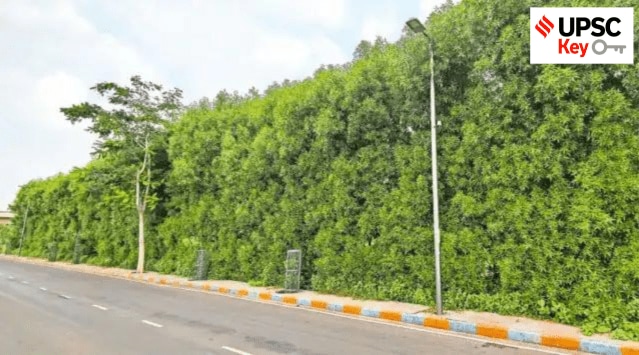
• What’s the ongoing story- FROM THE Sabarmati riverfront in Ahmedabad to the Ram Van “urban forest” in Rajkot, rows of Conocarpus trees, an exotic mangrove species, have been planted by the local administration in Gujarat over the last few years. But, the state government has now banned its “plantation in forest or non-forest area”, underlining its “adverse impacts on environment and human health”.
• Why the state government has banned Conocarpus trees plantation?
• What is an exotic species?
• And, what is the concept of invasive species?
• What is the difference between invasive and exotic species?
• Know about-Conocarpus tress
• For Your Information-Conocarpus is an evergreen species with dark-green shiny leaves. It is a fast-growing species which is reported to be not palatable to wild herbivores or domesticated animals.
In a circular issued on Tuesday, the principal chief conservator of forests and head of forest force, S K Chaturvedi, emphasised the need to control the growth of “exotic species Conocarpus”. “Roots of this species go deep inside the soil and develop extensively, damaging telecommunication lines, drainage lines and freshwater systems,” he said. “Keeping the above facts in mind, nursing of any Conocarpus plant in the departmental plant nurseries and Van Mahotsav nurseries, as well as their plantation in forest area or non-forest area is hereby prohibited, he said.
Research reports have highlighted adverse impacts/ disadvantages of this species on environment and human health… Trees of this species flower in winter and spread pollen in nearby areas. It is learnt that this is causing diseases like cold, cough, asthma, allergy etc.
The forest department has also been directed to raise public awareness about its “adverse impacts” through events like “farmer workshops, nature education camps”.
From beautification of public spaces to residential societies and factories, Conocarpus trees have been the popular choice in recent years, and are a common sight across Gujarat’s cities. They are being grown as trees lining public roads as well as hedges along walkways in gardens and are amenable to be trimmed into various shapes.
Meanwhile, welcoming the forest department’s decision, Professor Padamnabhi Nagar, an associate professor with the botany department of M S University of Baroda, said Conocarpus has no role in the local ecosystem. “Our wildlife will not respond to Conocarpus as it is not a native species,” said Nagar, adding that there are many native plant species which are viable options.
Some forest officers said the species may not be harmful if planted in certain areas “Conocarpus is a hardy mangrove species which grows easily, from inter-tidal zones to deserts to urban landscapes. It stores a lot of carbon. It does suck in a lot of soil moisture, but that is true for all fast-growing species… As it is an exotic species, wildlife may not find it useful. However, it may not be a bad idea to plant Conocarpus in waterlogged areas,” said a forest officer.
Earlier, Telangana had also banned the plant species, which is widely used in public spaces for its ornamental looks but is known to have adverse effects on the local biodiversity.
Other Important Articles Covering the same topic:
📍Putting invasive species on the menu: Approach with caution
📍Biodiversity loss: 37,000 ‘alien species’ introduced by human activities, says report
GOVT & POLITICS
8 Bills awaiting Governor assent, Pinarayi govt mulls moving SC
Syllabus:
Preliminary Examination: Indian Polity and Governance-Constitution, Political System, Panchayati Raj, Public Policy, Rights Issues, etc.
Mains Examination:
• General Studies II: Appointment to various Constitutional posts, powers, functions and responsibilities of various Constitutional Bodies.
• General Studies II: Functions and responsibilities of the Union and the States, issues and challenges pertaining to the federal structure, devolution of powers and finances up to local levels and challenges therein
Key Points to Ponder:
• What’s the ongoing story- With eight Bills passed by Kerala Assembly pending with the Raj Bhavan, Chief Minister Pinarayi Vijayan on Wednesday said the state would approach the Supreme Court on whether the Governor has the power to sit on the Bills indefinitely.
“Eight Bills were submitted to the Raj Bhavan. However, even after a long period, they have not become law. When the governor (Arif Mohammed Khan) had sought explanations and clarifications on the Bills, the ministers and the officials concerned had visited him and given the required explanations. However, no decision has been taken on the Bills,” Vijayan said.
• What is the current conflict between the governor and the government in Kerala?•
• Why the state government would approach the Supreme Court?
• What is the standard legislative procedure in state legislature?
• How Bills are passed in state assembly?
• What is role of governor in legislative procedure in state legislature?
• Every bill, after it is passed by the assembly or by both the Houses in case of a bicameral legislature, is presented to the governor for his assent. There are four alternatives before the governor-what are they?
• If the governor gives his assent to the bill, then what happens with the bill?
• If the governor withholds his assent to the bill, then what happens?
• Can the Governor withholds the Bills indefinitely?
• What is happening in Kerela?
• What Kerela Governor doing with the bills?
• The governor enjoys only a suspensive veto-What is suspensive veto?
• For Your Information-“Eight Bills were submitted to the Raj Bhavan. However, even after a long period, they have not become law. When the governor (Arif Mohammed Khan) had sought explanations and clarifications on the Bills, the ministers and the officials concerned had visited him and given the required explanations. However, no decision has been taken on the Bills,” Vijayan said.
Vijayan said the state government has sought the legal opinion of Senior Advocate Fali S Nariman on whether the Governor has the power to inordinately withhold Bills which the Assembly had passed after deliberations and now the Government wants to approach the Supreme Court raising this issue. The state would seek the service of Senior Advocate K K Venugopal in the apex court, he said. Vijayan said the delay in giving assent to the Bills, which reflect the aspirations of the people, is against the essence of parliamentary democracy.
Referring to the University Law Amendment Bill, which the Assembly had passed 22 months back, Vijayan said the delay in the Governor’s assent has put the appointment of V-Cs in a limbo. “The public health Bill 2021 is also pending with the Governor. Can anyone say that this approach is constitutionally right,” he said.
• How powerful is a Governor?
• Office of Governor-know the historical background
• Why has the Governor’s role and powers recently become a matter of contention?
• What is the relationship between the Governor and the state government?
• Various attempts were made to understand the role of the governor to strengthening centre-state relations-Can you name those committees and their recommendations?
• Administrative Reforms Commission of 1968, the Rajamanar Committee of 1969, the Sarkaria commission of 1988 and
Punchhi Commission-What were their recommendations in the context of role of Governor?
• The Sarkaria Commission, set up in 1983 to look into Centre-state relations, proposed certain points for the selection of Governors-Know them in detail
• What Punchhi Committee, constituted in 2007 on Centre-state relations said on selection the Governor?
• The Punchhi Committee recommended deleting the “Doctrine of Pleasure” from the Constitution-What is “Doctrine of Pleasure”?
• What Supreme Court of India said about the Governor’s role?
• How things changed after the S.R. Bommai case ,1994?
Other Important Articles Covering the same topic:
📍Explained: Governor’s powers, friction with states, and why this happens often
📍What does the law say on how a Governor can be sacked?
📍How are Governors appointed, and why is their role often controversial?
Previous Year Prelims Questions Based on same theme:
📍Which one of the following suggested that the Governor should be an eminent person from outside the State and should be a detached figure without intense political links or should not have taken part in politics in the recent past? (Please refer Prelims 2019 GS question Paper for complete question)
📍Which of the following are the discretionary powers given to the Governor of a State? (Please refer Prelims 2014 GS question Paper for complete question)
1. Sending a report to the President of India for imposing the President’s rule
2. Appointing the Ministers
3. Reserving certain bills passed by the State Legislature for consideration of the President of India
4. Making the rules to conduct the business of the State Government
THE IDEAS PAGE
Syllabus:
Preliminary Examination: Indian Polity and Governance-Constitution, Political System, Panchayati Raj, Public Policy, Rights Issues, etc.
Mains Examination: General Studies II: Functions and responsibilities of the Union and the States, issues and challenges pertaining to the federal structure, devolution of powers and finances up to local levels and challenges therein
Key Points to Ponder:
• What’s the ongoing story- Ashok Lavasa Writes: The recently concluded special session of Parliament was “special” for what it achieved, and what it did not. If the universally applauded Nari Shakti Vandan Adhiniyam Bill was labelled “a post-dated cheque”, One Nation One Election could be a cheque that wasn’t presented. Apprehension was strong that the cheque had already been written as the September 2 notification on the subject stated that “in the national interest it is desirable to have simultaneous elections in the country” and a committee headed by former president Ram Nath Kovind was tasked not simply to “examine the issue” but “to make recommendations for holding simultaneous elections in the country.”
• The notification cites three reasons why the “surfeit” of elections in India (“held almost every year and within a year too at different times”) is not desirable-cite those three reasons
• “Massive expenditure incurred by the government and other stakeholders; diversion of security forces and other electoral officers from their primary duties for prolonged periods; disruption in development work on account of prolonged application of the Model Code of Conduct (MCC). Each reason seems strong and merits transparent scrutiny by the Committee”-Analyse
• “Spending about 10 paisa per voter per day for the normal duration of the elected Houses at the state and central level”-How author of this article came to this conclusion?
• According to the author, what is the per voter expenditure?
• “So far, there has been no analysis on total public expenditure incurred on the conduct of Lok Sabha and Vidhan Sabha elections separately or together and the expected savings in the event of simultaneous polls”-Why?
• What is the argument of diversion from duty? What data is saying?
• For Your Information-According to the author, the conduct of elections does involve central and state security forces as well as other government staff called upon to do election duty in addition to their normal duties. Here again there is no statistical study to show the number of days taken up in election duties when elections to State Assembly and Parliament are held simultaneously or separately. It can be assumed that staff is involved for about 60 days during one election cycle and for every state this is done two times in five years because elections are held separately. That this is done at the cost of their normal duties is not disputed as far as civilian staff is concerned but to what extent this is detrimental or undesirable is a matter of debate because elections are undoubtedly “essential duty” for security forces. It is also true that many civilian officials consider it a privilege to do poll duty. Our system is built on utilising the services of full-time public officials for occasional activities such as Census and elections, which are considered national duty and for which it would be counterproductive to have a permanent cadre. The Constitution, in fact, even provides for appointing regional election commissioners only for the duration of the elections.
• What exactly author is trying to convey on simultaneous elections issue?
• Do you agree with the authors argument?
Other Important Articles Covering the same topic:
📍One Election will mean less democracy
📍The 360° UPSC Debate | Does India Need Simultaneous Elections?
Numbers that matter, and don’t
Syllabus:
Preliminary Examination: Economic and Social Development
Mains Examination: General Studies III: Indian Economy and issues relating to planning, mobilization, of resources, growth, development and employment.
Key Points to Ponder:
• What’s the ongoing story- Praveen Chakravarty writes: Over the past several weeks, four Chief Economic Advisors (current and former), three foreign university academics, members of the Economic Advisory Council and bureaucrats in the finance ministry have been arguing in the opinion pages of English print media and social media. Their bone of contention is whether India’s GDP growth in the most recent quarter was a “strong” 7.8 per cent or an “anaemic” 8 per cent or a “realistic” 4.5 per cent. If you are puzzled about how a 7.8 per cent growth can be strong while 8 per cent is deemed anaemic, brace for more economic gobbledygook.
• What are the arguments and accusations about GDP?
• “Whatever one can rightly say about India, the opposite is also true” and India’s GDP-connect the dot
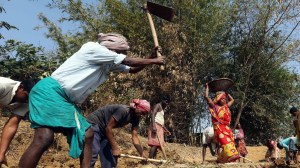
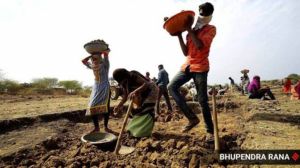
• “In the fiscal years of 2016, 2018 and 2019, MGNREGA demand went down as economic opportunities rose. It is an indicator of the economic distress of Indian households. Economists sniping at each other over deflators and IMF Washington executives celebrating India’s “fastest growing economy in the world” tag are a cruel joke on these 20 million distressed Indian families”-Decode
• “It is the idea of GDP as a holy grail measure for the health of the overall economy, which is the problem”-Discuss
• “When 20 million Indian families are telling us month after month that they are unable to find opportunities for income and prosperity, it does not matter what “deflator” is used to measure GDP”-Analyse the statement
• It is time for a complete reset in our economic public discourse and narrative-why?
• The primary responsibility for the measurement of Gross Domestic Product (GDP) is with whom?
• What do you understand by the Gross Domestic Product (GDP)?
• How the Real Gross Domestic Product (GDP) is calculated?
• What is the difference between real GDP and nominal GDP?
• What are the different types of Gross Domestic Product?
• GDP-How it is Calculated?
• Gross domestic product (GDP) and Gross National Product (GNP)-Key Differences
• What is Gross Value added (GVA)?
• How are GDP and GVA different?
• What do the GDP data show?
• What do the GVA data show?
• One of the most important tasks to measure GDP accurately is the immediate revision of the base year-why?
• The country’s GDP is presently computed with base year?
• “GDP estimates based on an outdated base would not adequately capture new activities being undertaken in the economy”-What is the problem with current base yaer?
• For Your Information-In the last 10 years, the Modi government has made large investments in infrastructure. This would have resulted in the augmentation of additional and diversified production capacities and hence would have led to an increase in the production of goods and services. Further, with the improving image of the country globally and greater ease of doing business, a large inflow of foreign investment has also contributed towards improved capital investment and hence increased value addition due to diversification, adoption of efficient technologies and increased capacity. Therefore, new activities should be properly and adequately captured in the compilation process.
The compilation of GDP itself is a complex exercise and the revision of the base year is still more challenging. This requires a complete assessment of various data sources presently used for compilation and an examination of the feasibility of using new sources of data which have come into existence during the intervening period. Such new data sets should be used with caution and must be in accordance with the global guidelines provided in the System of National Accounts 2008. Considering the time required to undertake such an exercise, MOSPI and the National Statistical Commission should initiate the process at the earliest.
Unfortunately, MoSPI has not come out with the results of various surveys like the consumer expenditure survey and the annual survey on unincorporated enterprises which are crucial for the base revision exercise. Further, the exercise to examine other available databases, especially the newly created databases from GST and digital payments, should commence immediately.
• “There are also requirements for improvements in the procedure for the compilation of GDP in the country”-Why?
Other Important Articles Covering the same topic:
📍ExplainSpeaking: Why is India’s GDP facing another controversy
EXPLAINED
Lok Sabha gets a new home, MPs’ code of conduct still undecided
Syllabus:
Preliminary Examination: Indian Polity and Governance-Constitution, Political System, Panchayati Raj, Public Policy, Rights Issues, etc.
Mains Examination: General Studies II: Parliament and State legislatures—structure, functioning, conduct of business, powers & privileges and issues arising out of these.
Key Points to Ponder:
• What’s the ongoing story- As Parliament moved to a new building last week, members of Lok Sabha carried along two matters that they have kept pending for years now. In both matters, the MPs themselves are the affected party, and seek a commitment to good behaviour and proper conduct from them.
• “The matter (of the Code of Conduct) is under consideration of the Committee on Ethics.”-why?
• Code of Conduct for MPs-what are they?
• Do You Know-Concerns over potential conflicts of interest of MPs were first expressed almost a century ago. On January 26, 1925, it was noted in the Central Legislative Assembly that “a member having a personal, pecuniary or direct interest in a matter before the House is required, while taking part in the proceedings on the matter, to declare the nature of the interest”.
The first Ethics Committee in Lok Sabha was constituted on May 16, 2000 by the late GMC Balayogi of the TDP. Balayogi was followed as Speaker by Manohar Joshi of the Shiv Sena, Somnath Chatterjee of the CPM, Meira Kumar of the Congress, and Sumitra Mahajan and Om Birla of the BJP.
The Ethics Committee is reconstituted every year. The committee was headed by T R Baalu of the DMK in 2009-10, by Advani in 2011-12, and by Dr Chinta Mohan of the Congress in 2013-14, according to the Lok Sabha website.
The Lok Sabha website states that the Ethics Committee shall “(a) Examine every complaint relating to unethical conduct of a member of Lok Sabha referred to it by the Speaker and make such recommendations as it may deem fit. (b) formulate a Code of Conduct for members and suggest amendments or additions to the Code of Conduct from time to time.”
After the Ethics Committee’s report is tabled in the House, it is taken up for discussion. Once approved by the House, it goes to the Rules Committee, which drafts Rules based on the recommendation.
Before the report under Advani that became part of the Rules Committee report tabled in 2015, the Ethics Committee headed by Manikrao H Gavit of the Congress had recommended on December 13, 2012: “…The Committee gave in principle approval for adoption of the Rajya Sabha model of Register of Members’ Interest. The Secretariat was accordingly directed to prepare a draft report on the subject.”
• How Code of Conduct for parliamentarian evolved?
• Code of Conduct in Lok Sabha and Code of Conduct in Rajya Sabha-Compare
• Do You Know-On September 15, three days before Parliament convened for the Special Session, Lok Sabha said in response to a query by The Indian Express under the Right to Information (RTI) Act: “The matter (of the Code of Conduct) is under consideration of the Committee on Ethics.”
The Committee on Ethics has in fact been considering the matter for more than eight years.
On December 16, 2014, the Lok Sabha Ethics Committee headed by Gandhinagar MP L K Advani submitted its report on proposed amendments to the Rules of Procedure and Conduct of Business in Lok Sabha to Speaker Sumitra Mahajan. The report was tabled in the House two days later.
The committee’s recommendations were included in the report of the Rules Committee of Lok Sabha, which was laid on the table of the House on August 5, 2015. The report said [the Ethics Committee] shall “formulate a Code of Conduct for Members and suggest amendments or additions to the Code of Conduct from time to time”.
It also said: “…Rajya Sabha is already maintaining a register of their Members’ interests. …The Committee recommends that the Committee on Ethics may examine and recommend the nature of Members’ interests to be declared and the form of Register of Members’ interest to be maintained for Members of Lok Sabha.”
The matter has stood there ever since.
The Ethics Committee continued to be headed by Advani until 2018-19. Since 2019-20, it has been headed by Vinod Sonkar, the BJP MP from Kaushambi, UP.
Other Important Articles Covering the same topic:
📍Ethics panel set to form code of conduct for Lok Sabha MPs
WHY ODISHA WANTS TO HAVE ITS OWN TIGER CENSUS, HOW IT WILL BE DONE
Syllabus:
Preliminary Examination: General issues on Environmental ecology, Bio-diversity and Climate Change – that do not require subject specialization.
Main Examination: General Studies III: Conservation, environmental pollution and degradation, environmental impact assessment.
Key Points to Ponder:
• What’s the ongoing story-After it announced a tiger census of its own in July, questioning the findings of the All-India Tiger Estimation (AITE) 2022, the Odisha government has unveiled how it plans to carry out the exercise.
The AITE report, released in July, had said more than half the tigers Odisha had in 2016 have vanished, with one of its two notified tiger reserves, the Satkosia Tiger Reserve, left with none. It said Odisha has 20 tigers, down from 45 in 2006. The number at the other reserve, the Similipal Tiger Reserve, has doubled from 8 in 2018 to 16 in 2022, the report said.
Disagreeing with the AITE’s methodology, the Odisha government began preparing for a census of its own, which is to take off in October.
While the AITE since 2006 has replaced the pugmark method with new technologies, Odisha’s survey will rely on the camera trap method along with pugmark and other approaches.
• What is Odisha’s contention?
• What does Odisha aim for with its own survey?
• Where will the survey be carried out?
• How will the survey be done?
Other Important Articles Covering the same topic:
📍India has 3682 tigers, home to 75 per cent of global numbers: Tiger census data
For any queries and feedback, contact priya.shukla@indianexpress.com
The Indian Express UPSC Hub is now on Telegram. Click here to join our channel and stay updated with the latest Updates.
Subscribe to our UPSC newsletter and stay updated with the news cues from the past week.


Read UPSC Magazine