


© IE Online Media Services Pvt Ltd
Tags:


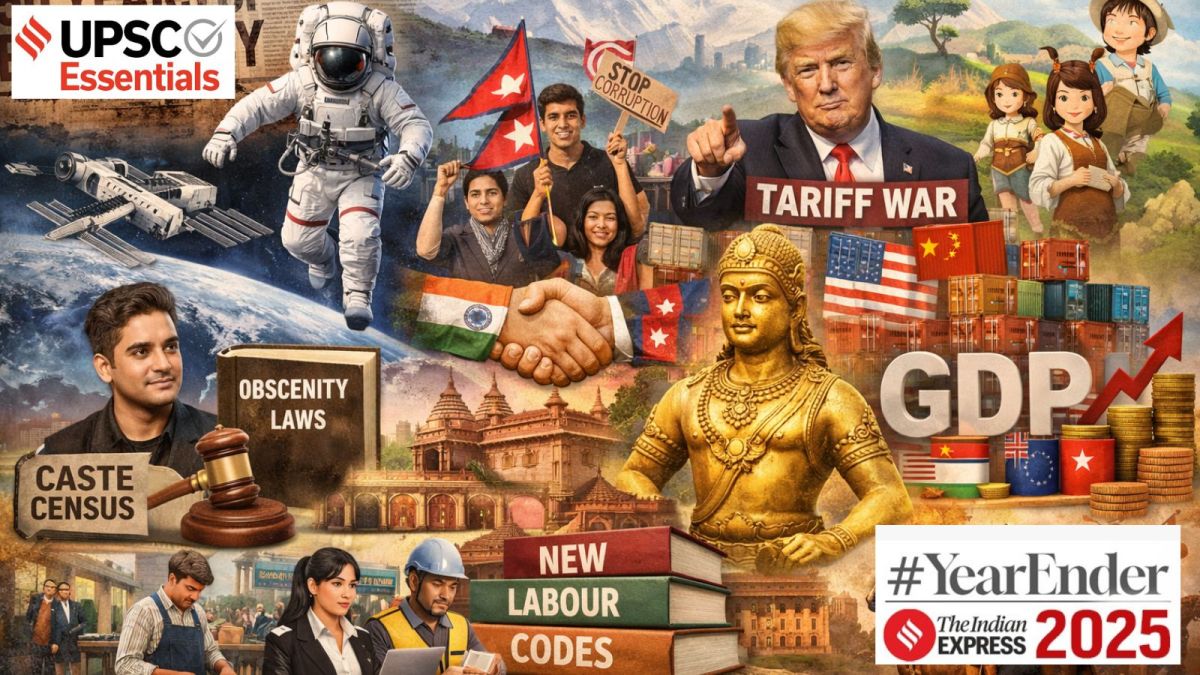
From national politics and international affairs to history and economy, here are the top ten issues that captured everyone’s attention in 2025.
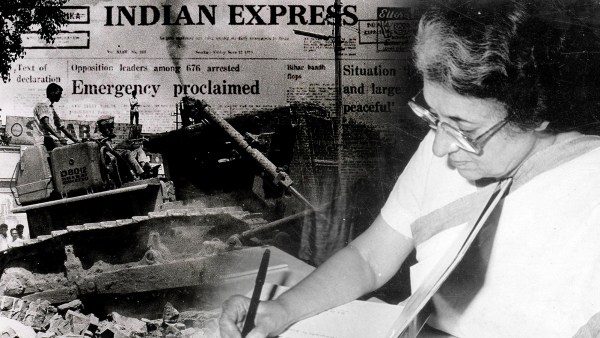
This year marked the 50 years of emergency that was imposed 50 years ago on June 25, 1975. The 21-month period that followed was marked by the suspension of civil liberties, curtailment of press freedom, mass arrests, cancellation of elections, and rule by decree. Notably, in the context of modern Indian Political history the “Emergency” refers to the period from June 25, 1975 to March 21, 1977, during which the government of Prime Minister Indira Gandhi used special provisions in the Constitution to impose sweeping executive and legislative consequences on the country.

Click here to read more about the 50 Years of Emergency: From causes to constitutional implications.
After spending 18 days on the International Space Station and orbiting around the Earth 288 times, Indian astronaut Group Captain Shubhanshu Shukla and his three colleagues on the Axiom-4 mission splashed down in the Pacific Ocean on 15th July after a 20-hour journey from the International Space Station. This mission not only strengthens India’s foray into human spaceflight but also showcases its growing contribution to space research through a series of significant experiments led by Shukla aboard the International Space Station (ISS).
Click here to read more about the Axiom-4 mission.
September 8 and 9 marked two major days in Nepal’s modern political history, which saw a Gen Z-led movement against social media bans and corruption that ended up toppling the government after the mostly leaderless protests spilled over into Kathmandu’s streets. As the protests intensified, Prime Minister Khadga Prasad Oli resigned on September 9. The President accepted the resignation and also dissolved Parliament. Former Supreme Court justice Sushila S Karki was sworn in as Nepal’s interim Prime Minister on September 12.
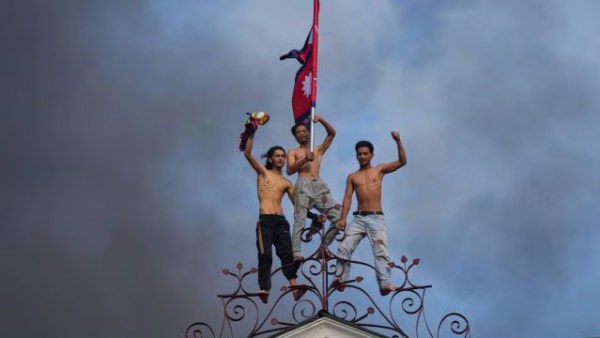
Click here to read more about the Nepal’s GenZ Protest and India-Nepal Relations.
During an episode of India’s Got Latent, hosted by comedian Samay Raina, Ranveer Allahbadia made a crude joke that caught attention for being offensive. The remark quickly triggered outrage, leading to FIRs being filed in two states — Maharashtra and Assam. While the show was intended for a limited audience, clips went viral, intensifying the backlash. As criticism mounted, Allahbadia issued a public apology, admitting that he overstepped. In response to the controversy, Samay Raina removed all videos of the show to curb further scrutiny.
| What is the Hicklin Test? |
| The Hicklin Test was established in English Law after the case of Regina vs Hicklin (1868). According to it, a work can be considered obscene if any portion of it is found to “deprave and corrupt those whose minds are open to such influences”. The test was most famously used by the Supreme Court to ban DH Lawrence’s Lady Chatterley’s Lover in the case of Ranjit D Udeshi vs State Of Maharashtra (1964). |

US President Donald Trump celebrated April 2 as America’s “Liberation Day” by announcing “reciprocal tariffs” against all major trading partners. Two sets of tariffs were announced. One, a base tariff of 10% against all countries, which represents a sharp increase from the pre-Trump 2.0 tariff rate of around 2.5%. Then there were country-specific tariffs. Amid global pushback, Donald Trump announced a 90-day pause on tariffs; later, it kicked in on August 27.
Click here to read more about the Trump’s reciprocal tariffs.
As artificial intelligence (AI) chatbot ChatGPT upgraded its 4o model on March 25 to include native image generation capabilities, featuring a “natively multimodal model capable of precise, accurate, photorealistic outputs”. Users replicated various popular artistic styles, most notably the distinctive animation of Studio Ghibli. The ChatGPT-converted Ghibli-style photos became viral on social media platforms. However, the trend also highlighted legal and ethical concerns about AI tools trained on copyrighted creative works and what that means for the future livelihoods of human artists. In this context, an old clip of Miyazaki has resurfaced in which he has expressed strong reservations about using AI to create art. In 2016, Miyazaki said he was disgusted by AI-generated animation and called it an “insult to life itself”.
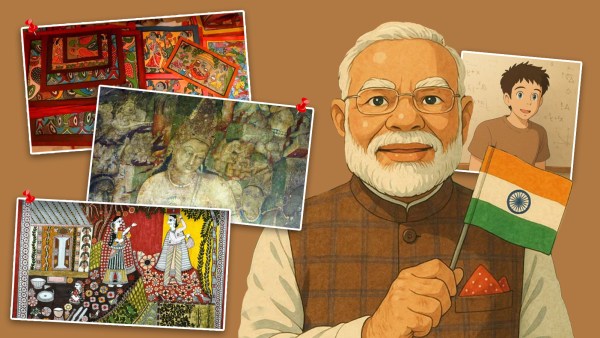
| Studio Ghibli |
| Studio Ghibli is a Japanese animation studio founded in 1985 by legendary animators Hayao Miyazaki, director Isao Takahata, and producer Toshio Suzuki. Its films feature hand-drawn, vivid frames with a rich colour palette and acrylic paints, with minimal use of computer techniques. The word ‘ghibli’ is Italian for “hot wind blowing through the Sahara Desert”. |
Click here to read more about the Ghibli trend and Indian Painting styles.
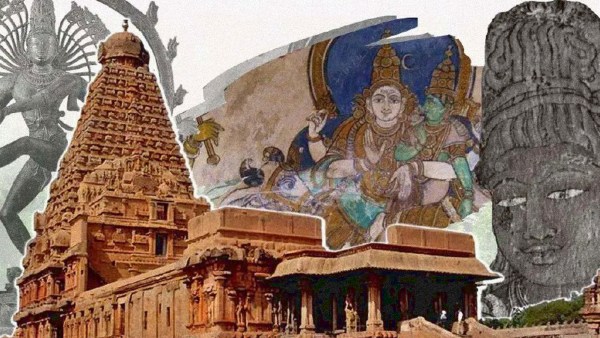
Prime Minister Narendra Modi visited Gangaikonda Cholapuram in Ariyalur district, which was once the Chola capital, on July 27 and unveiled a commemorative coin and inaugurated an exhibition on Rajendra Chola’s northern conquest. The Union Ministry of Culture also hosted a four-day festival in the town commemorating 1,000 years of Rajendra Chola’s maritime expedition to Southeast Asia and the commencement of the construction of the Gangaikonda Cholapuram temple. Rajendra I, the maritime monarch of the Chola dynasty, inherited a powerful kingdom from his father Rajaraja I and expansion of the Chola empire continued under him.
In the International Monetary Fund (IMF) World Economic Outlook April 2025, India was positioned as the fourth-largest economy globally, on par with Japan, the IMF forecasts India to be the fastest-growing major economy over the next two years, maintaining a significant advantage over both global and regional competitors despite the adjustment in growth projections.
Click here to read more about the largest economies and understand GDP.
The Cabinet Committee on Political Affairs (CCPA) on April 30 approved the inclusion of caste data in the upcoming population census. Union Minister Ashwini Vaishnaw made the announcement, underscoring the constitutional framework that makes Census a Union subject. The move revives a long-standing debate over caste-based enumeration and its use in governance, policy, and politics.
| History of census in India |
| The first non-synchronous, nationwide census was in 1872. This census involved counting individuals across most parts of the country; however, it did not include all territories under British control. It was non-synchronous census. The first synchronous census of India was conducted in 1881. It was conducted by W.C. Plowden. Census of 1881 marked a significant advancement towards a modern and synchronized census. This census emphasized not only complete coverage but also the classification of demographic, economic, and social characteristics. |
Click here to read more about the Caste Census.
More than five years after Parliament cleared the four labour codes- – Code of Wages (2019), Industrial Relations Code (2020), Code on Social Security (2020) and Occupational Safety, Health and Working Conditions Code (2020) – replacing 29 central labour laws, the government has moved ahead with their implementation. Effective from November 21, the four labour codes seek to ease regulations and compliance norms for employers and ensure uniformity in wage structure and social security protection for workers.
Click here to read more about India’s New 4 Labour Codes.
Dear Readers,
2026 will witness new developments in most of the stories mentioned above. You can keep a watch on these themes and many other topics that will be in the news by following the UPSC Issue at a Glance initiative of UPSC Essentials. We explore a new topic in a Q&A format which is relevant for your competitive exams in particular and knowledge in general. Read the articles of the series in the UPSC section of the Indian Express.
For your queries and suggestions write at roshni.yadav@indianexpress.com
Subscribe to our UPSC newsletter. Stay updated with the latest UPSC articles by joining our Telegram channel – Indian Express UPSC Hub, and follow us on Instagram and X.
🚨 Click Here to read the UPSC Essentials magazine for December 2025. Share your views and suggestions in the comment box or at manas.srivastava@indianexpress.com🚨


