8 min read
© IE Online Media Services Pvt Ltd
Latest Comment
Post Comment
Read Comments



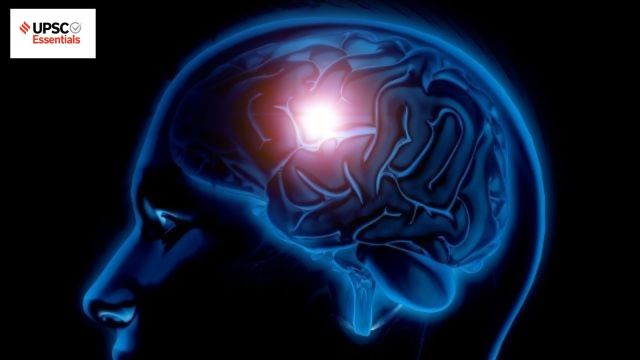 Check your progress and revise your topics through this quiz on Science and Technology. Find a question on the cognitive fatigue in today's quiz. (Image: Freepik)
UPSC Essentials brings to you its initiative of subject-wise quizzes. These quizzes are designed to help you revise some of the most important topics from the static part of the syllabus. Attempt today’s subject quiz on Science and Technology to check your progress.
🚨 Click Here to read the UPSC Essentials magazine for December 2025. Share your views and suggestions in the comment box or at manas.srivastava@indianexpress.com🚨
With reference to Thalassemia, consider the following statements:
1. It is a group of blood disorders affecting the haemoglobin genes.
2. All Thalassemia patients require blood transfusions every 2-4 weeks.
Which of the statements given above is/are correct?
(a) 1 only
(b) 2 only
(c) Both 1 and 2
(d) Neither 1 nor 2
Explanation
— Four children suffering from thalassemia have allegedly tested HIV positive at the Sardar Vallabhbhai Patel District Hospital in Madhya Pradesh’s Satna district, allegedly due to contaminated blood transfusions, officials said.
 (Express file photo by Partha Paul)
About Thalassemia
— It is a heterogeneous group of blood disorders affecting the haemoglobin genes and resulting in ineffective erythropoiesis. Hence, statement 1 is correct.
— The decreased production of haemoglobin results in anaemia at an early age and frequent blood transfusions are required to keep up the haemoglobin levels.
— Thalassaemia significantly necessitates frequent blood transfusions (often every 2-4 weeks). However, not all thalassaemia patients (such as those with minor or intermediate thalassaemia) require such frequent transfusions. Hence, statement 2 is not correct.
Therefore, option (a) is the correct answer.
The ‘Project Suncatcher’ is related to:
(a) A global initiative to mine rare-earth minerals from the Moon for renewable energy technologies.
(b) It will equip solar-powered satellite constellations with Tensor Processing Units.
(c) A defence project aimed at deploying space-based laser systems for missile interception.
(d) An ISRO–NASA collaboration for wireless power transmission from space-based nuclear reactors.
Explanation
— Google CEO Sundar Pichai announced that the company has begun work on a long-term research initiative, Project Suncatcher, aiming to start putting solar-powered data centres into space by 2027.
— According to a policy note released last week, Project Suncatcher will equip solar-powered satellite constellations with Tensor Processing Units (Google’s patented chip capable of high-volume, low-precision computation) and optical links that may scale machine learning computations in space.
— To this end, Google will attempt to achieve data centre-level computation linkages between satellites using laser beams to create the satellite constellation. Google claims it has successfully tested its computer chips for tolerance to radiation and that they can survive the harsh space environments.
— Google plans to launch two prototype satellites as part of a learning mission in partnership with Planet Labs, an Earth imaging company, by early 2027.
Therefore, option (b) is the correct answer.
Consider the following statements about cognitive fatigue:
1. Mental effort is mostly dependent on cognitive control.
2. It is the mental exhaustion that builds during periods of sustained concentration, problem-solving or decision-making.
Which of the statements given above is/are correct?
(a) 1 only
(b) 2 only
(c) Both 1 and 2
(d) Neither 1 nor 2
Explanation
— For a long time, researchers and medical professionals have had difficulty defining, quantifying, and treating cognitive tiredness; they have primarily relied on people’s self-reports of their level of exhaustion. But a new report in Nature sheds light on why our brain gets tired.
— Cognitive fatigue is a universal human experience, the mental exhaustion that builds during periods of sustained concentration, problem-solving or decision-making. It diminishes focus, motivation and judgement, increasing the likelihood of errors. Hence, statement 2 is correct.
— When combined with sleep deprivation or circadian disruption, it can contribute to severe mistakes in high-stakes environments, including medical settings or on the road. This enduring challenge has drawn growing scientific and clinical interest, especially as cognitive fatigue emerges as one of the most prevalent symptoms of long COVID.
— Mental effort is mostly dependent on cognitive control, which is the brain’s capacity to govern ideas, adjust to novel circumstances, and suppress automatic reactions. When the brain is faced with novel tasks or choices, this type of regulation becomes crucial and increases neuronal activity. Maintaining that activity becomes metabolically expensive over time, which ultimately results in the feeling of exhaustion. Although the physiological causes are still being studied, scientists concur that exhaustion protects the brain by alerting it when it is about to reach a limit and needs rest. Hence, statement 1 is correct.
— Scientists are exploring several potential biological contributors: changing levels of metabolites such as glucose, lactate and glutamate; neuromodulators such as adenosine; and proteins such as brain-derived neurotrophic factor (BDNF).
Therefore, option (c) is the correct answer.
With reference to the Interstellar objects, consider the following statements:
1. These are celestial bodies that originate outside the solar system.
2. To determine if a celestial body is interstellar, scientists compute its trajectory.
3. These objects are gravitationally bound to a star.
How many of the statements given above are correct?
(a) Only one
(b) Only two
(c) All three
(d) None
Explanation
— Interstellar objects are celestial bodies that originate outside the solar system, and travel through it. These objects are not gravitationally bound to a star. They can come from other solar systems and be thrown into interstellar space — the area between the stars — due to collisions or be slingshotted by a planet’s or star’s gravity. Hence, statement 1 is correct and statement 3 is not correct.
— Scientists have long suspected that interstellar objects frequently pass through our solar system. However, these objects were not discovered until recently, as they were too small and faint to be detected. With recent advancements in technology and the development of more powerful telescopes, scientists have now begun to observe them.
— To determine if a celestial body is interstellar, scientists compute its trajectory. All planets, asteroids, and comets within the Solar System move in closed elliptical orbits. When they come closest to the Sun (a point called perihelion), they travel the fastest, trying to move away from the Sun, but are slowed down by solar gravitational pull. When these celestial bodies are farthest from the Sun (a point called aphelion), they are brought back close to the Sun by solar gravitational pull. Hence, statement 2 is correct.
Therefore, option (b) is the correct answer.
With reference to the LVM-3, consider the following statements:
1. It is also known as the Geosynchronous Launch Vehicle Mark 3.
2. It uses solid, liquid, as well as cryogenic-fuel-based engines.
3. It is capable of putting an 8,000 kg satellite in geosynchronous orbit.
How many of the statements given above are correct?
(a) Only one
(b) Only two
(c) All three
(d) None
Explanation
— LVM-3, earlier referred to as Geosynchronous Launch Vehicle Mark 3 or GSLV Mk 3, uses solid, liquid, as well as cryogenic-fuel based engines to put up to 8,000 kg in low earth orbit (up to an altitude of 2,000 km from Earth’s surface) and up to 4,000 kg in geosynchronous orbit (about 36,000 km). Hence, statements 1 and 2 are correct and statement 3 is not correct.
— The GSLV-Mk3 rocket was later adapted in 2022, amid the Russia-Ukraine war, to launch 72 OneWeb satellites in two launches to low earth orbit, prompting the change in name of the rocket. The GSLV name implied it was meant to deposit satellites only to the geosynchronous orbit, but the OneWeb missions showed that this rocket could be used for other purposes as well.
— India’s previous heavy satellites — it does have a few communication satellites weighing more than 4,000 kg — were put in orbit by other private launchers. The 5,854-kg GSAT 11 and 4,181-kg GSAT-24 were launched by Ariane space. ISRO also used the service of Elon Musk’s SpaceX last year to put in orbit the 4,700-kg GSAT-20 satellite.
Therefore, option (b) is the correct answer.
Daily Subject-wise quiz — History, Culture, and Social Issues (Week 135)
Daily subject-wise quiz — Polity and Governance (Week 141)
Daily subject-wise quiz — Science and Technology (Week 140)
Daily subject-wise quiz — Economy (Week 140)
Daily subject-wise quiz — Environment and Geography (Week 140)
Daily subject-wise quiz – International Relations (Week 140)
Subscribe to our UPSC newsletter and stay updated with the news cues from the past week.
Stay updated with the latest UPSC articles by joining our Telegram channel – IndianExpress UPSC Hub, and follow us on Instagram and X.

Read UPSC Magazine