8 min read
© IE Online Media Services Pvt Ltd
Latest Comment
Post Comment
Read Comments



 Check your progress and revise your topics through this quiz on Science and Technology. Find a question on the planet Saturn in today's quiz. (Image credit: NASA/JPL/Space Science Institute via AP, File)
UPSC Essentials brings to you its initiative of subject-wise quizzes. These quizzes are designed to help you revise some of the most important topics from the static part of the syllabus. Attempt today’s subject quiz on Science and Technology to check your progress.
🚨 Click Here to read the UPSC Essentials magazine for November 2025. Share your views and suggestions in the comment box or at manas.srivastava@indianexpress.com🚨
With reference to Planet Saturn, consider the following statements:
1. Saturn is tilted at an angle of 44 degrees, and takes about 290 Earth years to complete a single orbit of the Sun.
2. Every 13 to 15 years, the edge of Saturn’s rings aligns directly with Earth.
3. According to NASA’s Cassini spacecraft, Saturn’s rings are made of billions of chunks of ice and rock.
Which of the statements given above is/are correct?
(a) 1 only
(b) 2 and 3 only
(c) 1 and 3 only
(d) 3 only
Explanation
— There are few sights in the Solar System as majestic as the rings of Saturn. But on November 23, these rings disappeared — though only briefly. It is not as if the rings will cease to exist. Their “disappearance” — when viewed from Earth — will be an optical illusion. Saturn, which is tilted at an angle of 26.73 degrees, takes about 29.4 Earth years to complete a single orbit of the Sun. Hence, statement 1 is not correct.
— Every 13 to 15 years, the edge of Saturn’s rings aligns directly with Earth. Hence, statement 2 is correct.
— Data from NASA’s Cassini spacecraft revealed that Saturn’s rings are made of billions of chunks of ice and rock, whose size varies from as small as grains of dust to as large as mountains. According to the current consensus, the rings evolved just 100 million years ago due to the collision of two icy moons. Hence, statement 3 is correct.
Therefore, option (b) is the correct answer.
Consider the following statements:
Statement 1: Genome-edited crops entail mere “editing” of genes naturally present in the host plant, leading to mutation or changes in their DNA sequence.
Statement 2: The editing is done by protein enzymes that act like molecular scissors to cut and modify the DNA of the targeted native gene.
Which one of the following is correct in respect of the above statements?
(a) Both Statement 1 and Statement 2 are correct and Statement 2 is the correct explanation for Statement 1.
(b) Both Statement 1 and Statement 2 are correct and Statement 2 is not the correct explanation for Statement 1.
(c) Statement 1 is correct but Statement 2 is incorrect.
(d) Statement 1 is incorrect but Statement 2 is correct.
Explanation
— GM (genetically modified) crops contain foreign genes from unrelated species – say the Bacillus thuringiensis or Bt soil bacterium that code for the production of proteins toxic to various insect pests in cotton.
— GE (genome edited), on the other hand, entails mere “editing” of genes naturally present in the host plant, leading to mutation or changes in their DNA sequence. Hence, statement 1 is correct.
— The editing is done by protein enzymes that act like “molecular scissors” to cut and modify the DNA of the targeted native gene. Such editing is aimed to bring forth desirable alterations in that gene’s expression and function. The enzyme is directed to the specific location/address in the plant genome by a “navigator” guide-RNA, which is a custom-designed molecule having a sequence matching that of the target DNA. Hence, statement 2 is correct.
— For developing the GE rice and mustard varieties, scientists used so-called CRISPR-associated (Cas) proteins. The Cas9 protein was deployed for editing a ‘drought and salt tolerance’ gene in the MTU-1010 rice and 10 ‘glucosinolate transporter’ genes in the Varuna mustard varieties. The Cas12a protein was, likewise, used to edit the ‘cytokinin oxidase 2 (also called Gn1a)’ gene in Samba Mahsuri rice.
Both Statement 1 and Statement 2 are correct and Statement 2 is the correct explanation for Statement 1.
Therefore, option (a) is the correct answer.
With reference to the measurement of pollutants in Air Quality Monitoring Stations, consider the following statements:
1. Particulate matter is measured using Beta Attenuation Monitors (BAM), which rely on the beta ray attenuation principle.
2. Sulphur dioxide is measured through chemiluminescence.
3. Nitrogen oxides are measured by UV fluorescence.
How many of the statements given above are correct?
(a) Only one
(b) Only two
(c) All three
(d) None
Explanation
— The city’s network comprises 40 Continuous Ambient Air Quality Monitoring Stations (CAAQMS) — compact, temperature-controlled cabins that function as automated laboratories. Spread across the city for representative measurement, each station must track eight pollutants: PM2.5, PM10, nitrogen dioxide, sulphur dioxide, carbon monoxide, ozone, ammonia and lead. They operate under Central Pollution Control Board (CPCB) guidelines issued in 2012, which specify the principles, calibration steps and quality-control procedures all instruments must follow.
— Particulate matter is measured using Beta Attenuation Monitors (BAM), which rely on the beta ray attenuation principle. A small Carbon-14 or Krypton-85 source emits beta rays through a clean patch of filter tape. After air is drawn through and dust collects on the tape, the instrument re-measures the spot. Fewer beta rays pass through, and the decline in signal is used to calculate PM2.5 and PM10 concentrations. Hence, statement 1 is correct.
— Sulphur dioxide is measured by UV fluorescence, which detects the weak glow SO2 emits under ultraviolet light. Hence, statement 2 is not correct.
— Ozone is measured by UV photometry, which tracks how much UV light it absorbs.
— Carbon monoxide is measured using non-dispersive infrared (NDIR) absorption, based on how much infrared light CO absorbs.
— Nitrogen oxides are measured through chemiluminescence, where instruments detect the faint light produced when the gases react with ozone inside the analyser. Hence, statement 3 is not correct.
— Ammonia is measured using optical spectroscopy based on its characteristic absorption of light.
— These methods are approved under the National Ambient Air Quality Standards (NAAQS) of 2009, which list “gravimetric, wet-chemical (for manual stations) and automatic instrument-based techniques” to ensure comparable data across India.
Therefore, option (a) is the correct answer.
The World Health Organisation, in its 2001 guidance on uranium in drinking water, said that the human body, on average, contains about 90 µg of uranium. What is the correct order of uranium content (from low to high) in the human body?
1. Liver
2. Kidney
3. Skeleton
Select the correct answer using the codes given below:
(a) 1—2—3
(b) 2—3—1
(c) 3—1—2
(d) 2—1—3
Explanation
— Experts have flagged issues with a recent study, which raised alarm over the presence of uranium in the breast milk of lactating mothers in Bihar. The study, published last Friday in the open-access Scientific Reports journal, detected uranium in 40 breast milk samples collected from mothers in Bihar.
— Uranium is a natural element which is invariably present in trace amounts in everything. The good thing is that uranium is a heavy element and does not bind with the tissues of the body, so any uranium you consume will likely be flushed out in a very short time. People have to drink highly contaminated water for several years to have some impact on the kidneys.
— The World Health Organisation, in its 2001 guidance on uranium in drinking water, said that the human body, on average, contains about 90 µg of uranium derived from normal intakes of water, food and air — about 66% is found in the skeleton, 16% in the liver, 8% in the kidneys and 10% in other tissues.
Therefore, option (d) is the correct answer.
China has launched a replacement return capsule to its space station, marking the first emergency mission in its human spaceflight programme by the:
(a) Shenzhou-22 spacecraft
(b) Tianzhou-8 spacecraft
(c) Long March-5B launcher
(d) Tiangong-2 orbital module
Explanation
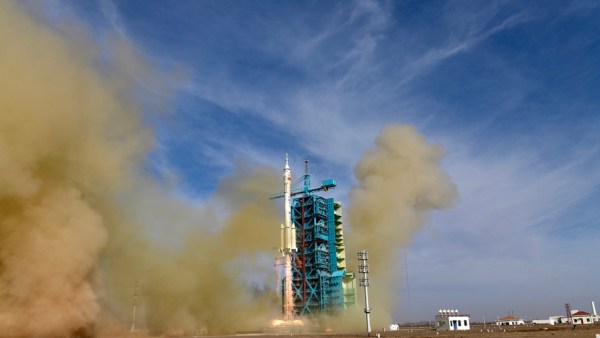 (Photo: CCTV)
— The Shenzhou-22 spacecraft, loaded with 600 kg of supplies, including food and material needed to repair a damaged return vehicle. It linked up with the Tiangong space station in under four hours.
— According to the China Manned Space Agency (CMSA), this is the first emergency launch mission in the country’s manned space programme.
Therefore, option (a) is the correct answer.
Daily Subject-wise quiz — History, Culture, and Social Issues (Week 133)
Daily subject-wise quiz — Polity and Governance (Week 137)
Daily subject-wise quiz — Science and Technology (Week 137)
Daily subject-wise quiz — Economy (Week 137)
Daily subject-wise quiz — Environment and Geography (Week 137)
Daily subject-wise quiz – International Relations (Week 137)
Subscribe to our UPSC newsletter and stay updated with the news cues from the past week.
Stay updated with the latest UPSC articles by joining our Telegram channel – IndianExpress UPSC Hub, and follow us onInstagramand X.


Read UPSC Magazine