7 min read

© IE Online Media Services Pvt Ltd



 "The scientific community of the country should have faith that there will be no dearth of resources for their endeavours." said Prime Minister, in the first
meeting of the Governing Board of Anusandhan National Research Foundation, held on 10 September, 2024.
"The scientific community of the country should have faith that there will be no dearth of resources for their endeavours." said Prime Minister, in the first
meeting of the Governing Board of Anusandhan National Research Foundation, held on 10 September, 2024. Take a look at the essential events, concepts, terms, quotes, or phenomena every day and brush up your knowledge. Here’s your UPSC Current Affairs knowledge nugget for today on Prime Minister Professorship.
(Relevance: Government initiatives constitute an important component of the UPSC syllabus, with questions frequently asked on various programmes. Hence, it is important for aspirants to stay informed about initiatives in the news. The Prime Minister Professorship is one such initiative currently in the news.)
Renowned scientist Dr Kishore M Paknikar, former Director of the Agharkar Research Institute (ARI), Pune, and Distinguished Visiting Professor at IIT Bombay, has been selected as one of the first recipients of the Prime Minister Professorship instituted by the Anusandhan National Research Foundation (ANRF), Government of India. He will be hosted at COEP Technological University, Pune, for a period of five years. In this context, let’s know what the Prime Minister Professorship is all about and other ANRF programmes.
1. The Prime Minister Professorship is a new national initiative aimed at strengthening India’s research ecosystem by placing highly experienced scientists in universities that have strong teaching foundations but need sustained research leadership.
2. The Prime Minister Professorship will provide a fellowship of Rs. 2,50,000/- per month, along with a research grant of Rs. 24,00,000/ per annum and an overhead of Rs. 1,00,000/- per annum, for a duration of five years.
3. Unlike traditional fellowships that primarily support individual research, the Prime Minister Professorship places accomplished and superannuated but research active scientists, technologists and industry professionals of Indian origin directly within universities that lack strong research ecosystems.
4. These appointments involve full time relocation to the host institution and a commitment of upto five years. Prof Paknikar is among the 21 professors who have been appointed across the country as part of this national initiative.
5. Dr Paknikar is widely known for his contributions to microbiology and nanotechnology, with particular emphasis on environmental biotechnology, nanomaterials, and translational research. Over a long and distinguished career, he has combined fundamental science with technology development and has played a key role in mentoring young scientists and building research groups.
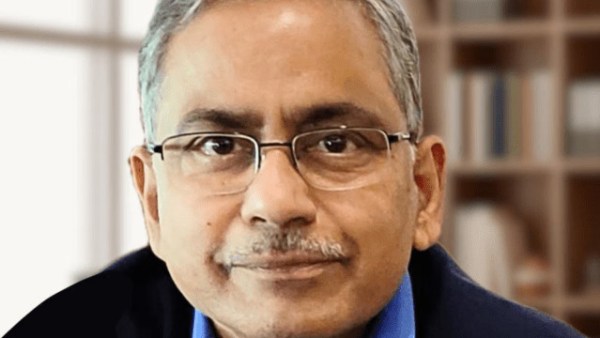 Reacting to his selection, Dr Kishore M Paknikar, described the honour as a responsibility to give back to the academic system.
6. Notably, the Prime Minister Professorship is expected to play an important role in reducing disparities in India’s higher education research landscape by spreading excellence beyond a small number of elite institutions and making high-quality research more widely accessible
1. Superannuated or retired faculty or scientists from reputed Indian institutions, research laboratories or from private institutions.
2. Overseas scientists i.e. Non-Resident Indians (NRIs), Persons of Indian Origin (PIOs), and Overseas Citizens of India (OCIs).
3. Professionals from industry/experienced Professors of Practice with a distinguished record of research and innovation.
4. Applicants should have strong research credentials, must be actively involved in research and innovation activities, and demonstrate a strong commitment to mentor faculty at the eligible host institutions where research and innovation is still at a nascent stage.
5. Superannuated or retired on the date of application (for university/institute faculty, lab researchers/scientists). Industry and international senior professionals with minimum of 55 years of age, may apply.
1. ANRF is established through ANRF Act, 2023, to provide high-level strategic directions for research, innovation, and entrepreneurship in the fields of natural sciences, including mathematical sciences, engineering and technology, environmental and earth sciences, health and agriculture, and scientific and technological interfaces of humanities and social sciences.
2. ANRF has been established to promote research and development and foster a culture of research and innovation throughout India’s Universities, Colleges, Research Institutions, and R&D laboratories.
3. ANRF acts as an apex body to provide high-level strategic direction of scientific research in the country as per recommendations of the National Education Policy. ANRF forges collaborations among the industry, academia, and government departments and research institutions.
1. Mission for Advancement in High-Impact Areas (MAHA) program: Under its MAHA program, ANRF promotes mission-mode, solution-oriented research.
— The newest flagship initiative under ANRF MAHA is Artificial Intelligence for Science & Engineering (AI-SE) , launched in collaboration with the Ministry of Electronics and Information Technology (MeitY), and Scientific Departments.
2. Centre of Excellence for Science, Technology and Innovation Indicators and Analytics (COE-STIIA): As the nation progresses towards a developed, knowledge-driven economy, the need for reliable, timely and fine-granular indicators of Science, Technology and Innovation (STI), and their contextual analysis becomes crucial for policy formulation, strategic planning and effective governance across multiple levels and sectors. In this context, ANRF plans to establish a Centre of Excellence for Science, Technology and Innovation Indicators and Analytics (COE-STIIA) with the aim to strengthen the institutional mechanism for STI indicators with an end-to-end system.
— The key objective is to enhance the quality, contextual relevance and applicability of India’s STI indicators, their analysis, interpretations and dissemination of information and insights at various levels of policy and program planning, as well as foster alignment with the global indicator frameworks to position India effectively in international indices.
3. MAHA-MedTech Mission: It is ANRF’s initiative in collaboration with the Indian Council of Medical Research and the Gates Foundation.
— The primary focus of the mission will be supporting the development and commercialisation of high-quality, affordable, and innovative medical technologies. Additionally, efforts will be directed towards fostering indigenous development of high-priority, high-cost, imported medical technologies to promote self-reliance and adaptation for the Indian population (for low-resource settings).
Consider the following statements with reference to the Prime Minister Professorship,
1. It is a national initiative aimed at strengthening research leadership in universities with strong teaching foundations but needs sustained research leadership.
2. It supports only individual research projects without any institutional responsibilities.
3. The tenure of the Professorship is up to five years.
Which of the statements given above is/are correct?
(a) 1 and 3 only
(b) 1 only
(c) 2 and 3 only
(d) 1, 2 and 3
| Answer Key |
| (a) |
(Sources: Prof Kishore Paknikar named Prime Minister Professor, to join COEP Technological University, anrfonline.in/ANRF)
Subscribe to our UPSC newsletter. Stay updated with the latest UPSC articles by joining our Telegram channel – Indian Express UPSC Hub, and follow us on Instagram and X.
🚨 Click Here to read the UPSC Essentials magazine for November 2025. Share your views and suggestions in the comment box or at manas.srivastava@indianexpress.com🚨

Read UPSC Magazine