© IE Online Media Services Pvt Ltd
Latest Comment
Post Comment
Read Comments
 10 min read


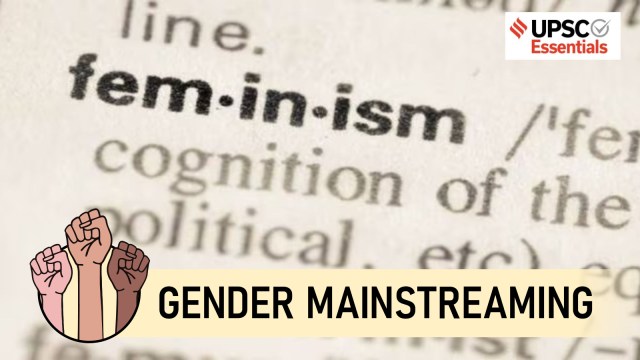 Third-wave feminism not only challenged patriarchy but also the ways race, class, sexuality, and culture shape women’s experience. (File)
— Mohammad Asim Siddiqui
“I humbly request you to keep my identity secret and punish him so that other girls will not suffer,” wrote a student to the internal complaints committee of the National Sanskrit University in Andhra Pradesh, whose allegation of sexual assault led to the arrest of two assistant professors.
“Let Thomas’ confirmation serve to remind you, as it did me, that the fight is far from over. Let this dismissal of a woman’s experience move you to anger. Turn that outrage into political power….I am not a post-feminism feminist. I am the Third Wave”, wrote American writer and activist Rebecca Walker wrote in an article in Ms. magazine in the 1990s, attacking the appointment of Clarence Thomas, who had faced charges of sexual harassment, to the US Supreme Court.
The two cases, separated by decades and continents, underline the timeless persistence of gender-based violence and women’s unwavering resistance to it. Let’s revisit third-wave feminism, which not only challenged patriarchy but also the ways race, class, sexuality, and culture shape women’s experience.
The third wave of feminism is generally believed to have begun in 1991, when Rebecca Walker – daughter of American novelist Alice Walker, best known for her novel The Colour Purple – coined the term.
While incorporating many lessons learnt from the first and the second wave, third-wave feminism diverges from them in embracing individual voices and contradictions within feminism rather than focusing on the universal experiences of women. Many essays in Third Wave Agenda: Being Feminist, Doing Feminism (1997), an anthology edited by Leslie Heywood and Jennifer Drake, highlight hybridity, contradictions, and differences within third-wave feminism.
A key concept embraced by the third-wave feminists was the intersectionality of race, class, and gender in talking about women’s problems. Taking a stance against the essentialist view of women and highlighting their differences rather than commonalities, they advocated, in the words of R Claire Snyder, “personal narratives that illustrate an intersectional and multiperspectival vision of feminism”.
An anthology Colonize This! Young Women of Colour on Today’s Feminism (2002), edited by Daisy Hernandez and Bushra Rehman, features varied feminist voices to show the limitations of white feminism and exhort the women of colour to recognise their importance. The two editors write, the third-wave feminists “encouraged women of colour to express their own unique values, interests, fears, hopes, disappointments, successes, failures, work choices, and so forth”.
Third-wave feminism has also been enriched by Nira Yuval-Davis’s advocacy of “transversal politics” – a term she introduced in her essay “What is Transversal Politics?” (1999). Making a case for encompassing difference rather than equality, and encouraging activists to act as advocates rather than authentic representatives of fixed identities, Yuval-Davis’s theory emphasises the building of coalitions across national, ethnic or religious divisions. Recognising the danger of Eurocentrism, she also stresses intersectionality and believes that feminists from different backgrounds can engage in a dialogue and build solidarity based on shared ideas and values.
An important characteristic of third-wave feminists was their refusal to be judgemental. It was up to women to choose and embrace their sexual or racial identity. Rosemarie Tong and Tina Fernandes Botts, authors of Feminist Thought: A More Comprehensive Introduction (1988/2024), state that unlike the bra-burning protests of the second-wave feminism, third-wave feminists considered it,
“…perfectly acceptable for women to put on makeup, have cosmetic surgery, wear sexually provocative clothes, provided they felt empowered by their choices and not somehow demeaned, diminished, or otherwise objectified by them.”
Another strategy adopted by third-wave feminists is not only to lambast sexist language but also to reclaim some derogatory and insulting terms used against women so as to free them of their biting power. Words like ‘slut’ and ‘bitch’ have been used by them matter-of-factly. They have also tried to enter the male-dominated places where women were not supposed to be seen.
Feminist theorist Judith Butler’s interrogation of the concept of gender and her theory of gender performativity is an important thread in third-wave feminism’s criticism of essentialism implicit in the traditional conception of women. Her book Gender Trouble: Feminism and the Subversion of Identity (1990) argues that gender is not an innate biological category but a social construct. In other words, gender is what one does rather than what one is. It is performed through repeated acts and forms of behaviour which society expects of men and women.
The performance of repeated acts creates the illusion of a stable gender identity. She wrote that “there is neither an essence that gender expresses or externalises nor an objective ideal to which gender aspires, and because gender is not a fact, the various acts of gender create the idea of gender, and without those acts, there would be no gender at all”. Butler’s writings greatly influenced queer and transgender movements.
Donna Haraway’s interpretation of the concept of cyborg in a feminist light also provided a new angle to third-wave feminism, particularly the use of technology to challenge traditional notions of identity and community. Her essay “A Cyborg Manifesto: Science, Technology and Socialist-Feminism in the Late Twentieth Century”(1985), reprinted many times, focuses on the blurring of human-non human boundaries. Cyborg is “a kind of disassembled and reassembled, postmodern collective and personal self”.
A hybrid of cybernetics and organism, the non-gendered figure of cyborg is used by Haraway to challenge male-female, nature-culture, mind-body and other such fixed binaries. Her essay paved the way for third-wave feminism’s attack on the essentialist notion of woman, its emphasis on fluid identities and thinking of gender as socially rather than biologically constructed. Haraway’s theory also influenced the development of cyberfeminism, which was an offshoot of third-wave feminism.
Theories of Haraway, Butler and many other feminists opened a space for alternative sexualities. Opposed to the dominant notion of heterosexuality, they provided strength to queer and transgender feminists and their movements.
Emi Koyama, an important advocate of transfeminism, states in “The Transfeminist Manifesto” (2001) that “transfeminism is primarily a movement by and for trans women who view their liberation to be intrinsically linked to the liberation of all women and beyond. It is also open to other queers, intersex people, trans men, non-trans women, non-trans men and others who are sympathetic towards needs of trans women and consider their alliance with trans women to be essential for their own liberation.”
Third-wave feminism has also been identified with the Riot grrrl underground feminist punk movement in the US in the 1990s, which addressed women’s issues in their songs and musical performances. They enabled women to raise issues and make political statements through music and electronic magazines.
The use of the word grrrl (grrls for some other feminists) suggests aggression and ferocity. Highlighting riot grrrls’s use of new information technology to propel their activism, Charlotte Krolokke and Anne Scott Sorenson (2005) list a number of books like The Cyberpunk Handbook (1995), Friendly Grrls Guide to the Internet-Introduction (1996), and Cybergrrl! A Woman’s Guide to the World Wide Web (1998), which spread the movement far and wide.
Third-wave feminism also benefited from the publication of e-magazines and papers, which were used by the feminists to advance their ideas and programmes quickly. Many third-wave feminists appreciated the aggressive exposition of female stereotypes, sexism and racism by Guerrilla Girls, an anonymous band of women artists in New York in the mid-1980s who performed wearing guerrilla masks.
To sum up, the idea of waves has met with some criticism for unnecessarily pitting one wave against the other. Furthermore, feminism as it has evolved in the non-western world does not fully match the wave sequence, which is closely tied to its American context.
Thus, many key developments in Indian feminism – including efforts of Brahmo Samaj and other reform movements for women’s education in the 19th century, the Hindu Code Bills of the 1950s, the Chipko movement of 1973, and the more recent fights for the rights of Dalit and other marginalised women – do not fit neatly into the US-centered sequence of waves.
Tong and Botts identify specific limitations of third-wave feminism, including its neglect of women’s real problems and celebration of ‘Girlie culture, its individualistic nature, and dismissal of the second-wave feminism as “victim feminism” by some third-wave feminists.
How does the concept of intersectionality challenge the essentialist notions of “woman” present in first- and second-wave feminisms?
How does the American-centric “wave” model of feminism limit our understanding of feminist histories in countries like India?
Gender is what one does rather than what one is. It is performed through repeated acts and forms of behaviour which society expects of men and women. Illustrate.
How do feminists use technology to challenge traditional notions of identity and community? Explain with examples.
Why did some third-wave feminists dismiss the second-wave feminism as “victim feminism”? What are the major criticisms of third-wave feminism?
(Mohammad Asim Siddiqui is a Professor in the Department of English at Aligarh Muslim University.)
Share your thoughts and ideas on UPSC Special articles with ashiya.parveen@indianexpress.com.
Click Here to read the UPSC Essentials magazine for November 2025. Subscribe to our UPSC newsletter and stay updated with the news cues from the past week.
Stay updated with the latest UPSC articles by joining our Telegram channel – IndianExpress UPSC Hub, and follow us on Instagram and X.

Read UPSC Magazine