4 min read


© IE Online Media Services Pvt Ltd



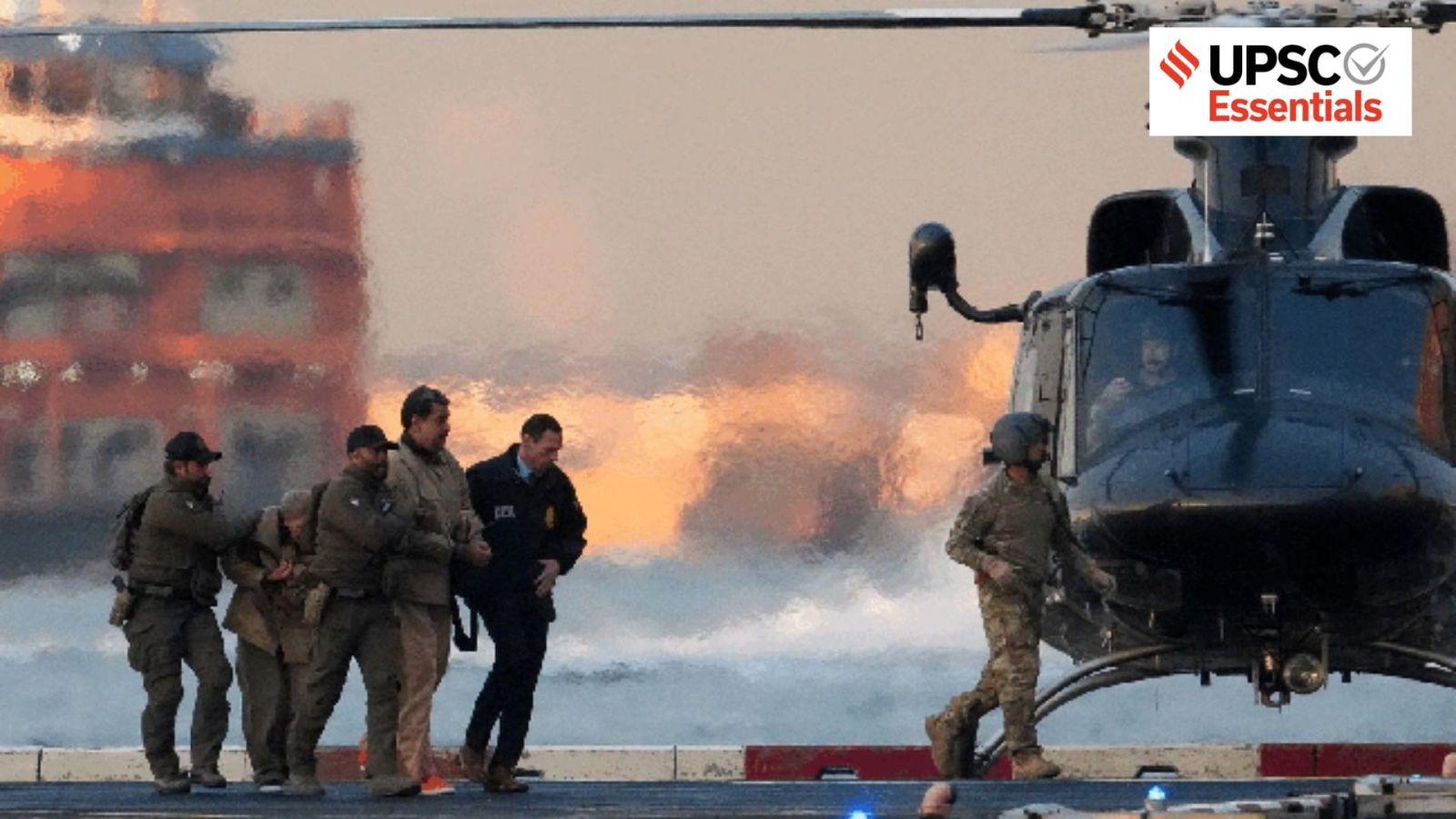 The unilateral military action by the Trump Administration against Venezuela is seen as a severe blow to the post-WWII Rules-Based International Order (RBIO). (File)
It’s been almost a week since the US bombed Venezuela and captured President Nicolas Maduro on charges of running a “narco terrorist organisation”, but the intense debate over the legality of the operation continues around the world.
The unilateral military action by the Trump Administration, called “Operation Absolute Resolve”, against the sovereign Latin American nation is seen as a severe blow to the post-WWII Rules-Based International Order (RBIO). But what is the rules-based international order?
The international order based on the rules enshrined in the United Nations Charter of 1945 is referred to as the rules-based international order. It was established to overcome the gravest consequences of traditional power politics, evident in the devastation of the Second World War, and is based on principles like sovereignty, self-determination, multilateralism, and international law.
Initially known as the liberal international order, the rules-based international order institutionalised a system of rules, laws, and norms, with international organisations like the United Nations, the World Bank, the World Trade Organization, and the International Monetary Fund providing a framework for interaction among states.
Article 1 of the United Nations Charter, for instance, states that the aim of the UN is “to maintain international peace and security”, while Article 2 requires states to “refrain in their international relations from the threat or use of force”.
Hence, the US military operation in Venezuela was carried out in complete violation of international law and multilateral cooperation, as the Trump Administration made no attempt to obtain a mandate from the UN Security Council for it nor did it face an imminent threat from the Latin American state in terms of military attack (an exception under Article 51 of the UN Charter for self-defense).
Trump has called the military operation against Venezuela an update to the Monroe Doctrine – rebranded as ‘Donroe Doctrine‘- enunciated by former President James Monroe in 1823 to cement America’s sphere of influence in Central and South America. It suggests the revival of the imperialist idea of the great powers’ spheres of influence of the 19th century.
In addition, the absence of even an implausible legal justification for the action, alongside Trump’s intent to acquire Greenland, cast a shadow over global stability. It also reflects poorly on other conflicts, like in Gaza and Ukraine.
The fact that the US is unlikely to face any action from the United Nations Security Council, as America is a member with a veto, prompts Geoffrey Robertson KC, a former president of the UN war crimes court in Sierra Leone, to call the security council a “worthless body”, as reported by The Guardian.
Resultantly, there’s a need for serious debate on whether the geopolitical realignments since 1945 undermine the rules-based international order that institutions like the United Nations were established to uphold; as Andrew Heywood and Ben Whitham in “Global Politics” ask, “how far do recent changes of direction in global politics threaten the ‘rules-based’ international order these organisations allegedly created?
We would love to hear what you think about this new initiative. Send your comments at ashiya.parveen@indianexpress.com.
Click Here to read the UPSC Essentials magazine for December 2025. Subscribe to our UPSC newsletter and stay updated with the news cues from the past week.
Stay updated with the latest UPSC articles by joining our Telegram channel – IndianExpress UPSC Hub, and follow us on Instagram and X.

Read UPSC Magazine