14 min read
© The Indian Express Pvt Ltd



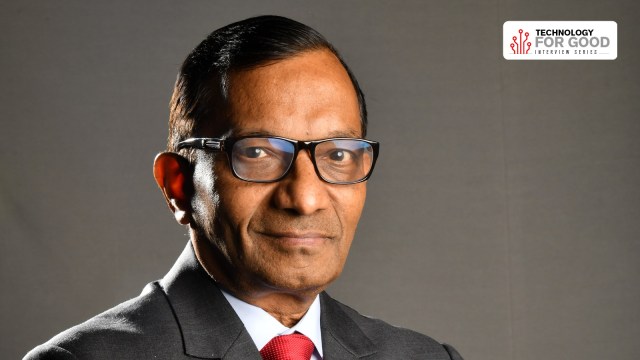 An engineering graduate from IIT Kanpur, Pawan Goenka has a PhD in Mechanical Engineering from Cornell University. (Credits: IN-SPACe )
Pawan Goenka is the chairman of the Indian National Space Promotion and Authorisation Centre (IN-SPACe), which plays a key role in boosting the private space sector economy in India.
An autonomous agency under the Department of Space (DOS), IN-SPACe was established as a single window agency for all space sector activities of private entities, including the building of launch vehicles and satellites and providing space-based services.
Goenka was earlier the MD and CEO of Mahindra & Mahindra and worked at General Motors R&D Centre, Detroit, US, for 14 years. He is now the Chairman of the Board of Governors of IIT Madras.
An engineering graduate from IIT Kanpur, Pawan Goenka has a PhD in Mechanical Engineering from Cornell University.
Pawan Goenka spoke to indianexpress.com on IN-SPACe’s journey, its achievements, focus, the startups that have been nurtured, and how the organisation is changing the face of the space economy. Edited excerpts:
Venkatesh Kannaiah: Could you tell us about IN-SPACe and its journey?
Pawan Goenka: IN-SPACe was created as part of the broader space reforms announced in June 2020 to bring the private sector into space activities. Until then, the private sector largely functioned as a vendor to ISRO. The reforms also aimed to allow ISRO to focus more on R&D and orbital missions, while the private sector took on a larger share of commercial space activities.
Since ISRO had been the sole actor in space, there was previously no need for a regulator. But once private participation was envisaged, a regulator became essential, and IN-SPACe was given the responsibility of regulating all space activities, not just those of the private sector. Even ISRO launches now require IN-SPACe approval.
One major role of the regulator was to create the entire authorisation process from scratch: the rules, guidelines, procedures, and workflows. The second role is that of a promoter, facilitating the entry and growth of private players in the space sector.
This includes giving the private sector access to ISRO’s tech and infrastructure, providing direct tech support, helping private players develop demand for their products and designing government schemes that support new entrants. We also engage with potential investors who may fund private-sector space ventures.
Broadly, whatever is needed to enable the private sector to play a significant role in the space ecosystem falls within this mandate.
Venkatesh Kannaiah: Could you share a few achievements of IN-SPACe?
Pawan Goenka: One of the achievements is the creation of a 10-year roadmap for India’s space economy. When we started, the space economy was about $8 billion. We set a target of $44 billion by 2033 and have mapped out in detail how each segment of the space economy will contribute to that number.
The private space sector has risen exponentially in the last three to three-and-a-half years. When we began, there were around 20-30 startups; today, there are more than 300. And these are deep-tech companies, not copycat ventures or simple marketplaces. These are teams conducting genuine research and tech advancements.
For example, Agnikul, based out of IIT Madras, is building a rocket using a first-of-its-kind semi-cryogenic engine that is fully 3D printed. No one has done that before. There are many such examples of Indian companies working on technologies not developed anywhere else. Some of these are very ambitious; not all will succeed, as is natural. But the ambition and appetite of the private sector are something to be proud of.
There is the scale of facilitation we have enabled through various schemes. There is the Rs 1,000 crore VC fund with SIDBI Venture, with the Government of India committing Rs 1,000 crore exclusively for space startups. There is the technology transfer of the SSLV rocket from ISRO to HAL; the first time a full rocket technology has been transferred to industry. There is also the award of a 12-satellite Earth Observation constellation to a consortium of four startups, which will redefine private-sector participation in space in the coming years.
Venkatesh Kannaiah: Could you tell us about India’s private earth satellite observation constellation?
Pawan Goenka: Today, most of the space-based data used in India, primarily by government agencies, either comes from ISRO or is purchased from abroad. We spend several hundred crores each year on such purchases. Going forward, we want to become data self-reliant and not depend on external sources.
Since ISRO is expected to focus more on R&D and orbital missions, the private sector is expected to step in to generate a large share of the data. We identified the specific data gaps and defined those requirements. When we floated the tender, we laid out these requirements, and this consortium emerged as the one that committed to delivering them.
Once the constellation is operational, I won’t say it will meet all of India’s data needs, but a significant portion, around 75-80% could be covered between ISRO’s data and what the constellation provides.
This also becomes the starting point for many such constellations in the future. We will not only meet our own needs but eventually export data, selling global data outside India, since the satellites naturally cover the entire planet.
Venkatesh Kannaiah: What would be its social impact?
Pawan Goenka: The social impact is significant. Today, the use of space data and space analytics is largely confined to government departments, and even there, adoption is uneven. Many programmes are still pilots conducted in limited regions. With affordable data and more private-sector applications, many high-impact solutions can become mainstream: for farmers, fishermen, disaster management authorities, and many others.
Take landslides, for example. If satellite data combined with ground sensors can predict a landslide 12 hours in advance, it can save lives. Today, some software exists, but the accuracy and lead time are limited. If you predict something three minutes before it happens, it’s of little use. Predicting hours ahead requires more space data, more sensors, and better algorithms. Space data gives broad coverage; sensors give local precision. Both are needed.
Agriculture is another example. Detecting pest attacks in advance today is largely visual and very local. But a combination of satellite imagery and local cameras can flag early warnings, allowing timely treatment.
In the marine sector, predicting where not to go for fishing, or where catch is likely to be good, is done today, but in a limited way. Imagine every fishing boat equipped with such tools, reducing risks and improving incomes.
There are countless such applications. Today, the user base is mostly government-led. Tomorrow, the end users themselves should want to use them, and the private sector should build applications using data from ISRO or private constellations. This won’t be limited to India, though we must first test and prove these systems at home before offering them globally.
This requires developing real intelligence, like AI algorithms that interpret data and generate actionable insights. It takes time. But that’s the direction in which we are headed.
Venkatesh Kannaiah: Can you tell us about the satellite-bus-as-a-service and how it would impact companies or researchers?
Pawan Goenka: Satellite Bus-as-a-Service is another initiative aimed at growing the private space sector. The idea is simple: many small experimental payloads are being developed, but each payload needs a satellite to carry it, and building a satellite is expensive.
A payload is the actual experiment or instrument that performs the intended function. The satellite itself doesn’t do the work — it carries the payload, provides power through solar panels and batteries, handles propulsion, collects data, and transmits it. The launch vehicle’s only job is to take the satellite into orbit. The satellite then carries the payload for the duration of its life, and the payload generates the data or performs the activity.
The costs lie mainly in building the satellite and launching it. So the question we asked is: can we create a business model where we own the satellite, and multiple users own the payloads? If three of you come to me saying you want to fly your payloads, you don’t have to spend on building your own satellite. You simply place your payload in my satellite, making it far cheaper and more efficient.
We are now developing this concept. The idea is to have one or more industry players create a standard satellite bus that can host payloads from multiple customers.
This has not been done in India before, and even globally, it is not very common, though there are a few instances. So we are trying to create a standard satellite bus and an ecosystem around it.
Our plan is to give a pilot project to four companies. These four will build a satellite bus to our specifications. From them, we’ll choose one or two, and we will finance their first two satellites. Once those are proven, it becomes a commercially viable business on its own.
Our role is to be a catalyst: create the ecosystem, provide initial funding, and then let industry take over and scale it.
Venkatesh Kannaiah: Can you tell us about the themes of Indian spacetech startups?
Pawan Goenka: The first element is launch vehicles. Second is satellites.
Third is payloads. Fourth is ground stations. Fifth is applications. And in between all of these is data.
Right now, you’ll notice a growing number of companies entering the applications space, and that’s where the biggest growth will happen. And growth in applications will, in turn, drive demand for data. Data demand will drive satellite requirements. Satellite requirements will drive launches. That is how it works.
Venkatesh Kannaiah: Your thoughts on data and AI.
Pawan Goenka: The future is going to be about data. Geospatial data is another major thrust of the Government of India. When we talk about geospatial, we usually mean ground-based data — photos, maps, or data captured by cameras and drones.
When we talk about space data, we mean data captured from orbit. What we are working on is space-based data. So, when we talk about an Earth Observation constellation, that refers to space data. Geospatial, by contrast, is more ground-driven.
Looking ahead, the key question is how we convert data into information. Data will never be complete, you will always have gaps or variations because things change constantly. The role of AI is to bridge these gaps.
AI is not new; it has been around for decades. I took my first AI course in 1980 in California, 45 years ago.
Venkatesh Kannaiah: Would the impact of AI in the space sector be mostly at the application layer?
Pawan Goenka: The impact of AI would not solely be at the application layer. Even earlier in the chain, where data is processed in orbit instead of being sent to Earth, AI tools are already being used. In satellites, too, whether in transmission or reception, AI is replacing hard-coded behaviour. Earlier, systems were programmed to operate the same way for 20 years. Now, we can add intelligence so the system keeps learning and improving on its own.
So while AI/ML is most visible at the application layer, it is also very useful upstream. The improvement at the application layer may be an order of magnitude, whereas in satellites or payloads, the improvement might still be significant.
Venkatesh Kannaiah: What are the challenges IN-SPACe faces being an enabler, promoter and supervisor?
Pawan Goenka: In many ways, this is a new experiment. I don’t think there is any other government entity with a role like this; simultaneously a promoter, supervisor, and enabler for industry. Everything is new, and IN-SPACe itself is like a startup.
Like any startup, we fall, get up, correct ourselves, and move forward. Many times, we have to rethink how best to support and promote the sector. The positive thing is that IN-SPACe is well accepted by the private sector, by ISRO, and by other government departments, which makes our job easier.
One challenge, however, is that we don’t have a robust way of measuring the size of the space economy. So when we talk about a $44 billion target, we need a proper methodology to track it. We are working to create a process for measuring the space economy accurately.
The second challenge is that investors are still somewhat hesitant to invest in space. The commercial feasibility of space ventures is not yet fully proven in India, which makes some investors cautious. We are working on this too.
Venkatesh Kannaiah: What are the global spacetech startups /innovations that have impressed you, and how does India rank?
Pawan Goenka: I suppose the number one example globally would be SpaceX.
We interact with many companies. We hold several “space days” with different countries, where we meet their space startups. But what I would really like to highlight is that our own startups are right up there. Even though we started later, we are not behind in terms of talent or innovation.
And five years from now, when you look at a global list of top space startups, I’m confident you will see many Indian names on it.
Venkatesh Kannaiah: What is the biggest challenge you want to solve?
Pawan Goenka: The biggest challenge is to change some misconceptions. Those who ask why a ‘poor country’ like India should invest in space are missing the point. India is not a poor country. We are among the top economies in the world. Yes, we still have poor people, but the nation itself is not poor. So the idea that we cannot afford to invest in space is simply not correct.
Second, our investment in space is not about indulging in someone’s fantasies. It is an investment in creating long-term societal value. It is not about going to the Moon or Venus for the sake of it. Those missions represent technology that ultimately enables practical applications in areas like predicting landslides, improving marine safety, disaster management, agriculture, and so on.
Another challenge is self-reliance. We should not be dependent on any other country for critical space-based capabilities. We should not be in a situation where someone can “switch off” access and hurt us, whether it is orbital missions or societal applications.