The company's platform leverages artificial intelligence to convert brain signals into actionable outputs. (Image credit: Paradromics)
Neurotech startup Paradromics has completed its first brain implant after nearly three years of preclinical studies. The company, which is developing a brain-computer interface (BCI) platform, successfully inserted its brain implant into a patient and safely removed it after about 10 minutes.
The successful insertion of the company’s brain-computer interface, dubbed Connexus, was led by Dr. Matthew Willsey of the University of Michigan, alongside Dr. Oren Sagher and a multidisciplinary team of clinicians and engineers, on May 14.
It’s a major milestone for the brain-computer interface startup, which is only a decade old. Paradromics was founded in 2015 by CEO Matt Angle, who believes that his company is on a mission to transform untreatable brain health conditions into solvable technology problems.
Austin-based Paradromics is aiming to restore speech and communication in people with spinal cord injuries, strokes, or amyotrophic lateral sclerosis (ALS). The device was implanted during epilepsy resection surgery—when the area of the brain causing seizures is disconnected or removed—to study how epilepsy influences brain signaling. The device is designed to translate neural signals into synthesized speech, text, and cursor control.
Paradromics has been testing its implant in sheep for the past few years. This is the first time the company has used the device in a human patient. The compant expects the devices will retail for $100,000.
A brain-computer interface (BCI) is a system that provides a direct communication pathway between the brain and an external device. The term “brain-computer interface” was coined in 1973 by Jacques Vidal, a computer scientist at the University of California, Los Angeles, who proposed that electrical signals in the brain might one day be used to control prosthetic devices.
Since then, researchers have been studying BCIs, continuously improving and designing systems that connect neurons to the digital world. In 2003, a team at Duke University demonstrated that monkeys implanted with microelectrode arrays could consciously control robotic arms. A year later, a young athlete named Matt Nagle became the first paralyzed person to benefit from BCI technology. Using a BCI, he was able to control a computer cursor and move a prosthetic hand.
Story continues below this ad
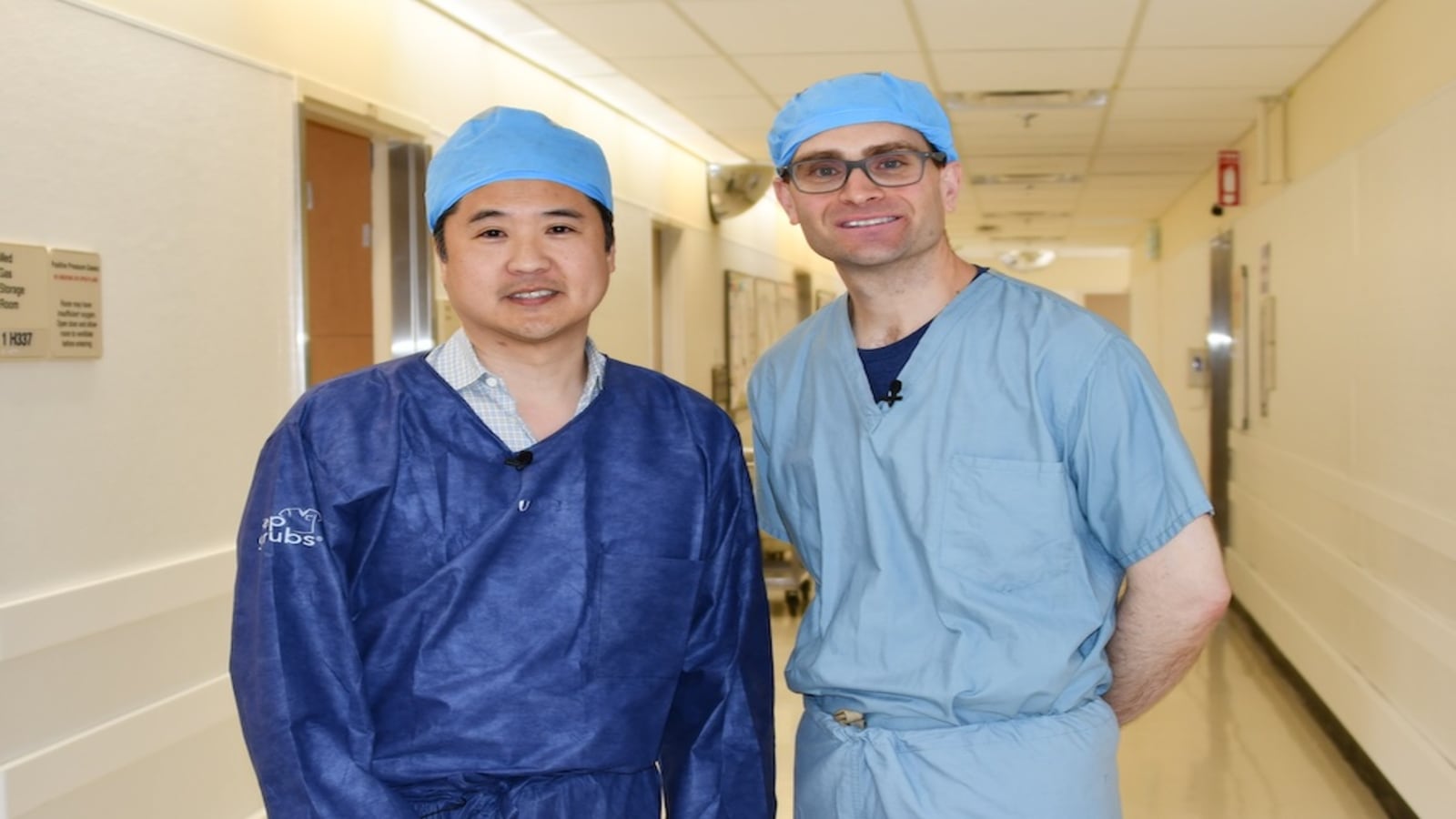
Dr. Matthew Willsey, (right) and Dr. Stephen Ryu, Paradromics Chief Medical Officer (left). (Image credit: Paradromics)
Paradromics competes with Elon Musk’s Neuralink
Paradromics’ successful trial implant of its brain-computer interface in a human for the first time sends positive signals, as the race to lead the brain-computer interface space heats up. It’s a sign that Paradromics is moving closer to the commercial development of its BCI system.
Elon Musk’s Neuralink, perhaps the most well-known name in the field, is also working to connect human brains directly to computers. As of April, three patients have received Neuralink’s brain implant.
Once regulators give the go-ahead, Paradromics plans to launch a clinical trial later this year to study the long-term safety and effectiveness of its technology in humans. Last year, Paradromics CEO told CNBC that the company expects to receive commercial approval to sell the product before the end of the decade.
Anuj Bhatia is a seasoned personal technology writer at indianexpress.com with a career spanning over a decade. Active in the domain since 2011, he has established himself as a distinct voice in tech journalism, specializing in long-form narratives that bridge the gap between complex innovation and consumer lifestyle.
Experience & Career: Anuj has been a key contributor to The Indian Express since late 2016. Prior to his current tenure, he served as a Senior Tech Writer at My Mobile magazine and held a role as a reviewer and tech writer at Gizbot. His professional trajectory reflects a rigorous commitment to technology reporting, backed by a postgraduate degree from Banaras Hindu University.
Expertise & Focus Areas: Anuj’s reporting covers the spectrum of personal technology, characterized by a unique blend of modern analysis and historical context. His key focus areas include:
Core Technology: Comprehensive coverage of smartphones, personal computers, apps, and lifestyle tech.
Deep-Dive Narratives: Specializes in composing longer-form feature articles and explainers that explore the intersection of history, technology, and popular culture.
Global & Local Scope: Reports extensively on major international product launches from industry titans like Apple and Google, while simultaneously covering the ecosystem of indie and home-grown tech startups.
Niche Interests: A dedicated focus on vintage technology and retro gaming, offering readers a nostalgic yet analytical perspective on the evolution of tech.
Authoritativeness & Trust
Anuj is a trusted voice in the industry, recognized for his ability to de-jargonize trending topics and provide context to rapid technological advancements. His authority is reinforced by his on-ground presence at major international tech conferences and his nuanced approach to product reviews. By balancing coverage of the world's most valuable tech brands with emerging startups, he offers a holistic and objective view of the global technology landscape.
Find all stories by Anuj Bhatia here.
You can find Anuj on Linkedin. ... Read More


 3 min read


 Dr. Matthew Willsey, (right) and Dr. Stephen Ryu, Paradromics Chief Medical Officer (left). (Image credit: Paradromics)