5 min read
© IE Online Media Services Pvt Ltd



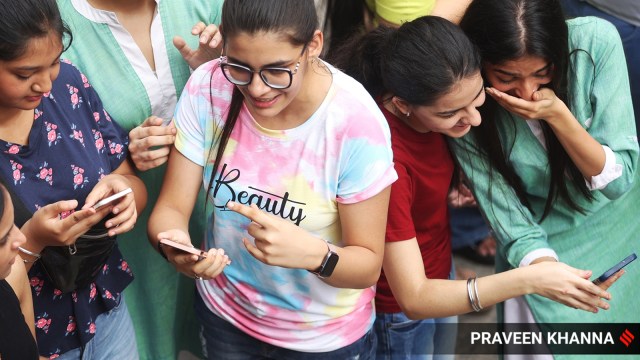 Emphasising the potential for children’s well-being outside of social media is one way of ensuring digital detox. (Representative/ Express file photo by Praveen Khanna)
Days after Australia became the first country in the world to ban social media for under-16 children, Reddit has sued the country’s government for what the message board website has called an intrusion on free political discourse.
It is the second such legal challenge against the landmark social media ban, after two teenagers representing an Australian libertarian group filed a lawsuit last month. Even though the ban went into effect from December 10, companies like Meta began deactivating the accounts of under-16 users several days prior.
While young Australians are still coming to terms with their new reality of not having an account on Tiktok and Instagram, parents, researchers, lawmakers, and government officials around the world, including in India, are closely watching how the first-of-its-kind social media ban is unfolding.
Some nations like Denmark and Malaysia are already planning to impose similar restrictions, and Australia’s experience may provide a regulatory template for lawmakers in these countries. Besides Australia, no other country has implemented a total ban on children using social media yet, and current online safety laws around the world mostly focus on age-gating content. Here’s a look at how some countries are regulating children’s access to social media.
While India does not have a law specifically to regulate the use of social media platforms by children, under the Digital Personal Data Protection Act, 2023, tech companies are required to implement a mechanism for collecting “verifiable” parental consent before processing personal data of children, even though it does not prescribe a particular technical measure to collect such consent. As per India’s law, a child has been defined as an individual below the age of 18.
The law also directs companies to not process personal data of children in cases where it could cause any detrimental effect on the well-being of a child, and not tracking or engaging in behavioural monitoring or targeted advertising directed at children.
The European Union’s Digital Services Act (DSA) has broad provisions to curb the dissemination of political misinformation to all social media users. But it does not specifically address social media harms posed to children.
Ursula von der Leyen, the President of the European Commission, has said that she has been studying Australia’s restrictions and how they address what she described as “algorithms that prey on children’s vulnerabilities” given that many parents feel powerless against “the tsunami of big tech flooding their homes”.
Last month, the European parliament called for an Australia-like social media ban for under-16 users. In July, Denmark, Greece, France, Spain, and Italy were chosen to be part of a pilot programme to trial an age verification app that could potentially be launched across the EU and would be implemented by adult content sites as well as other digital providers.
In 2023, France introduced a requirement that platforms must obtain parental consent for children under 15 to create social media accounts. But it is yet to be enforced. It is also reportedly considering a social media ban for children under 15, along with a 10-hour curfew for platform use for children between 15 to 18 years old.
In July this year, Norway announced plans to restrict access to social media for under 15s. The government said that the law would be “designed in accordance with children’s fundamental rights, including freedom of expression, access to information, and the right to association,” according to a report by The Conversation.
In November 2025, Denmark announced it would ban social media access for all users in the country under 15 years. But, unlike Australia’s crackdown, parents in Denmark would be able to override the rules to enable 13- and 14-year-olds to retain platform access. However, it is expected to take months to pass the legislation and the timeline for implementation of the ban is also unclear.
Many US state laws require age verification, but only for websites that host porn. The country has also strongly opposed Australia’s social media restrictions, with US President Donald Trump saying that he would stand up to any countries that “attacked” American technology companies. The US Congress has also called Australia’s eSafety Commissioner Julie Inman-Grant to testify before it, after American tech companies alleged that they have been unfairly targeted by the social media ban.
In October, New Zealand announced it would introduce similar legislation to Australia’s, following the work of a parliamentary committee to examine how best to address harm on social media platforms. The committee’s report will be released in early 2026.
Malaysia has announced it will ban children under 16 from social media starting in 2026. This follows the country requiring social media and messaging platforms with eight million or more users to obtain licenses to operate, and use age verification and content-safety measures from January 2025.
South Korea has decided against a social media ban for children. But it will ban the use of mobile phones and other devices in classrooms starting in March 2026.