


© IE Online Media Services Pvt Ltd
Tags:


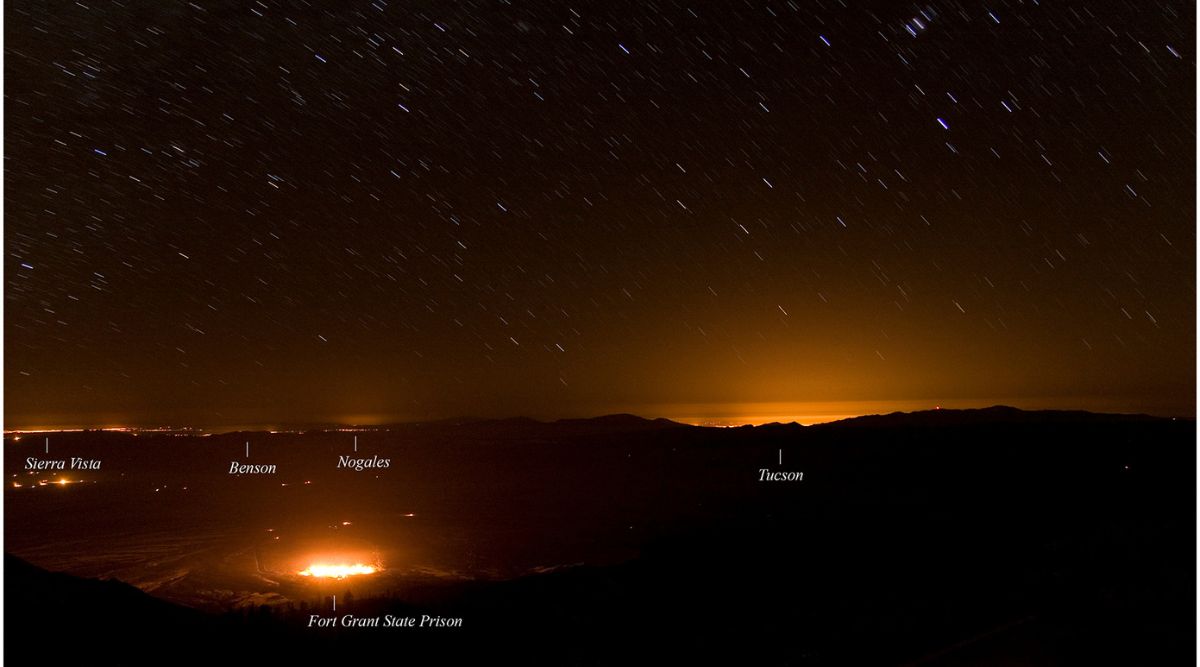
A new research study that studied and compared light pollution levels at major astronomical observatories across the world found that light is polluting the sky above most observatories and that immediate action will be required to decrease the amount of contamination from artificial light sources.
The study published in the Monthly Notices of the Royal Astronomical Society contains light pollution levels above almost 50 observatories across the globe, ranging from small observatories for amateurs to the largest professional observatories. The researchers used a model of light propagation in our planet’s atmosphere and applied it to night-time satellite data.


For the study, these indicators were compared to the natural sky brightness caused by airglow and light from the stars in the Milky Way. This comparison revealed that light pollution at major observatory sites is much higher than previously assumed.
The researchers found that only seven of the 28 major observatory sites in the study—observatories with a telescope that has a diameter of three meters or more—have a zenith (directly overhead) sky brightness with light pollution below the threshold of one per cent. This means that the other 21 observatories are all above the level, and therefore face light contamination.
Ground-based telescopes usually have the lowest pointing direction of around 30 degrees above the horizon. Only one out of the 28 observatories had light pollution below the one per cent level in this part of the sky. In fact, two-thirds of the major observatories have crossed the higher threshold of 10 per cent.
According to the researchers, this light pollution threatens the future of ground-based telescopes and should be addressed immediately to ensure that observatories can continue producing important astronomical work.


