3 min read
© IE Online Media Services Pvt Ltd



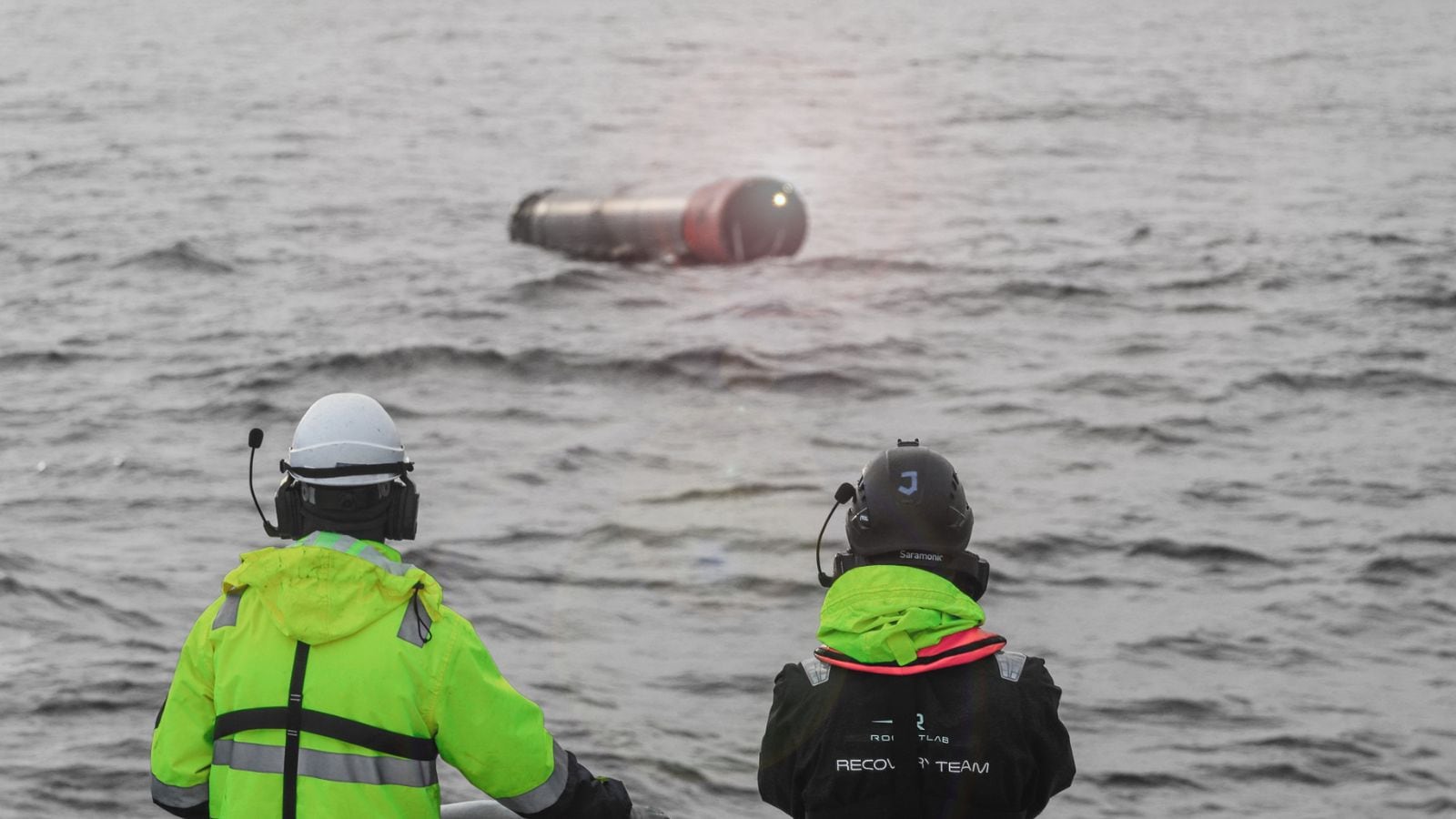 Technicians recovering a Rocket Lab launch vehicle from the sea. (Rocket Lab)
California-based Rocket Lab this week announced that it is, for the first time, returning a previously flown Electron rocket’s first stage back into the production line, preparing to launch it again. This will be the first time that it is reflying the Electron rocket, a big step for a company that aims to make it the world’s first reusable small orbital launch vehicle.
The company has already recovered many first stages of Electron rockets in various ways — having them return to Earth with a parachute, splashing them down in the ocean, and even trying to catch them mid-air using a helicopter. Rocket Lab analysed the boosters recovered previously but this is the first time one has been moved back into the standard production line in preparation to be launched again.
This first stage was launched as part of the “Four of a Kind” mission on January 31, this year, and after recovery, it has already passed more acceptance tests than any other recovered Electron stage. It will now go through a final fit out, along with rigorous qualification and acceptance tests that will hold it to the same standards as a brand new Electron.
“Through an iterative development process, we have methodically perfected each step of Electron recovery while simultaneously continuing to increase our Electron production capacity and launch cadence. This is the exciting final piece of the puzzle before Electron goes reusable,” said Rocket Lab founder and CEO Peter Beck, in a press statement.
Rocket Lab’s long-held dream of a fully-reusable small orbital launch vehicle is finally coming to fruition amidst surging demand for small satellites to support United States national security space programs.
The Space Development Agency (SDA), which is part of the country’s Space Force, is moving away from the traditional model of the military buying large expensive satellites at long intervals, reports SpaceNews. Instead, SDA plans to spend around $4 billion a year on constellations of hundreds of smaller, less costly satellites to be deployed more frequently.
While this change in model is putting a lot of pressure on satellite manufacturing supply chains, it is also a growing opportunity for companies like Rocket Lab. Two Indian companies — Telangana-based Skyroot Aerospace and Chennai-based Agnikul Cosmos — are also building launch vehicles with similar payload capacities.