2 min read
© IE Online Media Services Pvt Ltd



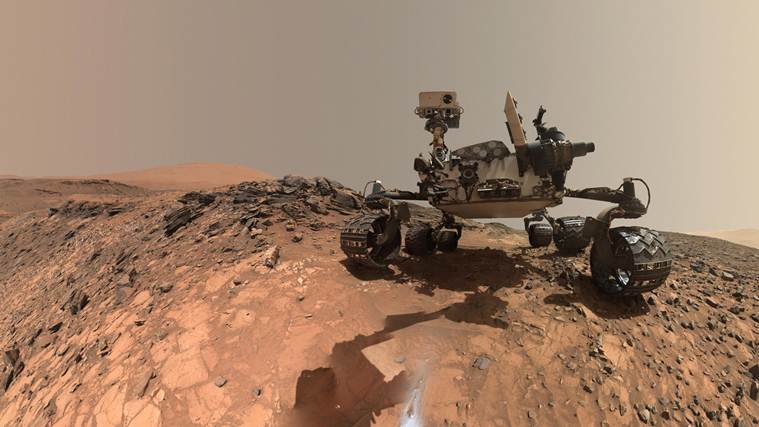 Curiosity is powered by a radioisotope thermoelectric generator that uses Plutonium-238
NASA has successfully captured the imagination of space explorers all over the world with missions reaching outer space, but the space agency (and the world) is running out of the fuel that powers these programmes – Plutonium-238.
NASA currently uses Plutonium-238 for its Radioisotope Power System (RPS), which converts heat from the natural radioactive decay into electricity. The Voyager-1 spacecraft, launched by NASA on a five-year mission in 1977 to explore Jupiter and Saturn, is still active 39 years later thanks to its Plutonium-238 power pack. The spacecraft became the first man-made object to reach interstellar space, and is expected to send data until 2025.
There is currently no viable replacement for Plutonium-238 with NASA, says a report in Wired. Solar power is too weak to power the systems on board, nuclear fission systems would be too bulky and chemical batteries will never have a large enough capacity, according to NASA. Plutonium-238 is found naturally in extremely small quantities, but largely produced as a byproduct of making nuclear weapons.
The only natural supplies of plutonium-238 vanished eons before the Earth was formed some 4.6 billion years ago. The US Department of Energy (DOE) was able to produce 50 gms of the precious metal in 2015 – the first time in the preceding 27 years, according to Wired. The amount is not very large, as probes like the Mars 2020 rover require upto 4 Kgs of the fuel, but it is a start.