2 min read
© IE Online Media Services Pvt Ltd



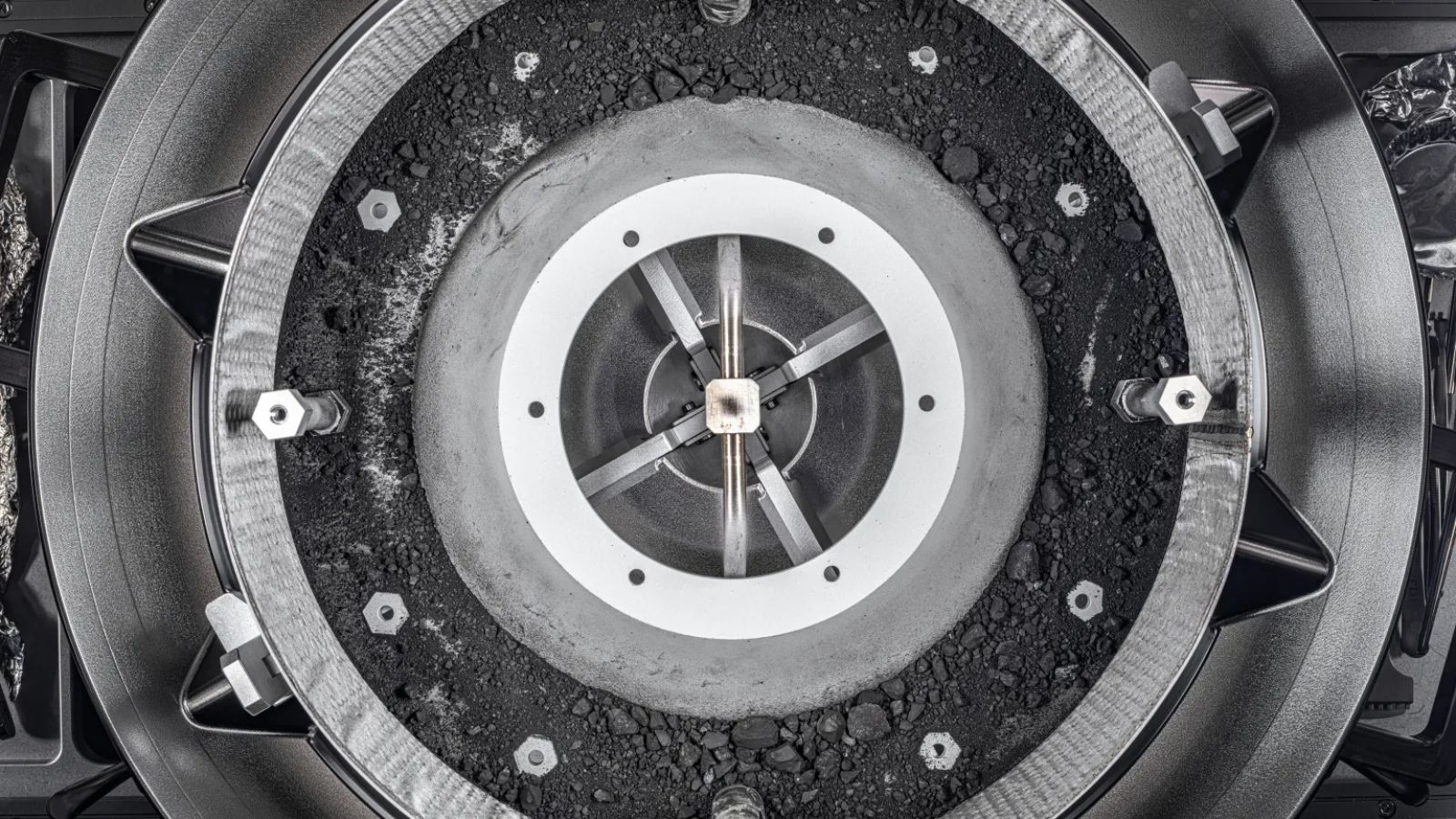 A top-down view of the asteroid Bennu sample and its container. (NASA/Erika Blumenfeld & Joseph Aebersold)
NASA on Thursday said its OSIRIS-REx spacecraft returned more than 4.29 ounces of material from the Asteroid Bennu when the sample capsule was delivered to Earth in September last year.
That is more than twice the 60 grams of material that was needed to meet the mission’s science goals. The sample exceeded that minimum amount already before the TAGSAM (Touch-and-Go Sample Acquisition Mechanism) head was completely opened. This is because processors at the space agency’s Johnson Space Center in Houston collected small rocks and dust from inside the large canister that hosted the TAGSAM head.
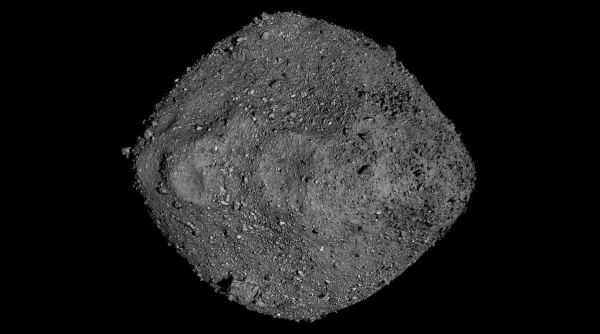 This mosaic of Bennu was created using observations made by NASA’s OSIRIS-REx spacecraft that was in close proximity to the asteroid for over two years. (NASA/Goddard/University of Arizona)
Even though the sample container landed on Earth last September, the curation process had to pause in October because two fasteners of the container were stuck, preventing the opening of the container. The curation engineers had to design, produce and test new tools to remove the fasteners in January, which meant they could continue the disassembly of the TAGSAM head.
The remaining sample of the asteroid Bennu was revealed and then carefully poured into wedge-shaped containers. The initial measure of additional particles collected was about 70. 3 grams and combined with the 51.2 grams collected during the pour together, brings the total up to 121.6 grams. At least 70 per cent of this sample will be preserved so that scientists worldwide can conduct further research, even in the future.
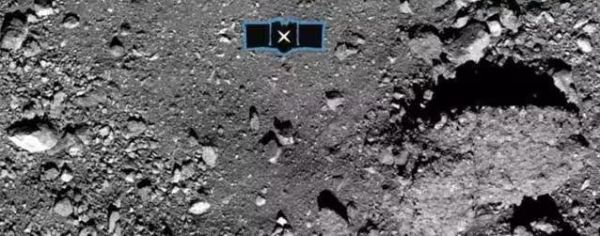 This image shows the OSIRIS-REx spacecraft’s primary sample collection site, named “Nightingale,” on the asteroid Bennu. (NASA/Goddard/University of Arizona via AP)
An initial analysis of the material that was stuck under the arm used to collect the sample revealed evidence of a high carbon content and water on Bennu. This indicated the presence of important building blocks of life on a 4.5-billion-year-old asteroid.
The material from Bennu will be put into containers and distributed for scientists to study. More than 200 scientists around the world will look at the properties of the dust from another world.