


Tags:


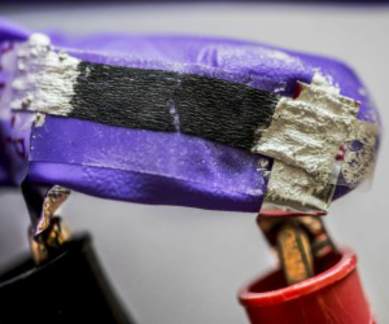
Scientists have used tissue paper to develop a Band-aid sized wearable sensor that can detect a pulse, a blink of an eye and other human movements. The sensor is light, flexible and inexpensive, with potential applications in health care, entertainment and robotics, researchers said.
Researchers at University of Washington (UW) in the US, showed that by tearing tissue paper loaded with nanoparticles and breaking its fibres, the paper acts as a sensor. It can detect a heartbeat, finger force, finger movement, eyeball movement and more, said Jae-Hyun Chung, associate professor at UW. “The major innovation is a disposable wearable sensor made with cheap tissue paper. When we break the specimen, it will work as a sensor,” said Chung, senior author of the research published in the journal Advanced Materials Technologies.


“They can use these sensors and after one-time use, they can be thrown away,” said Chung. Scientists used paper similar to toilet tissue. The paper – nothing more than conventional paper towels – is then doused with carbon nanotube-laced water.
Carbon nanotubes are tiny materials that create electrical conductivity. Each piece of tissue paper has both horizontal and vertical fibres, so when the paper is torn, the direction of the tear informs the sensor of what’s happened.
To trace the eye movement, they are attached to a person’s reading glasses. For now, the work has been contained to a laboratory, and researchers are hoping to find a suitable commercial use.


