


© IE Online Media Services Pvt Ltd
Tags:


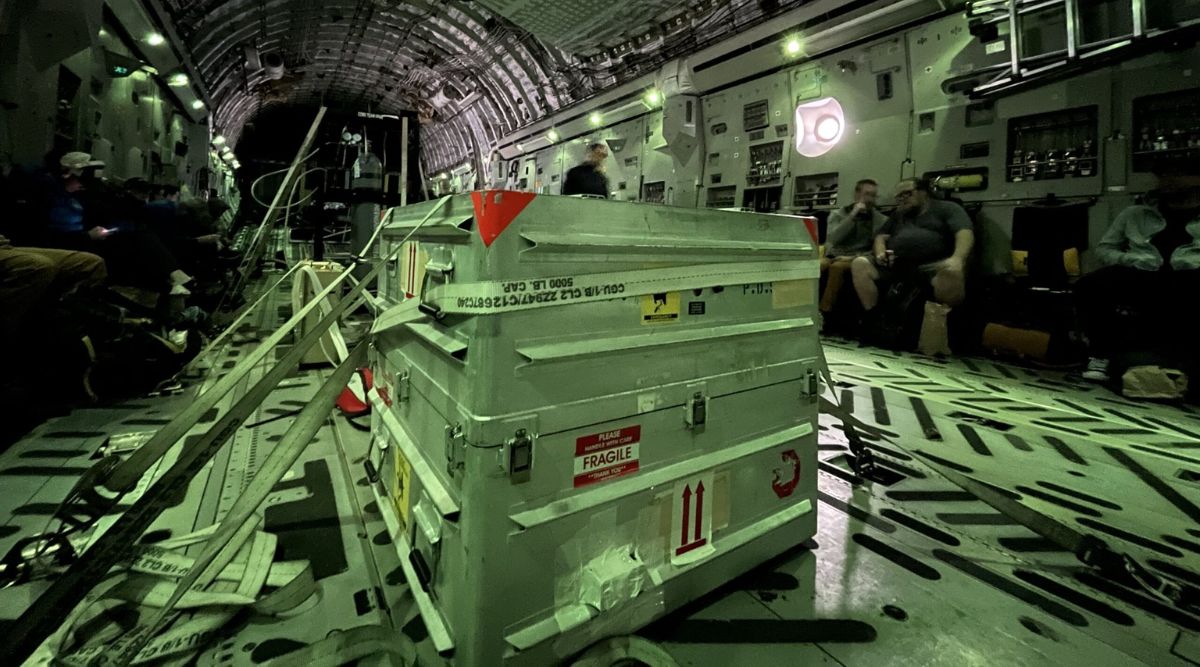
The first samples taken from an asteroid arrived on Earth on Sunday as the National Aeronautics and Space Administration’s (NASA) OSIRIS-REx mission concluded its seven-year-long journey. The samples were taken from the landing point in the Utah Desert to the space agency’s facility in Houston.
Samples carried by the OSIRIS-REx mission are important because asteroids like Bennu can act as “time capsules” of the earliest history of our solar system. They can preserve chemical signatures from a long time ago when the universe was a younger place. In fact, it is even possible that they contain samples of the ancient building blocks of life.


Supposing the capsule’s trajectory was at an angle too high, it would have skipped off the atmosphere like a stone skipping across the surface of a lake. If it was angled too low, it would have burnt up in the atmosphere. But since the parcel drop was conducted correctly, it landed exactly where it had to.
After it landed, the sample capsule was disassembled in a clean room, making sure the samples were not contaminated. Its components, including the unopened sample canister, were packed in shipping containers along with environmental samples that the recovery team collected around the capsule’s landing site.
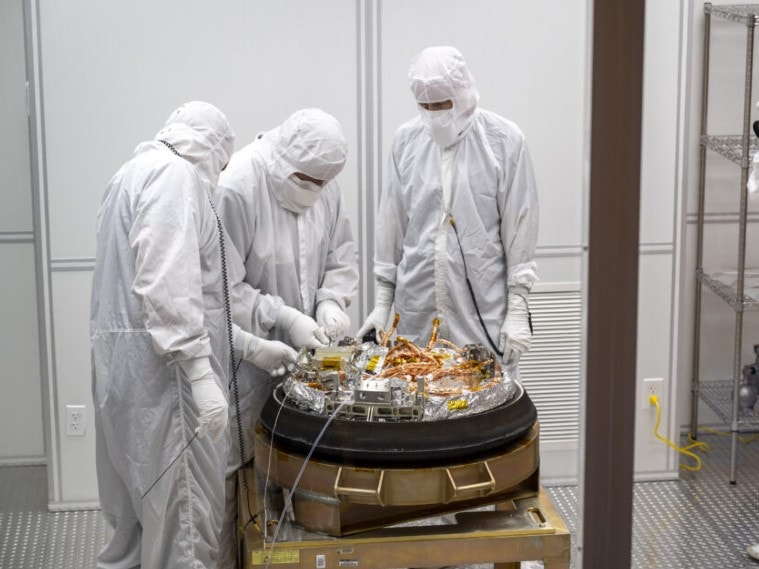
Now, the samples will spend the next few weeks at a specially-built clean room at Johnson Space Center in Houston. The room has glove boxes custom-built to fit the sample canister. The canister itself contains the TAGSAM (Touch-and-Go Sample Acquisition Mechanism) head inside. This TAGSAM head was at the end of a robotic arm that collected rocks and dust from the surface of asteroid Bennu on October 20, 2022.


