7 min read

Journalism of Courage



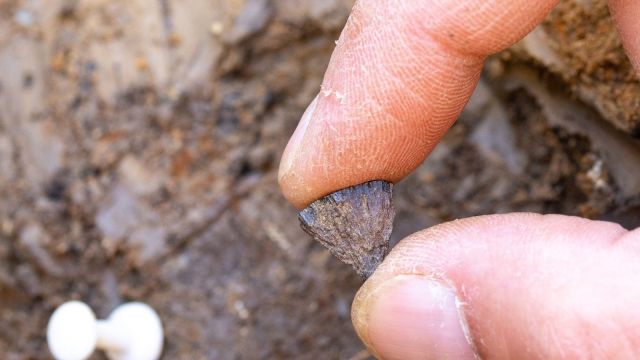 Some 400,000 years ago, in what is now eastern England, a group of Neanderthals used flint and pyrite to make fires by a watering hole — not just once, but time after time, over several generations. (Express Photo)
 Some 400,000 years ago, in what is now eastern England, a group of Neanderthals used flint and pyrite to make fires by a watering hole — not just once, but time after time, over several generations.
That is the conclusion of a study published Wednesday in the journal Nature. Previously, the oldest known evidence of humans making fires dated back just 50,000 years. The new finding indicates that this critical step in human history occurred much earlier.
“A lot of people had a hunch that they were making fire at this date,” said Nick Ashton, an archaeologist at the British Museum and an author of the study. “But now we can convincingly say, ‘Yeah, this was the case.’”
From Charles Darwin on, biologists have looked upon the mastery of fire as a hallmark in the evolution of our species. Early humans may have first used fire to cook their food. That advance let them improve their diet, by removing toxins from food and making it easier to absorb nutrients from their meals. Fires may have also kept them warm at night and kept predators at bay.
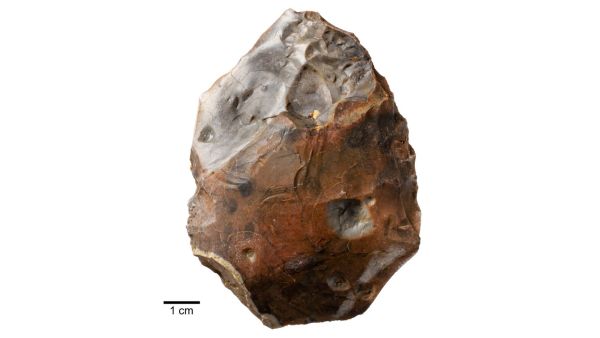 Scientists perceive the mastery of fire as a sign that our species have evolved. From cooking food to keeping humans warm at night, fires’ advance has certainly benefitted humans. (Express Photo)
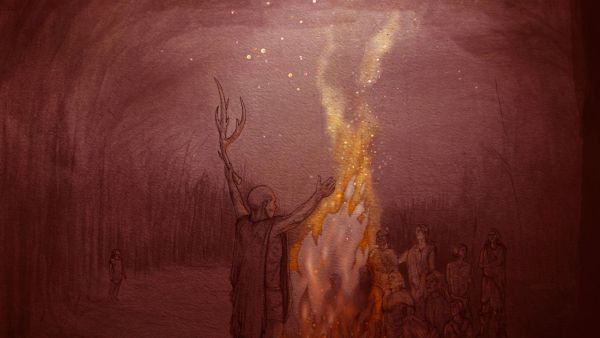 The oldest evidence for human ancestors using fire emerges from a cave in a South Africa. The account dating back to between 1 to 1.5 million years ago, reveals human ancestors have left behind tens of thousands of fragments of bones from animals they butchered to eat. Of these 270 fragments, at least 270 show signs of being burned in a fire. (Express Photo)
Later, they found new uses for fire. They cooked tree bark to create glue, which they used to anchor stone spear tips to wooden shafts. And starting about 10,000 years ago, humans began making fires to smelt copper and other metals, ushering in civilization.
As important as fire has been to our species, tracing its early history has proved an immense challenge. Rain can wash away ash and charcoal, erasing the evidence of a fire. Even when scientists do uncover the rare trace of an ancient blaze, it can be hard to determine whether it was created by people or ignited by lightning.
The oldest evidence for human ancestors using fire, dating back to between 1 million and 1.5 million years ago, comes from a cave in South Africa. Human ancestors left behind tens of thousands of fragments of bones from the animals they butchered to eat. Of those fragments, 270 show signs of having been burned in a fire.
But clues like these don’t offer clear proof that those ancient people knew how to make a fire. They may have just stumbled across a wildfire from time to time, and figured out ways to take advantage of it. They might have learned to light a stick from the fire, and then carry the ember back to their cave to cook a meal.
But that approach had its limits, Ashton noted. “You’re dependent on local lightning strikes,” he said. “It’s very unpredictable, and you can’t rely on it.”
A crucial step took place when early humans figured out how to make fires on demand, either by using rocks to create sparks or rubbing a piece of wood until the friction started a flame. “Once you can make fire, all those problems evaporate,” Ashton said.
Ashton and his colleagues caught their first glimpse of ancient fires in 2013, as they were digging at an archaeological site called Barnham in eastern England. For decades, researchers had found ancient tools and other signs of early humans there. In 2013, Ashton and his colleagues found something new: pieces of oddly broken flint.
Only an intense heat could have shattered the hard rocks. But Ashton and his colleagues couldn’t determine if the fire that broke the Barnham flints had been created by humans or lightning.
For years afterward, the researchers returned to Barnham hoping to tackle that question, without any further success. Finally, on a summer day in 2021, Ashton had a thought. As he prepared to take a nap under an oak tree, he recalled how, a couple of years earlier, he had glimpsed an intriguing streak of red clay. The nap could wait.
“I thought, I’ll have a little poke around,” Ashton said.
He found the red streak, and quickly realized that it was a 2-foot-wide band of burned ancient soil. Had humans burned it, or had lighting? Ashton and his colleagues put the two possibilities to a test.
Over the next four years, they analyzed the chemistry of the sediment, while conducting further digs around it. Eventually they determined that, about 400,000 years ago, the site had been a watering hole, which Neanderthals probably visited in search of game.
A wildfire would have left evidence far from the site, but the researchers found none. What’s more, the same patch had been burned repeatedly over the course of decades. And the fires there reached intense temperatures and burned for hours. The researchers grew increasingly certain that generations of Neanderthals had intentionally set fires at Barnham.
A last major clue came to light with the discovery of pieces of pyrite alongside heat-shattered flints. Anthropologists have documented many groups of hunter-gatherers around the world who make fires by striking pyrite against flint.
All the more notable, Ashton said, was that the rocks for miles around Barnham don’t contain pyrite. He speculated that the fire-making Neanderthals must have brought pieces of it to Barnham. The nearest known source of the mineral is some 40 miles to the east.
The pyrite was “the icing on the cake,” said Ségolène Vandevelde, an archaeologist at the University of Quebec in Chicoutimi who was not involved in the new study. “Altogether, it’s a really convincing case.”
But a question remains: How widespread was fire-making 400,000 years ago?
Perhaps not very, said Michael Chazan, an anthropologist at the University of Toronto who was not involved in the research. Other Neanderthals across Europe and the Near East might still have been collecting their embers from natural fires. Only at a place like Barnham did they have the right opportunity to learn how to make fires.
“This experiment seems to be local in scope,” Chazan said. “It still stands to reason that many Neanderthal groups did not have access to materials that could be used to strike a light.”