6 min read


© IE Online Media Services Pvt Ltd



 The material has been described as soft and gentle on the sensitive skin of children. (Express Image/Petit Pli)
“My goal is for my nephew to be able to grow up and look back, and think ‘my community, my life is better as a result of the actions of my uncle.” Ryan Mario Yasin, CEO and founder of Petit Pli, a UK-based startup creating smart and adaptive clothing for children, is clear about how he is creating a better future through innovation in sustainability. The fashion industry is the second largest polluter in the world, and Yasin believes innovation in sustainability can mitigate challenges posed by the textile industry.
The young entrepreneur, named in Forbes 30 under 30 in 2020 and winner of the James Dyson Award, sat down with indianexpress.com to share his journey. Yasin, an aeronautical engineer, wanted to use his diverse set of skills in engineering, design, and photography to create something uniquely positive with societal impact.
The birth of his nephew was a turning point. This inspired him to found Petit Pli in 2017 with the aim of reducing textile waste through durable and adaptable garments for children that grow with them.
Petit Pli’s keystone product is their line of children’s clothing that expands along with the child, avoiding the need to frequently purchase new sizes. This is achieved through their patented auxetic fabric technology, based on Yasin’s research into origami-inspired folding techniques for aerospace applications. The garments can expand in length and width up to seven sizes, providing on average 2-3 years of wear per piece.
“We have been working on this for two years. This uses a novel knitting technique to actually put these auxetic structures into the garments. So auxetic means that as you pull the garment along and sweat, it grows along its length or vice versa,” said Yasin.
 Ryan Mario Yasin founded Petit Pli in 2017 to reduce textile waste through versatile clothing for children. (Express Image/Petit Pli)
According to the founder, their product addresses a major pain point for parents regarding rapidly outgrown clothing. “It’s guaranteed to have a perfect fit because it’s constantly growing with you,” says Yasin. The expandability also allows passing clothing down between siblings, further increasing utilisation and reducing waste.
Yasin said parents have given feedback that the clothes were comfortable for their children to wear, owing to the carefully engineered stretch and expansion capabilities. The material has been described as soft and gentle on the sensitive skin of children.
The most rewarding part of the journey, he said, has been this interaction with parents, their feedback and suggestions. “From day one, I tested the outfit on my nephew and took pictures of him and them on my niece as well. I took these photos to parents since I wasn’t a parent myself, seeking their genuine feedback as users who would be using this garment. So as a start, to get some empathic design, I put myself in their shoes and started interviewing them while showing them the prototypes,” he explained while recalling the initial days of Petit Pli.
According to Yasin, sustainability is integral to design and manufacturing processes. Petit Pli’s garments are made using recycled materials including plastic bottles and organic cotton sourced through ethical manufacturing partners. Yasin explains that the upfront investment into quality and research enables the use of eco-friendly materials and ethical production.
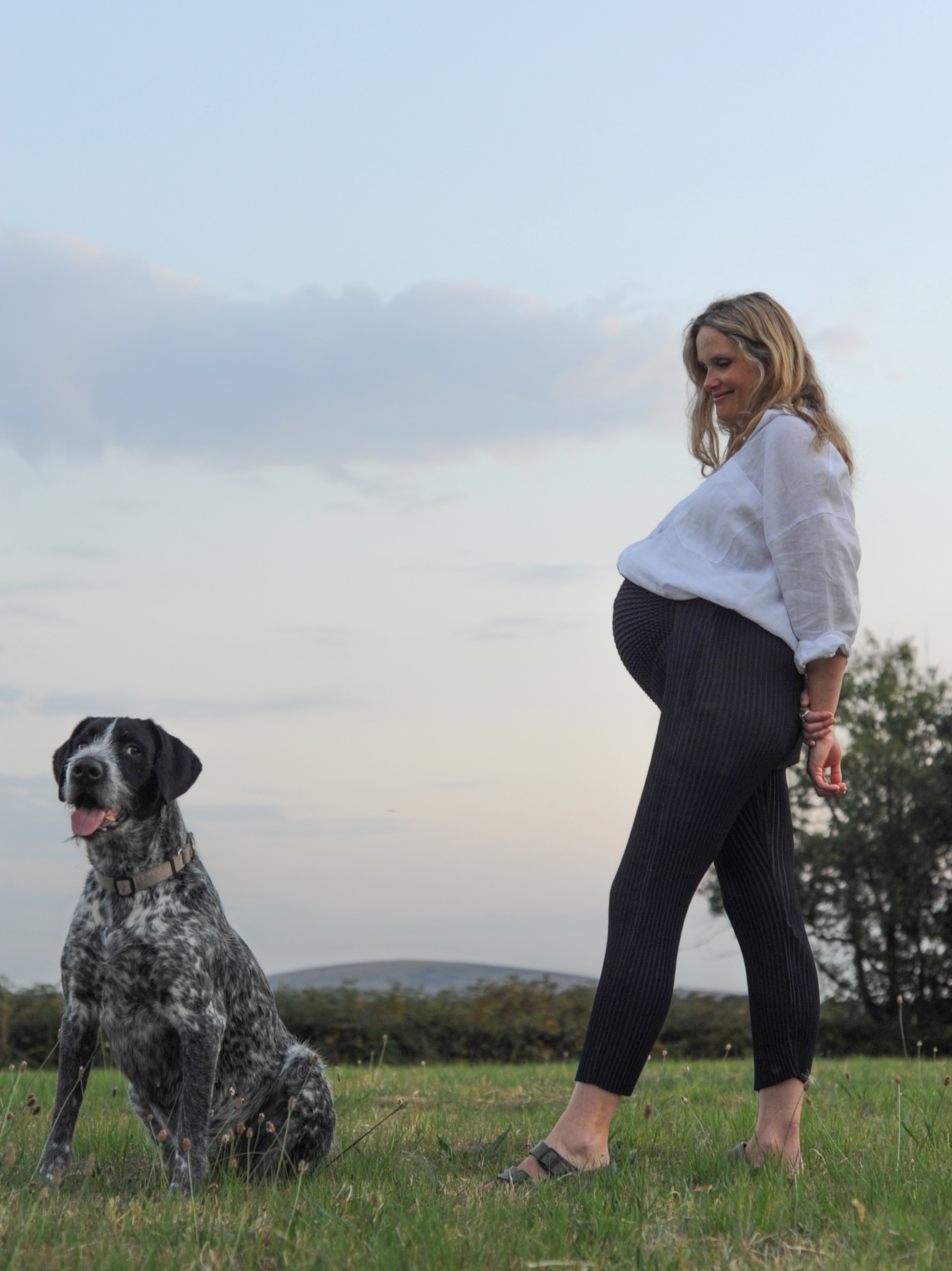 Along with children, Petit Pli also make clothing for pregnant women. (Image: Petit Pli)
Yasin believes technology itself is neutral and can be a “force for good or evil depending on how humans choose to use it.” He believes technology can be used to communicate and educate people to consume in a completely different way.
“If people truly understood the negative impacts that the likes of fast fashion have, if they could easily gather intelligence about how the garment that they are buying is made and the true costs behind the low price that they see, then perhaps they will choose after their own will to make a decision,” he said.
Yasin said the Indian market is an extremely interesting one but would need a lot of research. “There are so many different cultural points that you must understand before you enter any market, which you don’t fully understand.”
Yasin said they are already talking to suppliers to see what can be ethically manufactured within the country. “We are still looking for distribution partners and are speaking to some at the moment. And if we find collaborators, which are well aligned with the company’s values of ethics, responsible consumption, and responsible production, then I think things could move pretty quickly.”
Asked about his advice for aspiring entrepreneurs looking forward to technological innovation in sustainability, Yasin said, “Love what you do, and question why you love it until you really understand the driving forces. This gives you undying focus despite challenges.” He believes building a business from scratch is rewarding but it is not easy.
“Resilience comes from unwavering focus on your vision and motivations.” For him, it was the intersection of engineering, family, the outdoors, and sustainability.