Sony is once again eyeing the handheld console space, a market it was once part of but abandoned after losing out to Nintendo. A Bloomberg report Monday said that Sony is developing a new PlayStation handheld console, which would allow users to play games on the go. However, the device is likely years away from launch, and the company could still decide against bringing it to market.

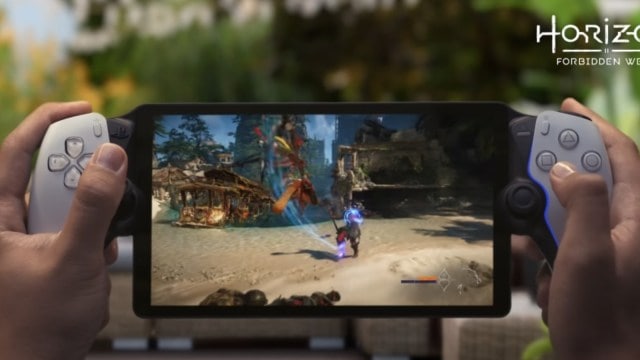
Sony continues to improve the Portal as it recently received an update allowing users to stream more games without being tethered to a local PS5. While the Portal may seem like an odd creation — a DualSense controller split in half with an 8-inch screen wedged in the middle — it is essentially a remote viewer and far from being a proper handheld console in the league of the Nintendo Switch or Valve’s Steam Deck.
Sony and portable consoles
Sony has previously released portable gaming consoles like the PS Vita and PlayStation Portable. (Image credit: Anuj Bhatia/Indian Express)
Understandably, Sony wants a piece of the handheld console market as it has matured over the years, competition is fiercer than ever, and there is money to be made — all thanks to Nintendo. The Switch has been a massive success, and even after eight years on the market, the hybrid console continues to sell remarkably well. In fact, Nintendo has yet to launch a successor to the Switch, though that is finally expected to happen early next year.
But many forget that Sony has had a history with portable consoles in the past. At one point, Sony was a juggernaut in the handheld market with the PSP, and the love affair continued with the PS Vita. Although the PSP was a popular console, the PS Vita struggled to do financially well. This made Sony exit the portable gaming market, choosing to focus on home consoles and VR gaming instead.
When the PSP debuted in 2004, it wasn’t the only portable gaming system on the market. It faced tough competition from the Nintendo DS, but the PSP did stand out from the crowd. It came with a large LCD screen and supported UMDs, a new form of media disks. The PSP had superior graphics than the DS, and Sony did live up to the promise of offering a console gaming experience on the go. Even though the DS outsells the PSP, players still remember Sony’s maiden handheld for its games notably Grand Theft Auto: Vice City Stories.
PlayStation Vita and its failure
The PlayStation Vita was a glorious failure. (Image credit: Anuj Bhatia/Indian Express)
Fresh off its success, Sony dabbled in the portable console market again, this time with the PlayStation Vita. The handheld was much more powerful than Nintendo’s, featuring a dazzling OLED screen, a touchpad on the back, front and rear-facing cameras, and two analogue sticks to better replicate the home console gaming experience. The PS Vita had no UMDs, instead, it supported proprietary game cards. Several high-profile exclusive games were released on the console, including Uncharted: Golden Abyss and Killzone Mercenary, and its remote play capabilities made it a great companion to the PS4.
Story continues below this ad
The PS Vita, however, was a failed console. It never matched the sales of the PSP, but aside from the numbers, the Vita wasn’t a bad console. It did have some issues, such as expensive proprietary memory cards and the premium price of the PS Vita. In 2019, seven years after the PS Vita launched, Sony stopped production of the portable console.
Experts and game veterans may blame smartphone gaming for the failure of the PlayStation Vita. However, in reality, it wasn’t smartphone gaming but Sony itself that deserves the blame for not holding its ground against Nintendo and ultimately deciding to give up. Perhaps what worked against Sony was that the company never focused on making games that appealed to all generations, unlike Nintendo. The DS and its successor, the 3DS, not only had one or two gimmicky features (dual screen, 3D screen) but also games based on storied franchises that were fun to play. Neither the PSP nor the PS Vita had that, though years later, the Vita became popular for indie titles. However, it was too late to save the console from commercial failure.
Embracing glorious failure
Nintendo leads the portable console market for years. (Image credit: Anuj Bhatia/Indian Express)
No product is perfect, but what is important is how one responds to mistakes and learns lessons to improve future versions. Sony decided to leave the market instead of following up on the success of the PS Vita. That was the biggest mistake Sony ever made. In contrast, Nintendo never abandoned the market, despite the failure of the Wii U. It continued to have a firm belief in the handheld market, and the launch of the Switch proved Nintendo was right. The Switch allowed users to use it in two ways: in handheld mode on its own or docked to hook it up to a TV, and that concept was fresh and innovative. On top of that, Nintendo has kept users excited with its catalogue of games, making the Switch a must-have console.
For years, Sony tried to crack the portable console market, but it never made a dent, despite having brilliant hardware with the PSP and PS Vita. It was the software (or games) — the lack of both first-party and third-party games — that was especially apparent when the PS Vita was launched. Developers instead chose Nintendo’s 3DS, despite its far weaker hardware, because it had a much higher installed base and an excellent library of games, which would likely result in higher sales.
Story continues below this ad
Sony should now acknowledge its past failures and avoid repeating the mistakes it made on the PS Vita. While market realities may be different now, the competition is fiercer than ever and growing (Nintendo is about to launch a new console, and Microsoft is also showing interest in the portable gaming space). It would be a shame if Sony gave up again, walked away, and pretended the whole thing had never happened. Instead, it should embrace its glorious failure in the handheld console space and try to come up with a new portable console that’s not a Switch knockoff but built on a fresh idea, with an emphasis on supporting the device with both first- and third-party games. Just do it, Sony.


 7 min read



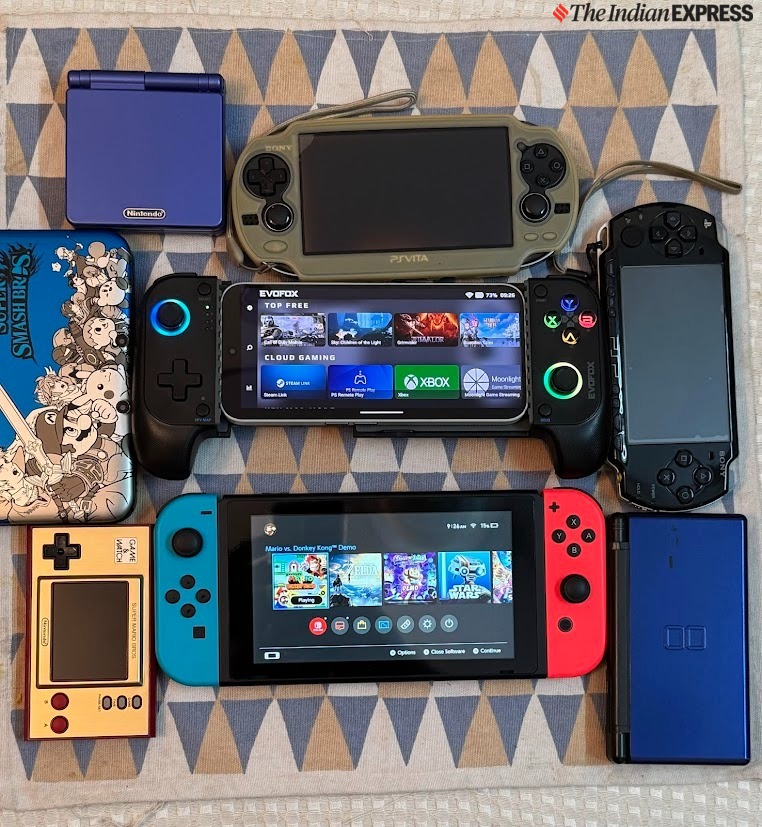 Sony has previously released portable gaming consoles like the PS Vita and PlayStation Portable. (Image credit: Anuj Bhatia/Indian Express)
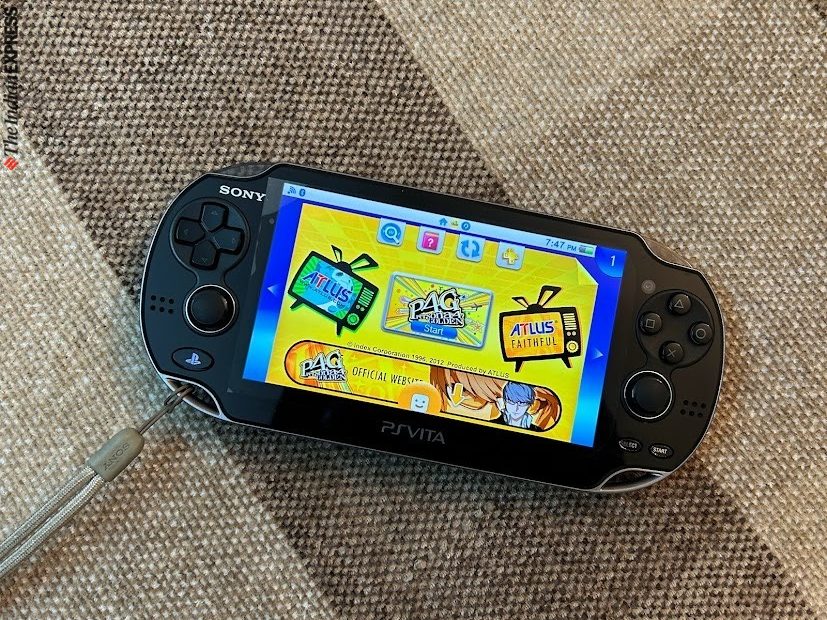 The PlayStation Vita was a glorious failure. (Image credit: Anuj Bhatia/
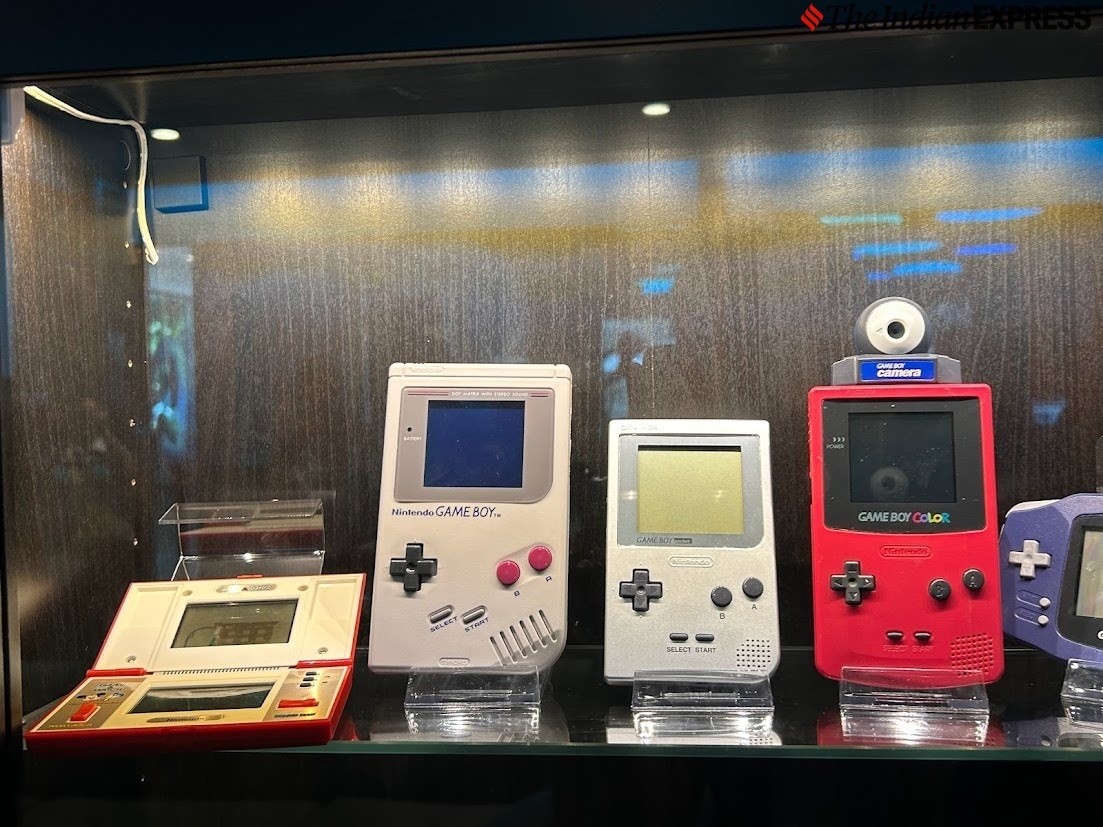 Nintendo leads the portable console market for years. (Image credit: Anuj Bhatia/Indian Express)
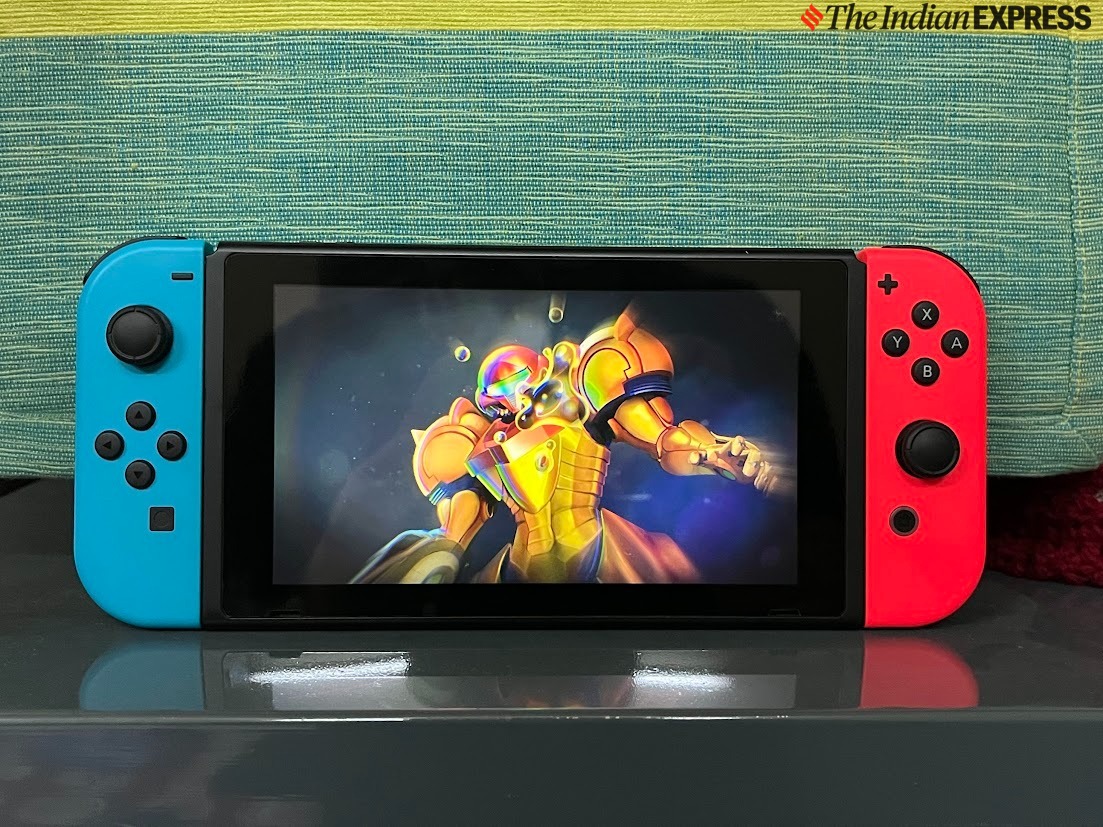 Nintendo Switch has blurred the line between home console and handheld. (Image credit: Anuj Bhatia/Indian Express)