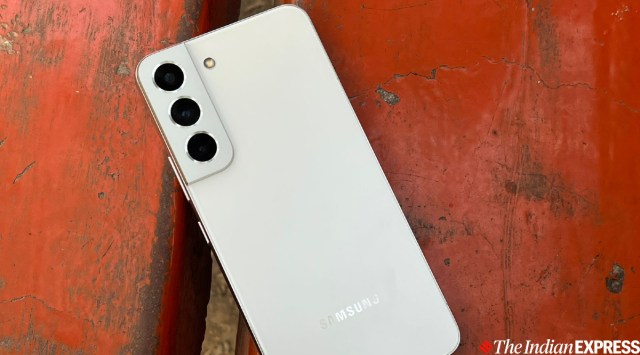
Samsung is taking one step ahead of Google, which promises three years of Android OS upgrades and five years of security patches for its Pixel phone lineup. (Image credit: Anuj Bhatia/Indian Express)
When you bought your last smartphone, you probably didn’t ask either the brand or the dealer if the phone will be eligible to get timely Android updates. This, however, does not feature on the priority list of an average smartphone user. But for an enthusiast, it’s a different case. But Samsung wants its new software upgrade policy to be a part of the commitment when selling a Galaxy smartphone.
“A lot of time you would have seen somebody using a two-generation old phone and say, Why can’t my phone do this?” Aditya Babbar, senior director & head of marketing at Samsung India, demystifies the myth that Android users don’t care about mobile software updates on their phones. “The needs exist and I think the onus is on us, how do we communicate to them.”
For the longest time, smartphones from major handset makers typically fail to get the latest version of Android. Sometimes even new phones launch with an older version of Android. This has been going on for years. Some blame Google, others blame OEMs for not pushing out software and security updates on time. When Google releases a new version of Android, the update goes through a series of steps before it reaches your phone. Because each phone is built differently, the software is customised and tailored for each phone and form factor. In simple words, Samsung can’t apply its OneUI to Android 12 and then push all the devices at once. Samsung has to follow a process and dedicate resources and time to making sure your device gets new updates.
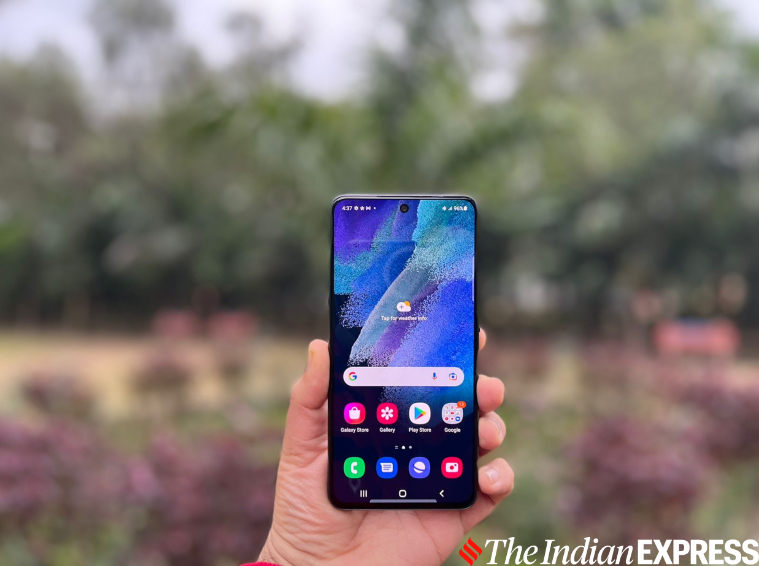
Despite having the widest lineup of smartphone releases among all the Android OEMs, Samsung’s focus on its Android upgrade process is good for the industry. (Image credit: Anuj Bhatia/Indian Express)
To improve its mobile software updates, an effort to address the industry-wide issue that plagued many Android manufacturers over the years, Samsung says its eligible Galaxy devices, including smartphones, tablets and watch, will receive up to four generations of operating system updates and five years of security updates. Not just the flagship Galaxy S22 and Galaxy Z lineup, Samsung is committed to extending its Android OS upgrade policy to premium mid-range devices such as the new Galaxy A53 and Galaxy A73. This shows that the state of Android updates is changing, and Samsung wants to lead the conversation around the speed at which Android updates reach your smartphone.
“A continuous OS upgrade is at the centre of what a consumer demands,” Babbar said. “Needs and adoption are there, and consumers understand that,” he added. “It’s how we make it relevant for them and make it a part of the decision.”
Samsung wants to set an example, while being part of the larger Android ecosystem which includes smartphone manufacturers and chip makers, by being transparent with its new Android OS upgrade policy. This not only benefits the end-user but also increases the longevity of a smartphone and thus reduces e-waste. “If there is an industry practice, why should the consumer not get it,” Babbar said.
Despite having the widest lineup of smartphone releases among all the Android OEMs, Samsung’s focus on its Android upgrade process is good for the industry. In fact, Samsung is taking one step ahead of Google, which promises three years of Android OS upgrades and five years of security patches for its Pixel phone lineup. The true rival to Samsung in updating the hardware with the latest software is Apple, which has a faster and seamless approach to pushing out iOS updates and software patches.
Anuj Bhatia is a seasoned personal technology writer at indianexpress.com with a career spanning over a decade. Active in the domain since 2011, he has established himself as a distinct voice in tech journalism, specializing in long-form narratives that bridge the gap between complex innovation and consumer lifestyle.
Experience & Career: Anuj has been a key contributor to The Indian Express since late 2016. Prior to his current tenure, he served as a Senior Tech Writer at My Mobile magazine and held a role as a reviewer and tech writer at Gizbot. His professional trajectory reflects a rigorous commitment to technology reporting, backed by a postgraduate degree from Banaras Hindu University.
Expertise & Focus Areas: Anuj’s reporting covers the spectrum of personal technology, characterized by a unique blend of modern analysis and historical context. His key focus areas include:
Core Technology: Comprehensive coverage of smartphones, personal computers, apps, and lifestyle tech.
Deep-Dive Narratives: Specializes in composing longer-form feature articles and explainers that explore the intersection of history, technology, and popular culture.
Global & Local Scope: Reports extensively on major international product launches from industry titans like Apple and Google, while simultaneously covering the ecosystem of indie and home-grown tech startups.
Niche Interests: A dedicated focus on vintage technology and retro gaming, offering readers a nostalgic yet analytical perspective on the evolution of tech.
Authoritativeness & Trust
Anuj is a trusted voice in the industry, recognized for his ability to de-jargonize trending topics and provide context to rapid technological advancements. His authority is reinforced by his on-ground presence at major international tech conferences and his nuanced approach to product reviews. By balancing coverage of the world's most valuable tech brands with emerging startups, he offers a holistic and objective view of the global technology landscape.
Find all stories by Anuj Bhatia here.
You can find Anuj on Linkedin. ... Read More


 4 min read



 Despite having the widest lineup of smartphone releases among all the Android OEMs, Samsung’s focus on its Android upgrade process is good for the industry. (Image credit: Anuj Bhatia/Indian Express)