


© IE Online Media Services Pvt Ltd
Tags:


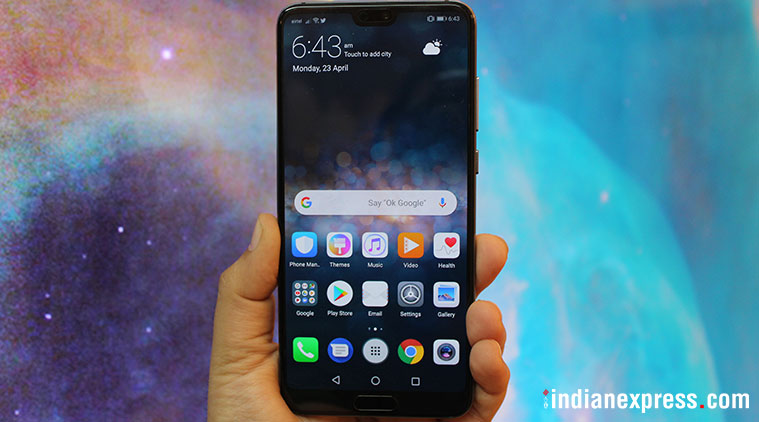
After having tested the waters with artificial intelligence in its top-end devices, Huawei will now open up its platform for developers to exploit it to the fullest. “Developers need to understand how AI works so they can build those capabilities into their apps. For us, the biggest challenge is natural interaction, and direct service access, when it comes to AI,” Huawei’s director of AI James Lu told indianexpress.com
The telecom giant and smartphone manufacturer plans to hold a global developer conference on the lines of Apple’s WWDC soon and hopes to rope in more developers, who will use the company’s Application Programming Interface (APIs) in their apps. However, this seems to the natural progression of what has been a clear focus on AI for Huawei.


“We have made the AI part a lot more easy. We used over 100 million photos to train our neural network. This is not the kind of effort that every developer can make. The idea is to let developers do the easy job, which is build their apps coding our APIs into them, so that your app can also do the same as thing as our camera does,” he explained.
Huawei’s approach to AI, Lu said, looks at both hardware and the developer side. On the hardware side, there’s Huawei’s Kirin 970 processor with its dedicated NPU to carry out the AI tasks on the device itself, while ensuring efficiency and consuming minimal battery life.

However, Lu was non-committal on whether the company’s new mid-range phones could also come with a dedicated NPU. “We are exploring a more powerful NPU chipset. One that can do more neural network computing-related task, which are more intensive. For example, a faster NPU could also allow us to process video even faster in the future,” he said, adding that costs are a factor for these coming into more affordable phones.
He is of the opinion that when it comes to AI, on-device computing is a better bet. “First of all, from the developer’s perspective, having most of the AI computing on-device means it is also free of charge. Second, it is better for user privacy, and offer better response time. And third, you can use these features without internet connection. This is a big thing for some markets,” he pointed out.
However, natural interaction is not as easy as what Google has shown with Duplex. “If you know you are speaking to a machine, you speak differently, but that’s not natural. In natural conversation, sometimes you pause, you rephrase. These are all challenges for any machine to understand accurately. With Duplex, we also saw that the person did not know it was machine calling.That’s another big challenge to emulate people’s tone and conversation,” he elaborated.
Huawei’s phones have AI-driven voice command features in China but not in other markets. The company is still working on developing these features in English. Indian languages are even further away though the company has a dedicated R&D team in India working on local AI tasks.


