Premium
This is an archive article published on March 14, 2021

Fencer Bhavani Devi makes history, qualifies for Olympics

For an Indian to dream of cracking those highest of echelons of Olympic sport - when equipment is niche, coaching is specialised, the sport isn't particularly easy to just lace up shoes and pick up - this qualification points to Bhavani's individual endeavour and her blazing ambition.

Bhavani DeviBhavani said Indian fencers will need more international exposure to compete with the best in business. (File)

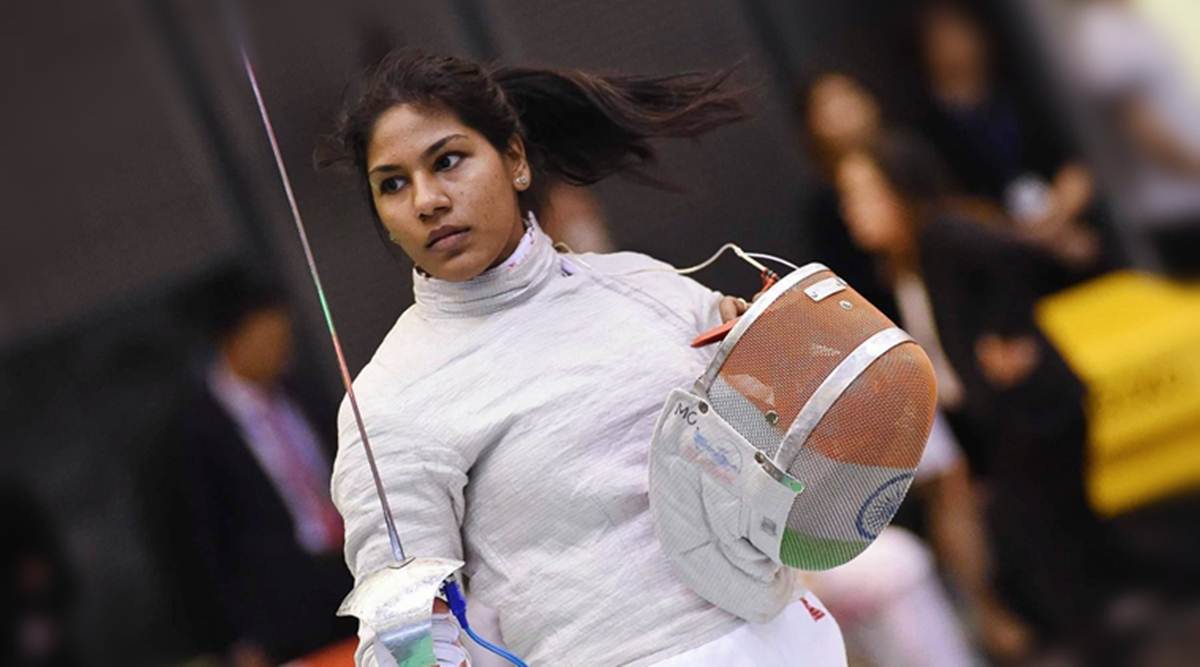
She wears a see-through, mesh tri-colour on her full-face masked helmet. She is also deeply influenced by the tale of Queen Velu Nachiyar, or Veeramangai, the ruler of Sivaganga who is supposed to have waged the first war of freedom on the British in 1770s.

But what Chadalavada Anandha Sundhararamana Bhavani Devi, India’s first ever fencer to qualify for the Olympics, has managed in the modern world of competitive sport, is a pioneering toe-hold into what is considered one of the most elite disciplines.

Fencing with its regal sporting origins in Europe, remains the preserve of the first world – with a stranglehold of the continent’s sporting superpowers in this sport being very tight. China, Japan and Korea have broken through in the discipline that carries a staggering 36 medals and is hence pushed by every country to amp up the medal placings.

But for an Indian to dream of cracking those highest of echelons of Olympic sport – when equipment is niche, coaching is specialised, the sport isn’t particularly easy to just lace up shoes and pick up – this qualification points to Bhavani’s individual endeavour and her blazing ambition.

Bhavani Devi Youngest of four children, born to an always encouraging homemaker mother and a father who was a priest.
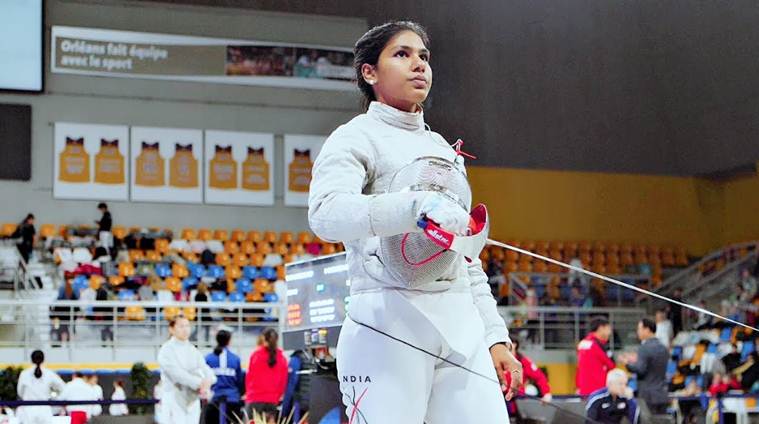
There was never a doubt that Bhavani had the speed for sabre, the fastest of the sword events. Italian coach Nicolo Zanotti has spoken earlier of her ability to grasp the nuances while keeping up the speed of movements.

But for someone hailing from a middle-class family in Chennai’s Washermenpet, Olympics was like reaching the moon when she took up the sport in her school at age 9. Youngest of four children, born to an always encouraging homemaker mother and a father who was a priest, but gorged on literary texts in multiple languages, Bhavani was self-motivated throughout her pathbreaking journey.

Staying away from home – first in Thalassery in Kerala as a junior, and later at Livorno in Italy – the 27-year-old overcame everything from fight of darkness to blending into local culture to learn a sport she had come to love and had started getting very good at.

Story continues below this ad

There were speed bumps at every juncture – sometimes the Indian team wasn’t sent to the Asian Games, at other times, refereeing was biased in Europe.

When the world went into lockdown, Bhavani was on the brink of qualification – but with an anxious eye on rankings, eyeing the two Asian spots available. It was also evident that she would be at the mercy of external results, being on the cusp and with tournaments cancelled.

She was one tournament away from qualifying same time last year. But the wait got prolonged with each passing uncertain day. Years of hard work was at stake.

It is in this frame of mind that she travelled to Budapest – all the pandemic restrictions applying to her movements. Hungary wasn’t allowing anyone to fly in, though the fencers could travel in solely for the World Cup.

Story continues below this ad
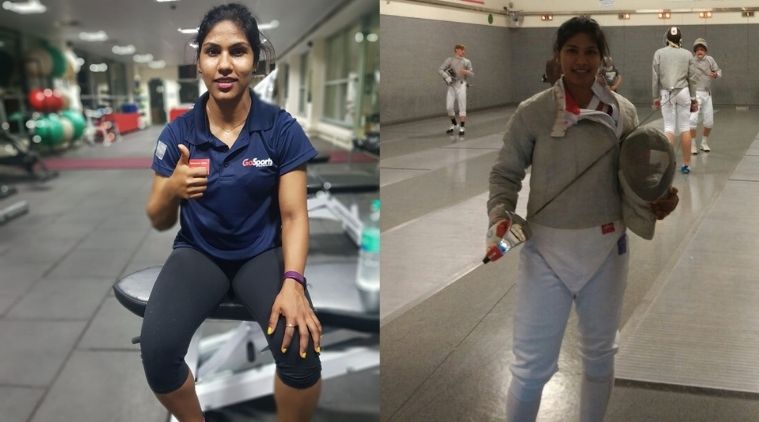
Bhavani Devi, Bhavani Devi fencing Bhavani recalls being charmed by the equipment — the mask, the jacket, the electrical trail that beeped off tiny lamps. (Photo Courtesy: Bhavani Devi)

Bhavani would lose early, but had a cushioning of the World Championship points. It boiled down to Hungary finishing behind South Korea, to ensure her qualification in a meshed calculation of variables. Bhavani would watch nervously in the arena with her coach.

There was one last continental tournament left but with a cloud of uncertainty on it.

Once Italy defeated hosts Hungary, putting them behind Korea, Bhavani was assured of a spot. She would breathe easy, allow tears to roll down and would choke for words, speaking to her sponsors back home – happy that her lifetime’s dream had been achieved.

It wasn’t just the wait of 25 years before the pandemic, where she lost her biggest motivator, her father in 2019. The pandemic made the wait even more torturous.

Story continues below this ad

GoSports, her support team, would arrange for training equipment for fitness and sport in the house during the lockdown along with yoga sessions to deal with the anxiety. Then it was time for strength and conditioning once the lockdown eased, and return to Italy for training, expenses borne by the support team who did not lose hope through the struggle.

Bhavani’s qualification though, was one woman’s ambition to make it to the Olympics, in a sport she dared to pursue when not many around her did.

Shivani Naik is a senior sports journalist and Assistant Editor at The Indian Express. She is widely considered one of the leading voices in Indian Olympic sports journalism, particularly known for her deep expertise in badminton, wrestling, and basketball. Professional Profile Role: Assistant Editor and Columnist at The Indian Express. Specialization: While she covers a variety of sports, she is the primary authority on badminton for the publication. She also writes extensively about tennis, track and field, wrestling, and gymnastics. Writing Style: Her work is characterized by "technical storytelling"—breaking down the biomechanics, tactics, and psychological grit of athletes. She often provides "long reads" that explore the personal journeys of athletes beyond the podium. Key Topics & Recent Coverage (Late 2025) Shivani Naik’s recent articles (as of December 2025) focus on the evolving landscape of Indian sports as athletes prepare for the 2026 Asian Games and beyond: Indian Badminton's "Hulks": She has recently written about a new generation of Indian shuttlers characterized by power and physicality, such as Ayush Shetty and Sathish Karunakaran, marking a shift from the traditionally finesse-based Indian style. PV Sindhu’s Resurgence: A significant portion of her late-2025 work tracks PV Sindhu’s tactical shifts under new coaching, focusing on her "sparkle" and technical tweaks to break out of career slumps. The "Group of Death": In December 2025, she provided detailed tactical previews for Satwiksairaj Rankireddy and Chirag Shetty’s campaign in the BWF World Tour Finals. Tactical Deep Dives: She frequently explores technical trends, such as the rise of "backhand deception" in modern badminton and the importance of court drift management in international arenas. Legacy and History: She often revisits the careers of legends like Saina Nehwal and Syed Modi, providing historical context to current Indian successes. Notable Recent Articles BWF World Tour Finals: Satwik-Chirag have it all to do to get through proverbial Group of Death. (Dec 2025) The age of Hulks in Indian badminton is here. (Dec 2025) Treadmill, Yoganidra and building endurance: The themes that defined the resurgence of Gayatri and Treesa. (Dec 2025) Ayush Shetty beats Kodai Naraoka: Will 20-year-old be the headline act in 2026? (Nov 2025) Modern Cinderella tale – featuring An Se-young and a shoe that fits snugly. (Nov 2025) Other Sports Interests Beyond the court, Shivani is a passionate follower of South African cricket, sometimes writing emotional columns about her irrational support for the Proteas, which started because of love for Graeme Smith's dour and doughty Test playing style despite being a left-hander, and sustained over curiosity over their heartbreaking habit of losing ICC knockouts. You can follow her detailed analysis and columns on her official Indian Express profile page. ... Read More


 

Latest Comment
Post Comment
Read Comments
Advertisement
Advertisement
Advertisement
Advertisement