6 min read
Stay updated with the latest sports news across Cricket, Football, Chess, and more. Catch all the action with real-time live cricket score updates and in-depth coverage of ongoing matches.

Journalism of Courage



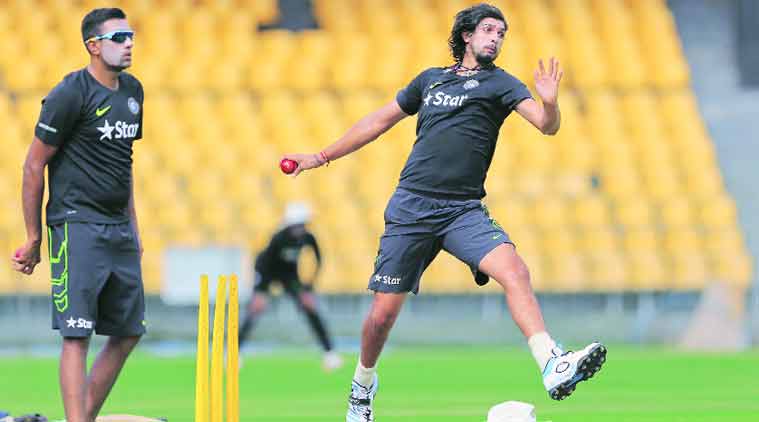 With Ravi Shastri keen on a five-bowler attack, spinners Harbhajan Singh and R Ashwin are all but guaranteed a playing XI spot. As are pacers Ishant Sharma and Umesh Yadav. The fifth bowler could be a toss up between Bhuvneshwar Kumar and Varun Aaron.
“IT’s not about getting the big runs. It’s about taking 20 wickets.”
His voice bellowed across the graciously air-conditioned press conference area at the Galle International Cricket Stadium. Team director Ravi Shastri was putting forth his singular formula for success as far as the Indian Test team is concerned. But you could easily have mistaken it to have been a war briefing room with the designated chief of staff laying down the new war plan. It certainly felt so. In many ways, Shastri was doing just that.
The word ‘aggression’ has been doing the rounds copiously ever since the firebrand former Indian captain joined the team management around this time last year. For some, it’s become the buzzword of the Shastri-era. Speaking to the media on the eve of the Test series in Sri Lanka, the team director once and for all produced a blueprint for the brand of cricket he expects his team to play, and he did so with that customarily no-nonsense Ravi Shastri flourish.
[related-post]
And he made it clear that in their quest for 20 wickets, the Indian team would henceforth be going into Test matches with a five-bowler formation except maybe in extremely helpful conditions.
“The endeavour is to look to take 20 wickets so you can win matches. You have to think in that fashion. So that when you are batting as well, if you get into a position you can take the game forward and try and look to give yourself time to take those 20 wickets,” explained Shastri.
“Five bowlers is the first option at all times unless you get a track where you think four bowlers are enough. Where you know it will turn from day one. Where it is going to seam and hoop all over the place from day one. You might need to strengthen your batting because you might think four bowlers can get you 20 wickets,” he added, while stressing that the team strategy would be woven around playing the extra bowler.
This yearning for 20 wickets is by no means a unique scheme. If anything it’s an old cricket truism. Traditionally, India couldn’t quite afford the inherent truth in that because of their own mediocre bowling stock. Now without quite an upsurge in their attack, they are taking a leap of faith.
A leap of faith that Shastri believes could be the turning point in his young team’s fortunes. The last time India played a Test at home was Sachin Tendulkar’s finale at the Wankhede Stadium. They’ve ever since been on the road, playing Tests in South Africa, New Zealand, England and Australia, not to forget the one-off encounter in Fatullah. They have one win—a famous one at Lord’s—to show for it. But according to Shastri, a lot of those results that didn’t go India’s way by the narrow margins could have been reversed if there was a fifth bowler up their sleeves.
“And then the fact that you have that additional bowler might just help you close matches which you couldn’t and if you look back at certain matches, you will tell me today that an extra bowler there would have been helpful,” he said.
Meanwhile, the Indian team’s practice session constantly kept getting disrupted by Galle’s bizarre rains, which would arrive from nowhere and then disappear as anonymously within a handful minutes. The subsequent heat and mugginess in the air made the air-conditioning in the press conference area a lot more welcoming. Unfortunately, the Indian players had no choice but to sweat it out—and some did to profuse proportions.
There was time enough for the six batsmen, including Wriddhiman Saha, to get a hit in the nets. And with the team set to go in with five bowlers, their shoulders will have to bear the burden of putting up decent scores on the board against a young Sri Lankan attack. Shastri is aware that the batting will not come through every time, but he isn’t worried about it. He instead insisted that the team’s ability to take 20 wickets could outdo the inability of the batsmen to score big runs each time.
“It will be added responsibility for the batsmen, yes, but it also gives you a chance if you are bowled out quickly to stay in the contest to come back rather than letting the opposition go,” he said, stating the example of the depth in the English bowling attack, which won them the Ashes recently.
Gung-ho approach
The Adelaide Test last December was the first one India played under Shastri’s reign as director, and they did come in for criticism in some circles for their gung-ho approach that did get them close to their target, but then failed to save the game once wickets started crumbling. But Shastri still feels that it is the approach that will provide India with that winning feeling in times to come.
“You don’t come to a cricket ground to draw a cricket match, so you play a brand of cricket where you take the game forward. The role I play is hammering that into their system. We don’t mind losing playing in that fashion. But it is the brand of cricket you want to play because if you get used to it, you will start winning more than you lose,” he said.
With that General Shastri had put Mission Aggression into force, and the onus will now shift upon his players to successfully execute the ground offensive, and maybe along the way also win a few Test matches.
Stay updated with the latest sports news across Cricket, Football, Chess, and more. Catch all the action with real-time live cricket score updates and in-depth coverage of ongoing matches.