3 min read
© IE Online Media Services Pvt Ltd



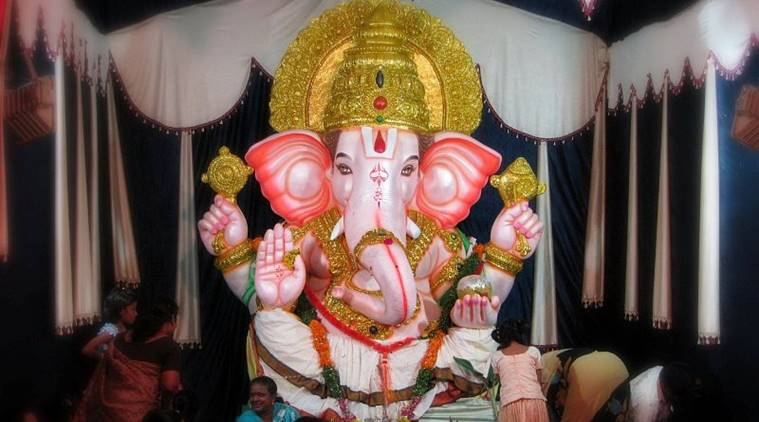 Ganesh Chaturthi 2018 falls on 13th September this year. Know its history, rituals, significance. (Source: WikimediaCommons/Pranav)
Ganesh Chaturthi 2018: Ganesh Chaturthi, also known as Vinayaka Chaturthi, marks the birth of Lord Ganesha. This auspicious festival is observed in the month of Bhadra, according to the Hindu calendar. This year, it will be celebrated on September 13.
One of the most beloved Gods, Lord Ganesha is considered by many as a symbol of good fortune, wisdom, and luck. This festival is celebrated with much fervour and joy in India and outside the country.
Get to know about the history, rituals, and significance of the festival.
History: There are many stories that do the rounds when it comes to tracing the history of this festival but the most relevant one dates back to the time when Parvati, Lord Shiva’s wife, created Ganesha.
As the story goes, Parvati used sandalwood paste and created Ganesha so that he could guard while she was bathing. Ganesha performed the task with utmost dedication. It is believed that when Shiva returned home, Ganesha didn’t allow him to pass through. In a fit of rage, Shiva severed the head of the child.
Upon learning this, Parvati broke down and Shiva promised to bring Ganesha back to life. He sent his followers to search for a child’s head facing north, but all they could find was an elephant’s head. And that’s how our Gajanana or Ganesha was re-born with an elephant’s head.
Traditions and Rituals: Weeks before Ganesh Chaturthi, excitement sets in all over the country. People prepare clay idols of Ganesha and paint them in vibrant colours.
The festival begins with Pranapratishhtha, that involves chanting of mantras by a priest. This is followed by a ritual that includes a 16-step ritual known as Shodashopachara Puja. During the puja, offerings that are believed to be a favourite of Ganesha are made to the idol. These include modak, shrikhand, coconut rice, motichoor laddoo, payasam, and medu vada, among others.
Finally, the festival ends with a ritual called Uttarpuja, which involves bidding farewell to Lord Ganesha. After this ritual, the statue of Ganesha is immersed in water. This is known as Ganpati Visarjan — slogans like ‘Ganapati Bappa Morya’ are shouted by devotees to pay respect to Ganesha and keep up with the spirit of celebrations and they bid a revered farewell to Ganesha.
The festival of Ganesh Chaturthi not only involves prayers but also indulges in various cultural activities like dancing, singing, and theatre performances.