6 min read

© The Indian Express Pvt Ltd



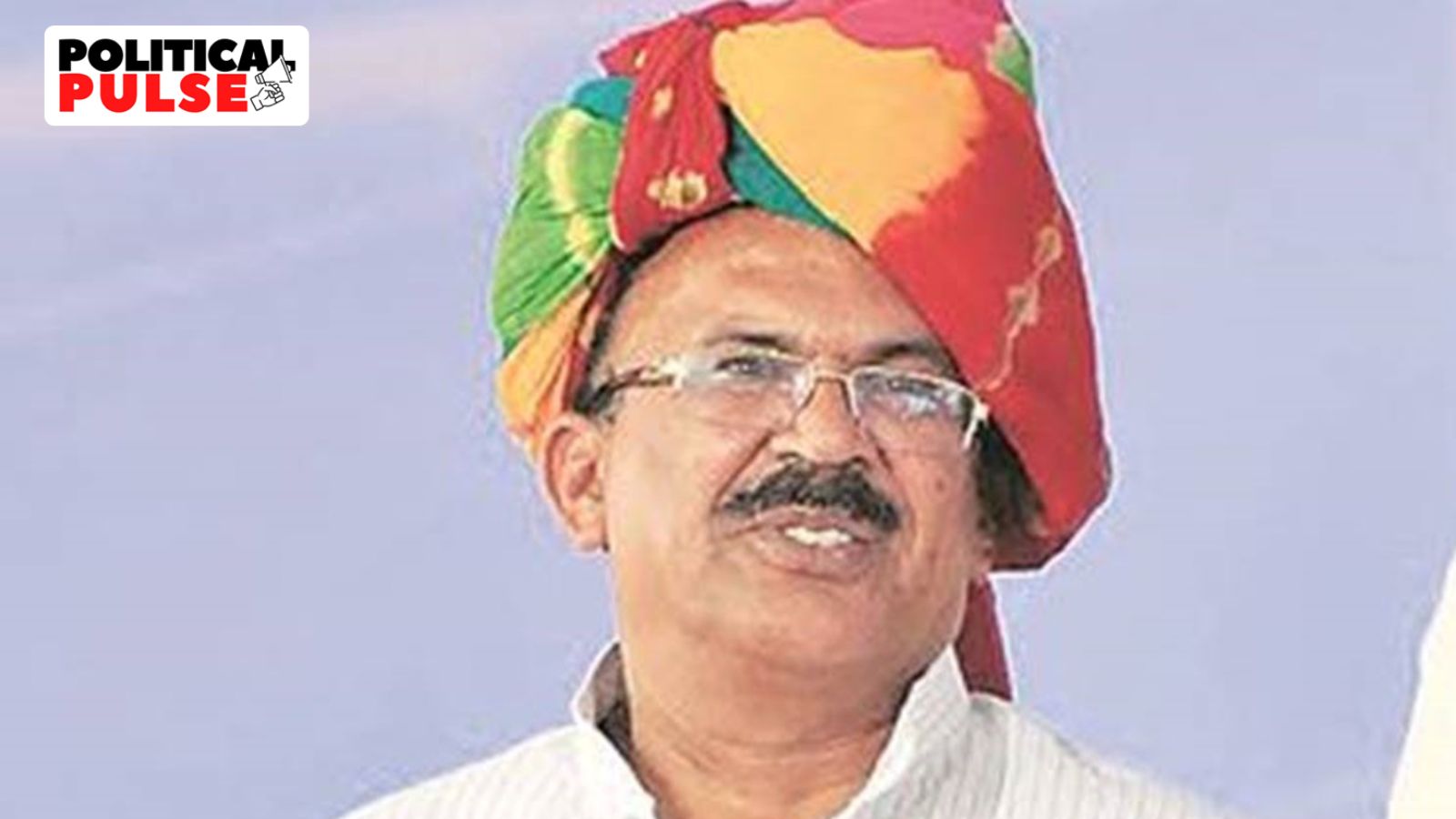 Rajasthan Assembly Speaker Vasudev Devnani. (File Photo)
Completing a year in office, Rajasthan Assembly Speaker Vasudev Devnani has taken a slew of measures at the Assembly, including its new look with Jaipur pink carpets and Apple iPads on each table. Outside the Assembly too, he has been in news, more recently in November when the Rajasthan Tourism Development Corporation (RTDC) renamed Hotel Khadim as “Ajaymeru” upon Devnani’s instructions.
With another session scheduled from January 31, Devnani, an MLA from Ajmer North, speaks to The Indian Express on his face off with Congress MLAs, how he plans on increasing Assembly’s annual sittings, ensuring time bound answer to questions, and what he thinks of the Ajmer Dargah petition. Edited excerpts:
How will the Assembly be different this time?
We have made the Assembly paperless and have implemented the One Nation One Application or the National e-Vidhan Application project. As part of it, an Apple tablet has been placed on each seat. The MLAs can ask questions through the tablet and get answers too, apart from reading the Bills and proceedings.
The MLAs will take some time getting used to it and so the upcoming session would be 50:50; we will also have persons who can assist the MLAs with operating the tablets.
We also felt that one colour (green) has been there for years (for the carpets) and there can be a change. Jaipur is a gulabi (pink) city so we thought it should be gulabi.
There is a perennial issue with unanswered questions, some of which are left unanswered and forgotten
Till now, the tradition has been that the bureaucracy didn’t give Legislature or House the importance it should. When the 15th Assembly ended, over 4,700 questions were unanswered. So, we took an initiative, called meetings of Secretaries and only about 1600 of those are left. As for the present Assembly, 95 per cent questions of the first session have been received while for the second session, about 2,300 questions remain.
I believe that both Vidhan Sabha and the bureaucracy should work towards public welfare … Bureaucracy should be accountable to the Legislature. The aim is to ensure that before a session starts, all the questions from the previous Assembly session should be answered.
There was a time when there used to be 50-60 days Assembly sittings in a year but now it is close to 30 days…
Last year it was 30 days in two sessions and my aim is to run it for 40 days. But this is only possible when there is cooperation from both the ruling party and the Opposition. And this is the case in all the Assemblies of the country. The highest is in Kerala which has about 45 days, and there are many other Assemblies which have 7-12-15 days. So, I think we will have to bring back those times (with more sittings).
Last year there were bitter scenes between Congress MLA Mukesh Bhakar and you. How do you think it can be addressed in a better way?
There is only one way: Dialogue and persuasion. If there is a deadlock, then I call both sides in the chamber. Earlier, some Speakers used to call while others used to leave it up to them (the parties). But when it has to be addressed, five days or ten days later, why not now?
If both sides come in the middle of the well and raise slogans, that won’t work. If you want, do a walk-out and there are other ways (to state your point) but the honourable member’s (Bhakar) behaviour … There are some new MLAs who may not have the knowledge of the rules and traditions or they may forget them. But sometimes the purpose is to get themselves published in the newspaper.
You are an MLA from Ajmer where a petition was filed claiming that there is a temple in the Ajmer Dargah…
There are some issues which are in the courts and it is not apt to comment on them. But it is true that in 1100-1200 years, there were many centres of faith which were demolished. And because of that there are emotions too. So, there should be a solution to this.
But both sides have context and there are issues arising elsewhere (and not just in Ajmer) but everyone’s centres of faith should be respected and this applies equally to everyone. If that is honoured then the old Sanatan culture, which says Vasudhaiva Kutumbakam (the world is one family) will be realised. Sometimes, it seems that both sides have their own logic but this should be resolved amicably through discussions.
For example, there is (the issue of) population control, I am feeling it in Ajmer too. And in the context of what happened in Bangladesh, then some things should be thought about seriously; infiltration – the problems start from there.
What is the change you are seeing in Ajmer?
We have to think about demography and ensure that there isn’t a demographic change. the beliefs of every community should be respected. Thoughts can be different, worshipping style can be different, but Hindustan is one, and it should be respected.
Dr APJ (Abdul) Kalam was the President of India, bhale he woh Muslim samuday ke the, lekin national hero the (even though he was from the Muslim community, but he was a national hero). So, every person should have that kind of nationalism. We should not use these issues merely to gain power.
Sometimes there are discussions that democracy or the constitution is in danger. My clear belief is that no power in the world can endanger the constitution or democracy here. The reason? Since Independence, there has been a peaceful transfer of power over 360 times in the nation and its states.