


© The Indian Express Pvt Ltd
Tags:


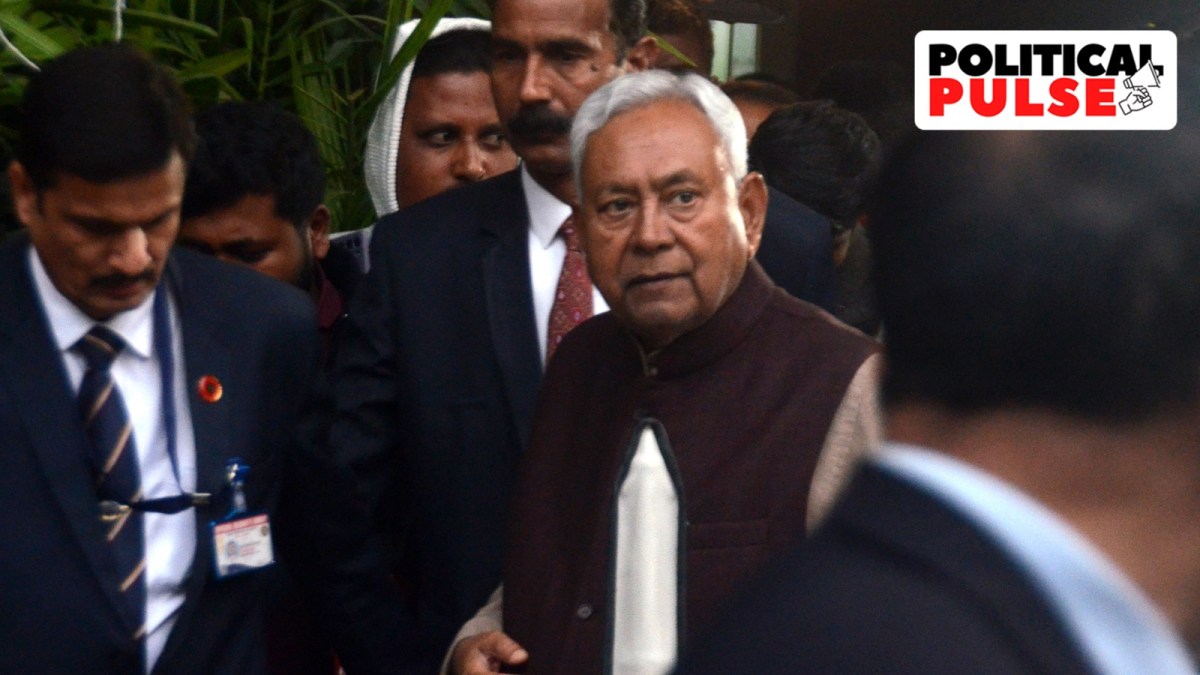
With the return of the Nitish Kumar-led JD(U) to its ranks, the NDA hopes to have a repeat performance as in 2019, when it had won 39 of the state’s 40 Lok Sabha seats. The Congress won the remaining single seat.
The NDA, with the BJP now the undeclared senior-most partner in Bihar, also has more partners now than in 2019, when it comprised the BJP, JD(U) and the united Lok Janshakti Party (LJP). The BJP and JD(U) had both contested 17 seats each at the time, and the LJP 6 seats.

The NDA had won a combined vote share of 54.34%, and swept the polls. The BJP and LJP had won all the seats they contested, while the JD(U) fell short on only 1 seat, which went to the Congress.
It was a struggle for the RJD-led Mahagathbandhan, which included the Congress, Hindustani Awami Morcha (Secular) (HAM(S)), Rashtriya Lok Morcha (RLM) and one other minor party, which together secured 31.23% of the votes but won just 1 seat. The Congress victory came in 1 of the 9 seats it contested, while the RJD could not win any of the 19 in its share. The Left parties too failed to win a single seat among the 19 they contested.
Notably, the RJD’s zero tally was despite its vote share being a respectable 15.68%, with the BJP at 24.06% and the JD(U) at 22.26%.

The alliance matrix is not markedly different in 2024 compared to 2019, with the NDA now comprising apart from the BJP and JD(U), the HAM(S) and former minister Upendra Kushwaha’s Rashtriya Lok Morcha (RLM).
In its seat-sharing arrangement announced on Monday, the BJP is contesting 17 seats again, while the JD(U) and LJP will fight one less seat each at 16 and 5, respectively. This will allow the two new allies to get 1 seat each.
The INDIA bloc, now including the RJD, Congress and Left, is yet to announce its seat deal. However, compared to other states, it has at least been smooth going for the alliance in the state.
Historically, the Congress hasn’t been a major player in Bihar’s Lok Sabha polls since 1984, while the BJP’s emergence as a significant party in the state began in the 1990s, when the Janata Dal was a leading force in the state. Once the Janata Dal split to give rise to the RJD in 1999 and later the JD(U) in 2003, these regional parties began to make their mark in the state’s parliamentary seats, until the BJP’s landslide victory in the 2014 Lok Sabha elections.
In 2014, which was the first Modi wave election, the JD(U) contested 38 seats on its own, but won just 2, with 16.04% of the vote share. The NDA, which at the time comprised the BJP, LJP and one other regional party, won 31 seats, with more than double the JD(U)’s vote share, at 39.41%. The RJD-Congress-NCP alliance managed just 7 seats, despite 30.24% of the votes.
Just a year after the NDA swept Bihar in the 2019 Lok Sabha polls, the alliance faced a stiff challenge from the Opposition in Bihar.
In the Assembly polls held in 2020, the NDA, including the BJP, JD(U), LJP and two smaller parties in the state, won 125 seats and 37.26% of the vote share, only narrowly crossing the 122-seat majority mark in the 243-member House. The most striking aspect of the result was the BJP’s emergence as the second-biggest party, in both seats and vote share, winning 74 seats (from 110 contested) and 19.46% votes. The JD(U) finished third, behind the BJP and RJD, winning 43 seats from 115 contested and 15.39% of the votes.
However, the BJP let Nitish continue as CM, for his sixth term.
In a heartwarming performance for the Congress, bruised for the second time in the 2019 general elections, its Mahagathbandhan alliance with the RJD and Left gave the NDA a scare, winning 110 seats and 37.23% of the votes (just 0.03% shy of the NDA’s vote tally). The RJD, in particular, recorded a strong performance, emerging as the largest party, with 75 seats from 144 contested and 23.11% vote share.
While the Left parties won 16 seats with 4.64% of the votes, the Congress was the laggard in the alliance, managing just 19 seats out of the 70 it contested and securing 9.48% of the votes.
Less than two years later, Nitish switched to Mahagathbandhan, bringing down the NDA government.
A look at the 2021 results across Assembly segments indicates that the JD(U)’s exit will significantly hurt the INDIA bloc in the coming elections.
Reading the 2021 results in terms of Lok Sabha constituencies shows that the vote share of the Mahagathbandhan constituents outnumbered the NDA in just 10 seats. But, adding the JD(U) votes in 2021 to the Mahagathbandhan put the alliance past the NDA in as many as 24 additional seats for a total 34.


