© IE Online Media Services Pvt Ltd
 5 min read


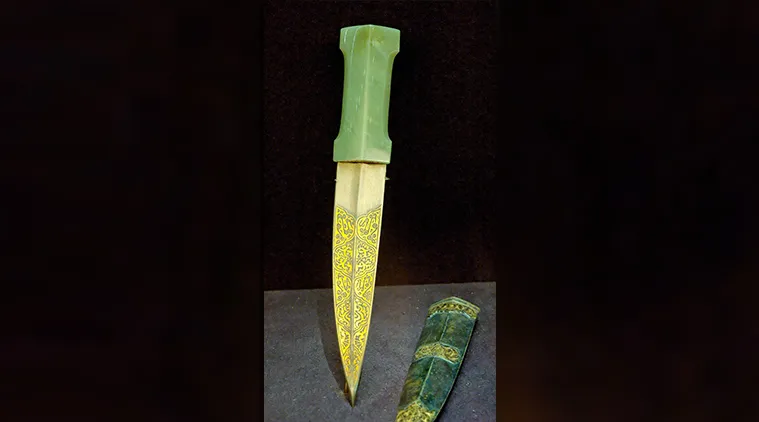 Dagger (Source: Wikimedia Commons)
(This is part of the series Make History Fun Again, where the writers introduce historical facts, events and personalities in a fun way for parents to start a conversation with their kids.)
By Archana Garodia Gupta and Shruti Garodia
Did you know that ancient India made the first true steel in the world? That swords of Indian steel were the ultimate global status symbol for hundreds of years? Here is the story.
The Iron Age was sparked off with iron smelting in Turkey around 1300 BC, utterly changing mankind’s destiny. Instead of costly and scarce bronze, people could now use abundant iron to make tools and weapons. The technology quickly spread far and wide, leading to a farming revolution and a global population boom.
Yet, iron was often brittle. It was gradually discovered that adding a small amount of carbon could make the iron harder, but it was a touch and miss process and iron was still prone to rusting and shattering.
As early as 400 BC, Indians learned how to manipulate iron in ways that we don’t fully know even today!
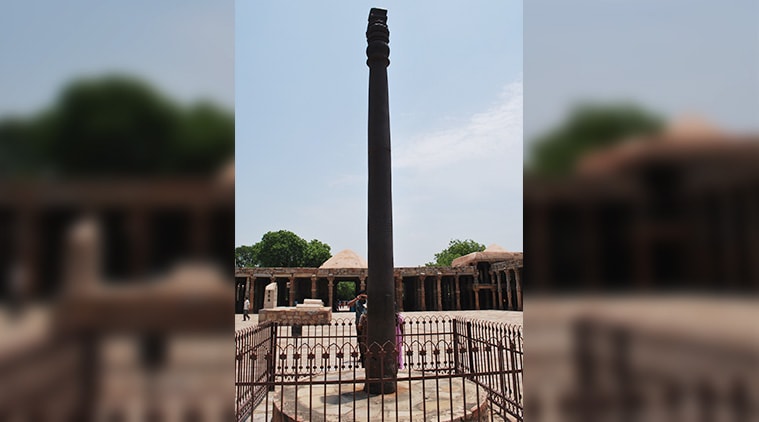 Iron Pillar of Chandragupta II Vikramaditya (Source: BibinVarghese/wikimedia commons)
The iron pillar near the Qutb Minar in Delhi is a perfect example of the genius of ancient Indians. From the Gupta era in the 4th century AD, this iron pillar has not rusted in over 1,600 years. Scientists spent decades puzzling over how this was possible. After many tests over many years, they realised that the pillar’s iron has an unusually high level of phosphorous, which reacts with moisture and creates a thin protective coating of hydrogen phosphate hydrate on the pillar’s surface to prevent rusting. So the rain and wind, which would normally cause corrosion, actually helps protect the pillar!
Indians also produced the first true steel, fusing iron with a high amount of carbon (1 to 1.6 per cent). They did this by sealing iron and charcoal into clay containers called crucibles, and roasting these at extremely high temperatures in furnaces. When they broke open the cooled clay containers, pure steel ingots lay waiting for them, with even amounts of carbon throughout the steel. This steel was extremely tough, shatter-resistant and able to be honed to the sharpest edge.
Indian steel and iron soon became the rage throughout the known ancient world.
In the Persian national epic, the Shahnama, the dashing hero Rostam always carries the best weapon available, a sword of Indian steel. Alexander the Great took 100 talents (around 2.7 tonnes!) back with him. Indian ironmasters exported their ware to Abyssinia (Ethiopia). As far away as Toledo, Spain, ironsmiths used ‘Ferricum Indicum’ to hammer Indian steel into swords for the imperial Roman army.
The Arabsset up their own sword-making industry in Damascus with this Indian steel, where they forged the deadliest blades. The steel had distinct patterns of banding which looked like etchings of flowing water. Over the centuries, Damascus swords gathered many legends – being able to cut through a feather, a single hair, a gauze cloth in mid-air…
Of course, the steel became known as Damascus steel!
(Fun fact: Damascus steel was so legendary, it became the inspiration for ‘Valyrian steel’ in the television show, Game of Thrones.)
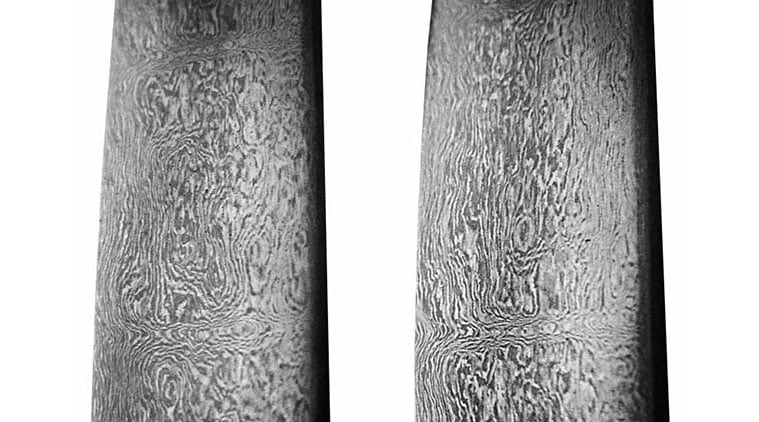 Watered pattern on sword blade (Source: Wikimedia Commons)
In the middle ages, the famous Arab scientist al-Idrisi, who lived in Sicily, wrote that “The Hindus excel in the manufacture of iron, and in the preparation of those ingredients along with which it is fused to obtain Indian Steel called Hindiah. They also have workshops to forge the most famous sabres in the world….it is impossible to find anything to surpass the edge that you get from Indian steel…”
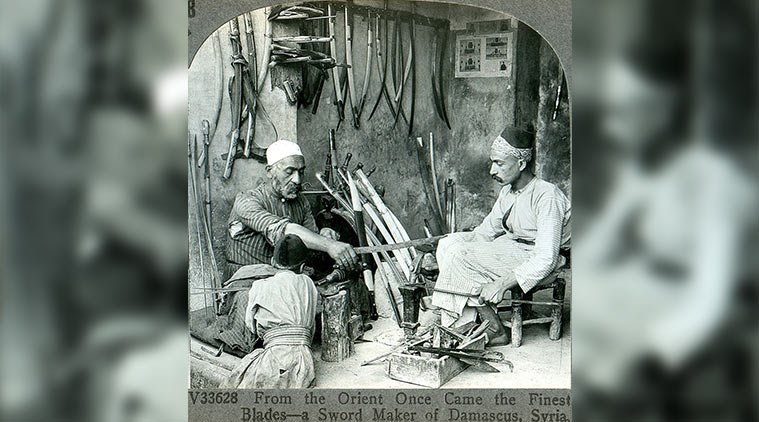 Damascus bladesmith (Source: Wikimedia Commons)
In later centuries, Indian steel became known as ‘wootz steel’. Many say the word comes from the Kannada and Telugu words for steel – ‘ukku’ – since the steel industry was highly developed down south. Well into the Mughal times, there was industrial size production and export of wootz ingots to Persia from the Coromandel coast.
After the failed Indian Revolt of 1857, the British went around and deliberately destroyed all Indian steel making industries across south India, and wootz technology was lost to the world. Conveniently, modern mass-production of steel had just begun with the invention and patent of the ‘Bessemer process’ in England in 1856.
Today, the original method of producing this legendary wootz steel has still not been discovered, though keep people experimenting and claiming they have figured out how it was done! This youtube video documents one person’s attempts to make wootz steel using the ancient Indian method.
(For more fun journeys through India’s history, check out the newly released two-volume set, The History of India for Children Vol. 1 and Vol. 2, published by Hachette India, which is now available online and in bookstores across the country.)